
ISSN: 1885-5857 Impact factor 2025 4.2
Vol. 79. Num. 2.
Pages 131-141 (February 2026)

Original article
Classification, prevalence and cardiovascular risk of different types of hypercholesterolemia

Clasificación, prevalencia y riesgo cardiovascular de los diferentes tipos de hipercolesterolemia

Fernando CiveiraabcEstíbaliz JarautaabcVictoria Marco-BenedíabcAna M. BeaabRocío Mateo-GallegoabdItziar Lamiquiz-MoneoabeIrene Gracia-RubioabeDaniel Bello-ÁlvarezabMartín LaclaustraabcMaría Teresa TejedorfSalvador OlmosgAna Cenarroabh
https://doi.org/10.1016/j.rec.2025.07.004

Options

Supplementary data
Imagen extra
Rev Esp Cardiol. 2026;79:131-41
Abstract
Introduction and objectives

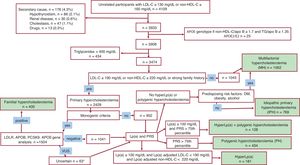
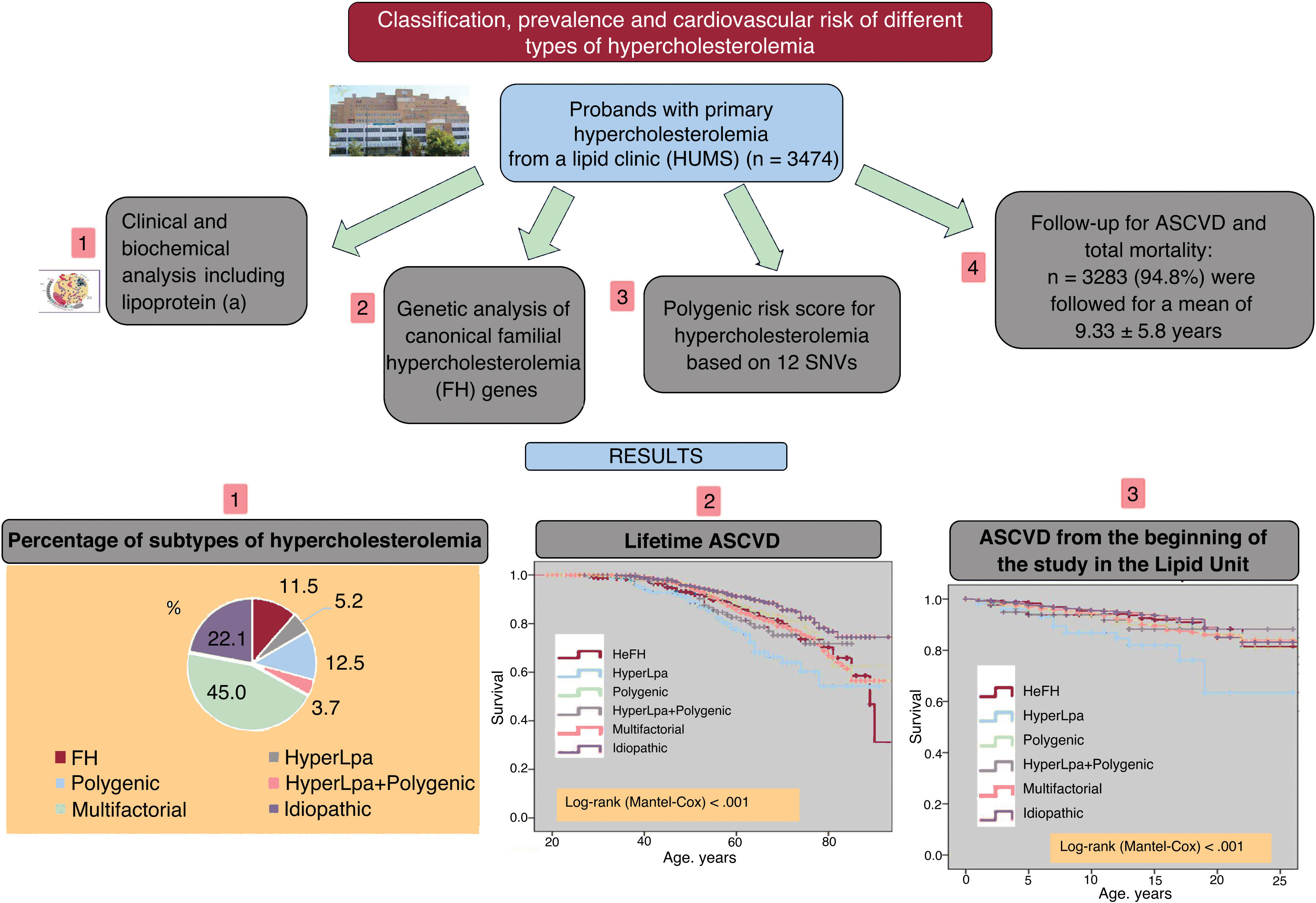
The frequency, clinical characteristics and risk of atherosclerotic cardiovascular disease (ASCVD) of the different types of hypercholesterolemia are not well established. The primary and secondary objectives of this study were to determine the cause of hypercholesterolemia and whether the cause confers a different ASCVD prognosis.

Methods

The analysis included 3474 probands with primary hypercholesterolemia, of whom 3283 (94.8%) were followed up for 9.33± 5.8 years for ASCVD. Genetic analysis of familial hypercholesterolemia (FH) genes, polygenic risk score for hypercholesterolemia, and lipid concentrations, including lipoprotein(a), were used to classify hypercholesterolemia.

Results

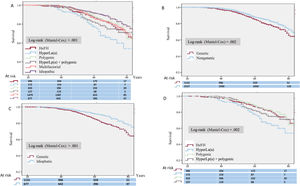
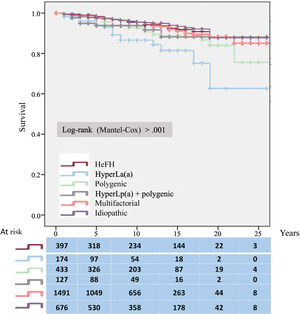
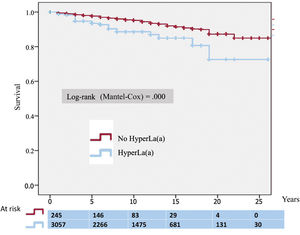
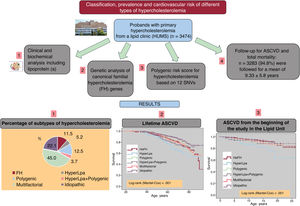
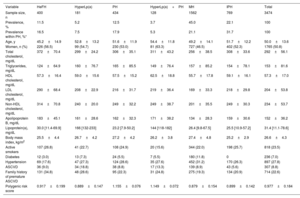
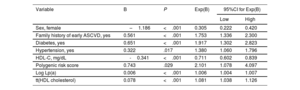
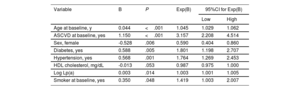
The diagnoses were heterozygous FH, n=400 (11.5%); hyperlipoproteinemia(a), n=181 (5.2%); polygenic hypercholesterolemia, n=434 (12.5%); hyperlipoproteinemia(a) plus polygenic hypercholesterolemia, n=128 (3.7%); multifactorial, n=1562 (45.0%); and idiopathic, n=769 (22.1%). At baseline, low-density lipoprotein cholesterol levels were higher in heterozygous FH, and the prevalence of ASCVD was higher in hyperlipoproteinemia(a). Other clinical and biochemical characteristics did not differ among hypercholesterolemia subgroups. The survival rate was lower in participants with hyperlipoproteinemia(a) than in the other hypercholesterolemia groups (P=.001). Variables independently associated with ASCVD events during follow-up were age, male sex, the presence of ASCVD, diabetes or hypertension at baseline, current smoking, lipoprotein(a) concentration, and high-density lipoprotein cholesterol concentration, the latter being inversely associated with ASCVD events. Total mortality was independent of the type of hypercholesterolemia.

Conclusions

Genetic hypercholesterolemia has a worse prognosis for ASCVD than nongenetic hypercholesterolemia. Among individuals with genetic hypercholesterolemia, those with elevated lipoprotein(a) have the worst prognosis. Conventional lipid-lowering treatment for low-density lipoprotein cholesterol appears to be less effective in hypercholesterolemia due to hyperlipoproteinemia(a) than in other forms of hypercholesterolemia.

Keywords

Primary hypercholesterolemia
Classification
Familial hypercholesterolemia
Mortality

Identify yourself

Not yet a subscriber to the journal?
Purchase access to the article

By purchasing the article, the PDF of the same can be downloaded

Price: 19,34 €

Phone for incidents

Monday to Friday from 9am to 6pm (GMT+1) except for the months of July and August, which will be from 9am to 3pm

Calls from Spain 932 415 960
Calls from outside Spain +34 932 415 960
References
[1]
B.A. Ference, H.N. Ginsberg, I. Graham, et al.
Low-density lipoproteins cause atherosclerotic cardiovascular disease 1. Evidence from genetic. epidemiologic. and clinical studies. A consensus statement from the European Atherosclerosis Society Consensus Panel.
Eur Heart J., (2017), 38 pp. 2459-2472
[2]
S.M. Grundy, N.J. Stone, A.L. Bailey, et al.
2018 AHA/ACC/AACVPR/AAPA/ABC/ACPM/ADA/AGS/APhA/ASPC/NLA/PCNA Guideline on the Management of Blood Cholesterol: Executive Summary: A Report of the American College of Cardiology/American Heart Association Task Force on Clinical Practice Guidelines.
J Am Coll Cardiol., (2019), 73 pp. 3168-3209
[3]
F. Mach, C. Baigent, A.L. Catapano, et al.
2019 ESC/EAS Guidelines for the management of dyslipidaemias: lipid modification to reduce cardiovascular risk.
Eur Heart J., (2020), 41 pp. 111-188
[4]
F.L.J. Visseren, F. Mach, Y.M. Smulders, et al.
2021 ESC Guidelines on cardiovascular disease prevention in clinical practice: Developed by the Task Force for cardiovascular disease prevention in clinical practice with representatives of the European Society of Cardiology and 12 medical societies With the special contribution of the European Association of Preventive Cardiology (EAPC).
Eur Heart J., (2021), 42 pp. 3227-3337
[5]
A. Sikorski.
2014 NICE cholesterol guidelines.
Br J Gen Pract., (2017), 67 pp. 446
[6]
Expert Panel on Detection.
Evaluation. and Treatment of High Blood Cholesterol in Adults Executive Summary of The Third Report of The National Cholesterol Education Program (NCEP) Expert Panel on Detection. Evaluation. And Treatment of High Blood Cholesterol In Adults (Adult Treatment Panel III).
JAMA., (2001), 285
[7]
Emerging Risk Factors Collaboration.
Major lipids. apolipoproteins. and risk of vascular disease.
JAMA., (2009), 302 pp. 1993-2000
[8]
A.V. Khera, H.H. Won, G.M. Peloso, et al.
Diagnostic Yield and Clinical Utility of Sequencing Familial Hypercholesterolemia Genes in Patients With Severe Hypercholesterolemia.
J Am Coll Cardiol., (2016), 67 pp. 2578-2589
[9]
P.J. Talmud, S. Shah, R. Whittall, et al.
Use of low-density lipoprotein cholesterol gene score to distinguish patients with polygenic and monogenic familial hypercholesterolaemia: a case-control study.
Lancet., (2013), 381 pp. 1293-1301
[10]
E. Meriño-Ibarra, J. Puzo, E. Jarauta, et al.
Hyperlipoproteinaemia(a) is a common cause of autosomal dominant hypercholesterolaemia.
J Inherit Metab Dis., (2007), 30 pp. 970-977
[11]
B.S. Hedegaard, B.G. Nordestgaard, H.L. Kanstrup, et al.
High Lipoprotein(a) May Explain One-Quarter of Clinical Familial Hypercholesterolemia Diagnoses in Danish Lipid Clinics.
J Clin Endocrinol Metab., (2024), 109 pp. 659-667
[12]
A.S.F. Berry, L.K. Jones, E.J. Sijbrands, S.S. Gidding, M.T. Oetjens.
Subtyping Severe Hypercholesterolemia by Genetic Determinant to Stratify Risk of Coronary Artery Disease.
Arterioscler Thromb Vasc Biol., (2023), 43 pp. 2058-2067
[13]
F. Civeira, M. Arca, A. Cenarro, R.A. Hegele.
A mechanism-based operational definition and classification of hypercholesterolemia.
J Clin Lipidol., (2022), 16 pp. 813-821
[14]
H. Tada, M.A. Kawashiri, A. Nohara, A. Inazu, H. Mabuchi, M. Yamagishi.
Impact of clinical signs and genetic diagnosis of familial hypercholesterolaemia on the prevalence of coronary artery disease in patients with severe hypercholesterolaemia.
Eur Heart J., (2017), 38 pp. 1573-1579
[15]
A.M. Bea, A. Larrea-Sebal, V. Marco-Benedi, et al.
Contribution of APOE Genetic Variants to Dyslipidemia.
Arterioscler Thromb Vasc Biol., (2023), 43 pp. 1066-1077
[16]
S. Richards, N. Aziz, S. Bale, et al.
ACMG Laboratory Quality Assurance Committee. Standards and guidelines for the interpretation of sequence variants: a joint consensus recommendation of the American College of Medical Genetics and Genomics and the Association for Molecular Pathology.
Genet Med., (2015), 17 pp. 405-424
[17]
A. Cenarro, A. Etxebarria, I. de Castro-Orós, et al.
The p.Leu167del Mutation in APOE Gene Causes Autosomal Dominant Hypercholesterolemia by Down-regulation of LDL Receptor Expression in Hepatocytes.
J Clin Endocrinol Metab., (2016), 101 pp. 2113-2121
[18]
L. Palacios, L. Grandoso, N. Cuevas, et al.
Molecular characterization of familial hypercholesterolemia in Spain.
Atherosclerosis., (2012), 221 pp. 137-142
[19]
A. Amor-Salamanca, S. Castillo, E. Gonzalez-Vioque, et al.
Genetically Confirmed Familial Hypercholesterolemia in Patients With Acute Coronary Syndrome.
J Am Coll Cardiol., (2017), 70
[20]
M. Futema, M. Bourbon, M. Williams, S.E. Humphries.
Clinical utility of the polygenic LDL-C SNP score in familial hypercholesterolemia.
Atherosclerosis., (2018), 277 pp. 457-463
[21]
B.S. Hedegaard, B.G. Nordestgaard, H.L. Kanstrup, et al.
High Lipoprotein(a) May Explain One-Quarter of Clinical Familial Hypercholesterolemia Diagnoses in Danish Lipid Clinics.
J Clin Endocrinol Metab., (2024), 109 pp. 659-667
[22]
A.J. Berberich, R.A. Hegele.
The complex molecular genetics of familial hypercholesterolaemia.
Nat Rev Cardiol., (2019), 16 pp. 9-20
[23]
A.M. Medeiros, A.C. Alves, B. Miranda, J.R. Chora, M. Bourbon.
investigators of the Portuguese FH Study Unraveling the genetic background of individuals with a clinical familial hypercholesterolemia phenotype.
J Lipid Res., (2024), 65
[24]
M. Futema, V. Plagnol, K. Li, et al.
Whole exome sequencing of familial hypercholesterolaemia patients negative for LDLR/APOB/PCSK9 mutations.
J Med Genet., (2014), 51 pp. 537-544
[25]
M.D. Di Taranto, G. Fortunato.
Genetic Heterogeneity of Familial Hypercholesterolemia: Repercussions for Molecular Diagnosis.
Int J Mol Sci., (2023), 24 pp. 3224
[26]
V. Marco-Benedí, A. Cenarro, À. Vila, et al.
Impact of conducting a genetic study on the management of familial hypercholesterolemia.
J Clin Lipidol., (2023), 17 pp. 717-731
[27]
R. Estruch, E. Ros, J. Salas-Salvadó, et al.
Primary prevention of cardiovascular disease with a Mediterranean diet.
N Engl J Med., (2013), 368 pp. 1279-1290
[28]
B.G. Nordestgaard, A. Langsted.
Lipoprotein(a) and cardiovascular disease.
Lancet., (2024), 404 pp. 1255-1264
[29]
S. Perez-Calahorra, M. Laclaustra, V. Marco-Benedí, et al.
Effect of lipid-lowering treatment in cardiovascular disease prevalence in familial hypercholesterolemia.
Atherosclerosis., (2019), 284
[30]
B. Iyen, N. Qureshi, J. Kai, et al.
Cardiovascular disease morbidity is associated with social deprivation in participants with familial hypercholesterolaemia (FH): A retrospective cohort study of individuals with FH in UK primary care and the UK Simon Broome register, linked with national hospital records.
Atherosclerosis., (2025), 403 pp. 119142
[31]
Assessing the impact of lipoprotein (a) lowering with TQJ230 on major cardiovascular events in patients with CVD—full text view—ClinicalTrials.gov [Internet]. Available at: https://clinicaltrials.gov/ct2/show/NCT04023552. Accessed 4 Apr 2025.
[32]
M.L. O’Donoghue, R.S. Rosenson, B. Gencer, R.N.A. Small Interfering, et al.
to Reduce Lipoprotein(a) in Cardiovascular Disease.
N Engl J Med., (2022), 387 pp. 1855-1864
[33]
S.E. Nissen, H. Linnebjerg, X. Shen, et al.
Lepodisiran, an Extended-Duration Short Interfering RNA Targeting Lipoprotein(a): A Randomized Dose-Ascending Clinical Trial.
JAMA., (2023), 330 pp. 2075-2083
Copyright © 2025. Sociedad Española de Cardiología