
The clinical significance of gray zone N-terminal pro-B-type natriuretic peptide (NT-proBNP) values in the emergency department (ED) remains poorly defined in patients without prior heart failure (HF). We aimed to determine whether, among ED patients without prior HF who did not meet age-adjusted rule-in criteria, gray zone NT-proBNP values were associated with worse long-term outcomes compared with rule-out values.
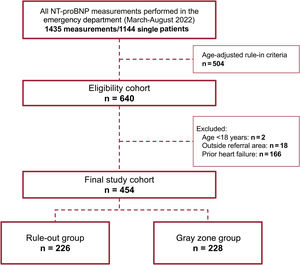
MethodsThis retrospective, observational study included consecutive patients presenting to a tertiary care ED between March and August 2022 who underwent NT-proBNP testing. Patients with prior HF or NT-proBNP values above age-adjusted rule-in thresholds were excluded. First HF hospitalization and all-cause mortality were analyzed as 2 separate, independent outcomes.
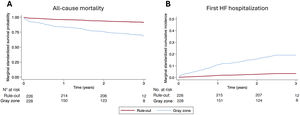
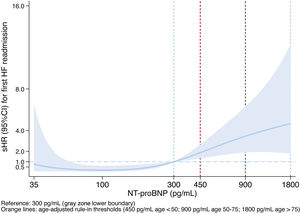
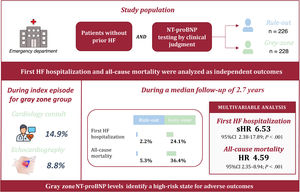
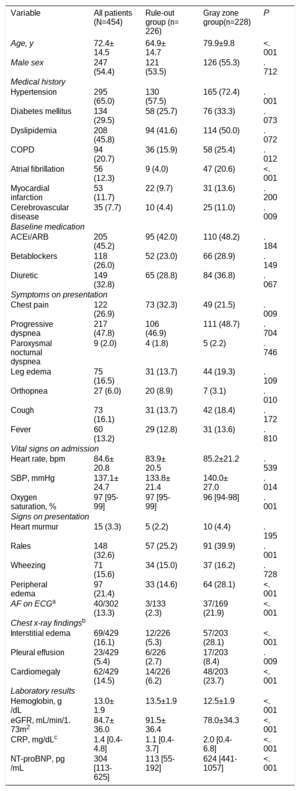
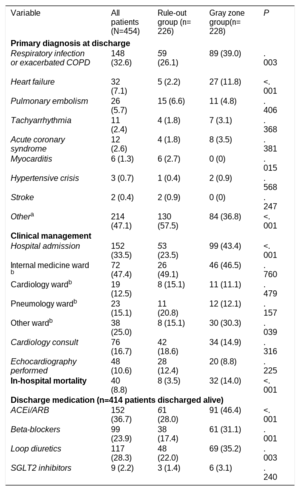
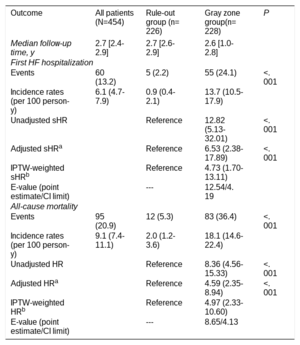
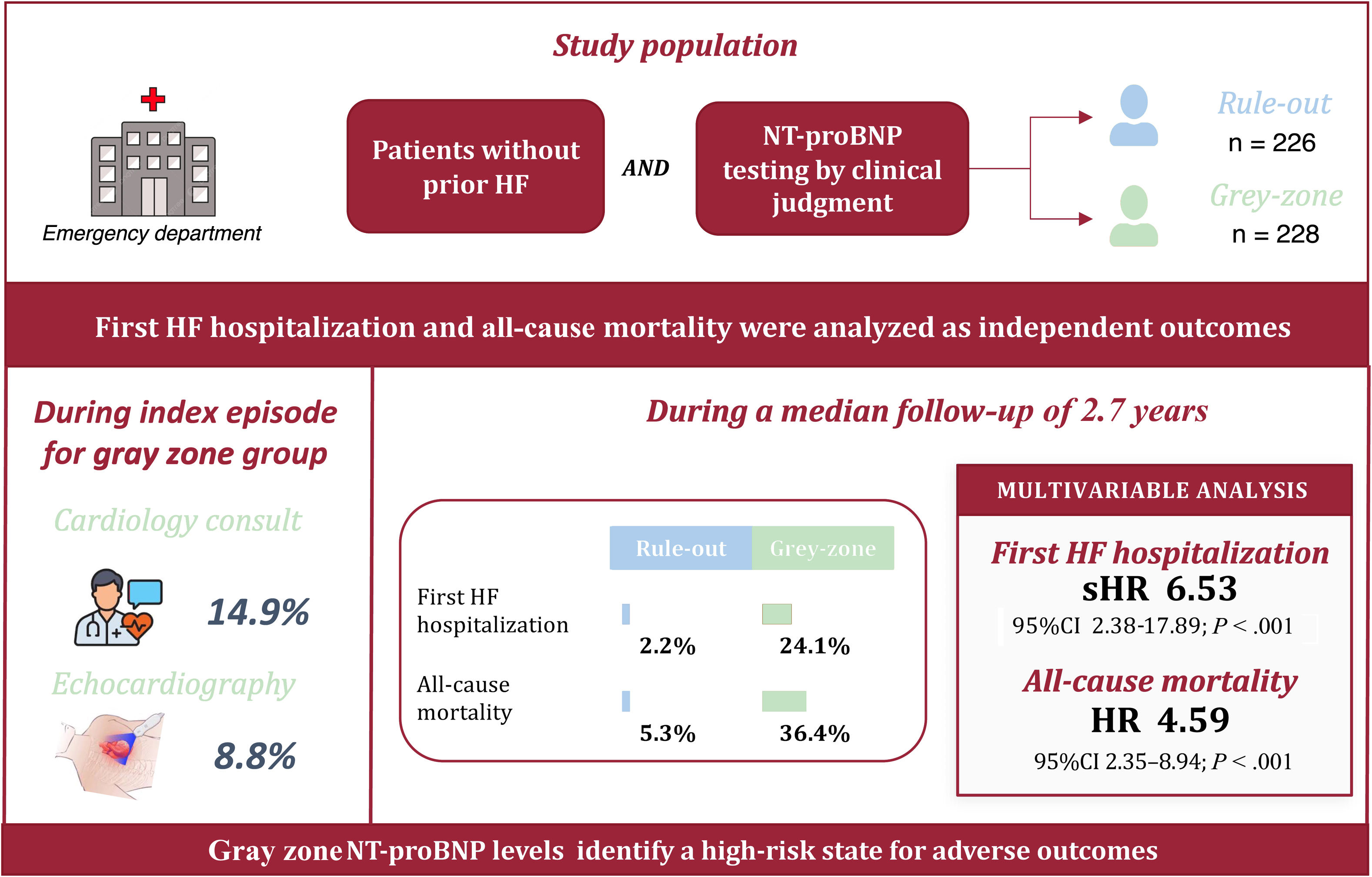
ResultsA total of 454 patients were included, of whom 228 (50.2%) had gray zone NT-proBNP values and 226 (49.8%) had rule-out values. During a median follow-up of 2.7 years, patients with gray zone values had significantly higher rates of first HF hospitalization (24.1% vs 2.2%) and mortality (36.4% vs 5.3%). After multivariable adjustment, gray zone NT-proBNP values were associated with first HF hospitalization (subdistribution hazard ratio [HR], 6.53; 95%CI, 2.38-17.89; P <.001) and all-cause mortality (HR, 4.59; 95%CI, 2.35-8.94; P <.001).
ConclusionsIn ED patients without prior HF, gray zone NT-proBNP values were associated with higher long-term risks of HF hospitalization and all-cause mortality compared with rule-out values. Prospective studies are needed to determine whether structured evaluation of this population improves clinical outcomes.
Keywords
Abbreviations
Identify yourself
Not yet a subscriber to the journal?
Purchase access to the article
By purchasing the article, the PDF of the same can be downloaded
Price: 19,34 €
Phone for incidents
Monday to Friday from 9am to 6pm (GMT+1) except for the months of July and August, which will be from 9am to 3pm