

This article presents data on implantable cardioverter-defibrillator (ICD) implantation in Spain in 2025.
MethodsThe registry is based on data submitted by participating centers after device implantation to the Spanish Society of Cardiology Heart Rhythm Association registry through CardioDispositivos, the online platform of the national registry. Additional data sources included: a) data provided by device manufacturers and distributors; b) local databases submitted by implanting centers; and c) the ICD Technical Report. Implantation rates were calculated using population data from the Spanish National Institute of Statistics.
ResultsIn 2025, 200 hospitals participated in the registry. A total of 8637 devices were reported, compared with 9076 reported by Eucomed (European Confederation of Medical Suppliers Associations). The overall implantation rate was 182 implants per million inhabitants (the second highest in the history of the registry), with substantial variation among the autonomous communities. Only 18% of ICD implantations were performed in women.
ConclusionsThe registry data for 2025 reflect virtually all ICD implantations performed in Spain. The number of implantations remained close to the highest levels recorded to date, although marked differences persisted among the autonomous communities.
Keywords
Abbreviations
Implantable cardioverter-defibrillators (ICDs) are a cornerstone of the treatment and prevention of various medical conditions. Their clinical and health care context is analyzed in the Spanish implantable cardioverter-defibrillator registry of the Heart Rhythm Association of the Spanish Society of Cardiology (SEC).. The current article presents registry data for 2025.
METHODSThe registry is based on information provided by participating centers and patients after device implantation, covering both first implants and replacements. It is continuously compiled, updated, and maintained throughout the year with the participation of a team comprising full members of the Heart Rhythm Association, the technical team, and the coordinator of the Heart Rhythm Association registries of the SEC. Device manufacturers and distributors also contribute data. All team members have contributed to data cleaning and analysis and are responsible for this publication.
In addition, in accordance with Spanish ministerial order SCO/3603/20031 of December 18, and SSI/2443/20142 of December 17, 2 partially automated files were established, named “National pacemaker registry” and “Spanish implantable cardioverter-defibrillator registry”. CardioDispositivos is the online platform of the Spanish National Pacemaker Registry and Spanish National Implantable Cardioverter-Defibrillator Registry (owned by the Spanish Agency for Medicines and Health Products, Ministry of Health, Spanish Government), and has been active and managed by the SEC since 2016.3 Article 36 of Royal Decree 192/2023 of March 21 mandates that health care centers and professionals report specific data on pacemaker and defibrillator implantation to the abovementioned registries.4 In 2025, and until the date of drafting of the present registry report, 3754 defibrillators were reported via this route, representing 43% of the total. Other information sources include: a) data transfer from the manufacturing and marketing industry; b) Spanish implantable defibrillator patient identification card records (7025 defibrillators); and c) local databases submitted by the implanting centers (1969 defibrillators). In January 2024, the online platform Informe Técnico de DAI (ICD Technical Report) was launched, based on the registry platform of the SEC.5 The objective of this new platform is to facilitate the management of incidents in ICD recipients related to: a) the ICD patient identification card; b) events and safety alerts related to devices; and c) management of the Spanish implantable cardioverter-defibrillator registry. The ICD Technical Report is completed by the technical staff who assist the implanting centers and contains no personal information on patients or professionals. In 2025, technical data corresponding to 2031 defibrillators were reported via this route. The total number of units recorded by the registry was determined after cross-referencing the above information sources and removing duplicates.
Census data for the calculations of rates per million population, both nationally and by autonomous community and province, were obtained from the Spanish National Institute of Statistics.6 As in previous years, the data from the present registry were compared with those provided by the European Confederation of Medical Suppliers Associations (Eucomed).7 The percentages of each of the variables analyzed were calculated using the total number of implants with available information on that variable. If more than one arrhythmia was recorded, only the most serious was included.
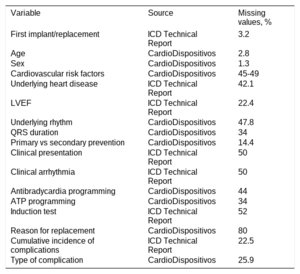
Variable data were extracted from the ICD Technical Reports (n=2031; 23% of all implants) or CardioDispositivos (n=3754; 43% of all implants). The source and percentage of missing values for each variable are detailed in table 1.
Source and completeness of the data presented in the results
| Variable | Source | Missing values, % |
|---|---|---|
| First implant/replacement | ICD Technical Report | 3.2 |
| Age | CardioDispositivos | 2.8 |
| Sex | CardioDispositivos | 1.3 |
| Cardiovascular risk factors | CardioDispositivos | 45-49 |
| Underlying heart disease | ICD Technical Report | 42.1 |
| LVEF | ICD Technical Report | 22.4 |
| Underlying rhythm | CardioDispositivos | 47.8 |
| QRS duration | CardioDispositivos | 34 |
| Primary vs secondary prevention | CardioDispositivos | 14.4 |
| Clinical presentation | ICD Technical Report | 50 |
| Clinical arrhythmia | ICD Technical Report | 50 |
| Antibradycardia programming | CardioDispositivos | 44 |
| ATP programming | CardioDispositivos | 34 |
| Induction test | ICD Technical Report | 52 |
| Reason for replacement | CardioDispositivos | 80 |
| Cumulative incidence of complications | ICD Technical Report | 22.5 |
| Type of complication | CardioDispositivos | 25.9 |
ATP, antitachycardia pacing; ICD, implantable cardioverter-defibrillator; LVEF, left ventricular ejection fraction.
Results are expressed as the mean ± standard deviation or median [interquartile range], depending on the distribution of the variable. Continuous quantitative variables were compared using the t test, whereas qualitative variables were analyzed using the chi-square test.
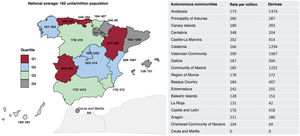
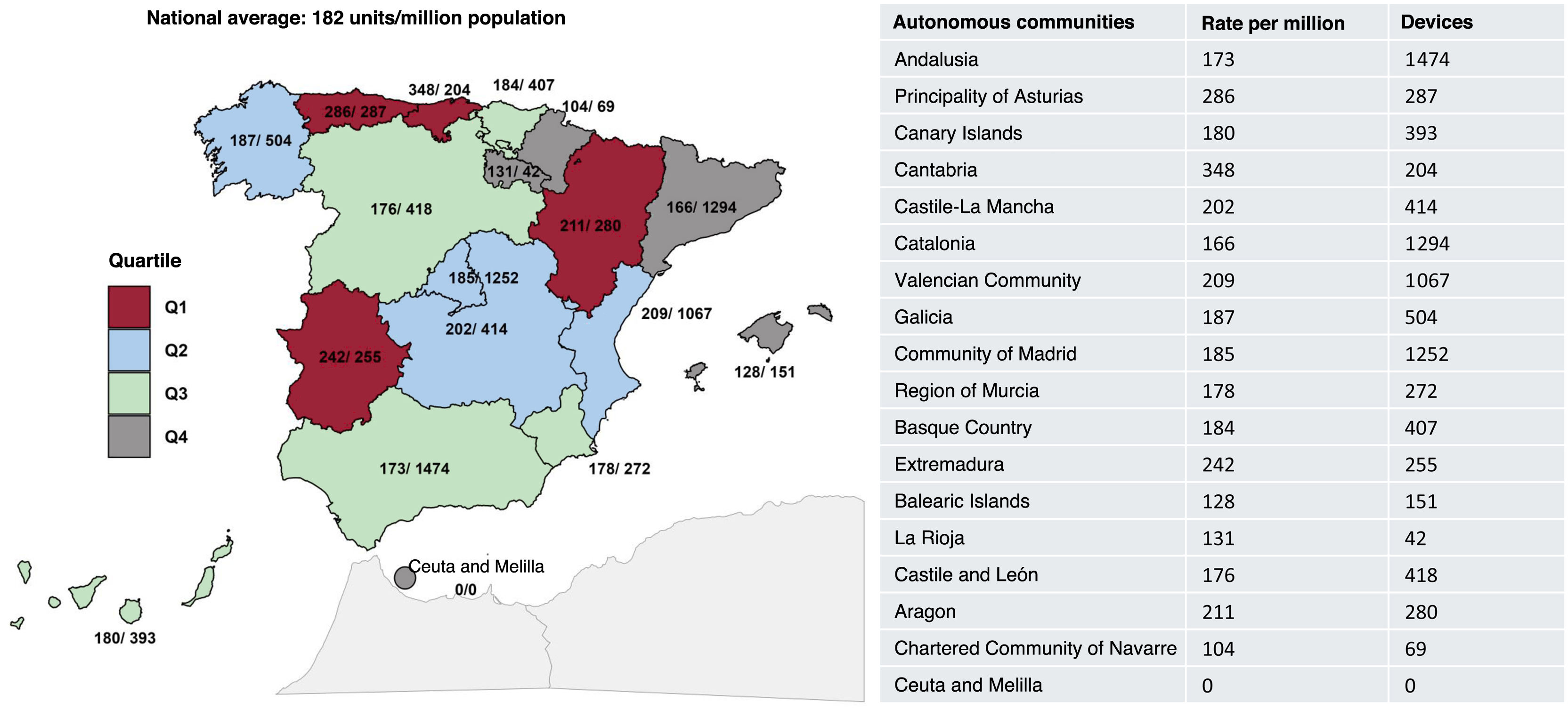
RESULTSIn 2025, 8637 ICDs were directly reported to the registry by implanting centers, a rate of 182 implants per million population. The number of units repoted by Eucomed as sold was 9076. figure 1 shows the rate per million population and the total number of implants by autonomous community according to the data submitted to the registry. In total, 200 hospitals participated in the registry, the second-highest participation to date, behind the 202 hospitals recorded in 2024.8

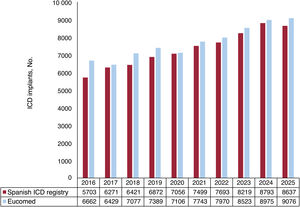
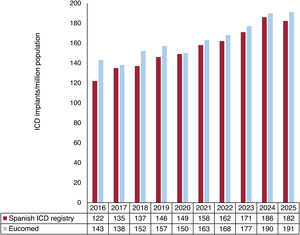
Figure 2 shows the total number of implants reported to the registry by implanting centers and those estimated by Eucomed in the last 10 years. According to the registry, the number of implants in 2025 was the second highest, after 2024. Based on the Eucomed data, the number of devices reached its highest level in 2025 since the start of the registry, with a 1.1% increase vs 2024.8 The trend in the implantation rate in the last 10 years are illustrated in figure 3, based on data reported to the registry and from Eucomed. The total implantation rate in 2025, 182 per million population, is slightly lower than that of 2024 (186 per million population), which was the historic peak. Based on the Eucomed data, the implantation rate in 2025 was 191 implants per million population. This value, which was higher than that reported to the registry, represents a historic high for the registry and reinforces the upward trend of recent years.


First implants accounted for 70.3% of devices implanted, replacements for 22.5%, device upgrades for 5.6%, and procedures due to device dysfunction for 1.9%. The rate of first implants was 128 per million population in 2025, compared with 133.9 per million in 20248 and 121.5 per million in 2023.9
AgeIn 2025, the mean age of patients included in the registry was 65 ± 13 years (range, 3-93 years) and was similar in men and women. Patient age was lower for first implants than for replacements: 61 ± 13 years vs 68 ± 13 years (P < .001). In total, 8% of implants were performed in patients ≥ 80 years. The percentage of implants performed in individuals ≥ 80 years was significantly higher for secondary prevention than primary prevention (9.4% vs 7.2%, P=.03) and for replacements than first implants (18% vs 3.5%, P < .001).
SexJust 18% of implants were performed in women. By autonomous community, Galicia (23.8%) and Andalusia (20.5%) had the highest proportions of implants in women in 2025. Navarre (11.5%), Castile-La Mancha (14.9%), and Castile and León (15.6%) were the communities with the lowest percentage of implants in women. Primary prevention as an indication was more frequent in women than in men: 78% vs 70% (P=.002).
Comorbidity and family historyHypertension was the most prevalent risk factor (48%), followed by hypercholesterolemia (44%), smoking (30%), and diabetes (29%). A history of atrial fibrillation was present in 29% of patients, and a history of stroke in 7.3%. Finally, 8% of patients had a family history of sudden cardiac death. All of these conditions were significantly more frequent in men, with the exception of a family history of sudden cardiac death, which was more common in women: 12% vs 7% (P < .05).
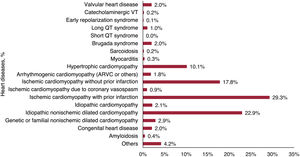
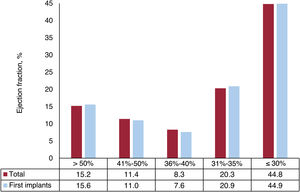
Underlying heart diseaseThe underlying heart disease in the registry patients is shown in figure 4. For first implants, ischemic heart disease was the most frequent underlying heart disease (48%), followed by dilated cardiomyopathy (25.8%). Most patients (65.8%) had a left ventricular ejection fraction (LVEF) ≤ 35% and only 15.6% had an LVEF > 50% (figure 5). The mean native QRS duration was 132 ± 35ms and was significantly shorter in first implants vs replacements: 129 ± 36ms vs 140 ± 29ms (P < .001). Patients with a QRS duration > 120ms received a resynchronization ICD in 64% of cases. This percentage was lower in first mplants vs replacements: 61% vs 71% (P < .05).


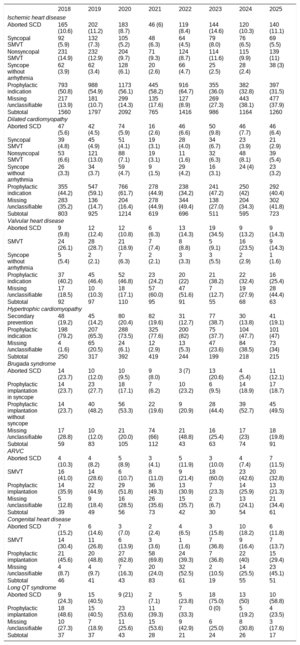
The trends in indications by underlying heart disease are presented in table 2. Regarding the 2 most frequent diseases, primary prevention accounted for 50.5% of implants in ischemic heart disease and 40.3% in dilated cardiomyopathy.
Number of first implants according to the type of heart disease, clinical arrhythmia, and clinical presentation (2018-2025)
| 2018 | 2019 | 2020 | 2021 | 2022 | 2023 | 2024 | 2025 | |
|---|---|---|---|---|---|---|---|---|
| Ischemic heart disease | ||||||||
| Aborted SCD | 165 (10.6) | 202 (11.2) | 183 (8.7) | 46 (6) | 119 (8.4) | 144 (14.6) | 120 (10.3) | 140 (11.1) |
| Syncopal SMVT | 92 (5.9) | 132 (7.3) | 105 (5.2) | 48 (6.3) | 64 (4.5) | 79 (8.0) | 76 (6.5) | 69 (5.5) |
| Nonsyncopal SMVT | 231 (14.9) | 232 (12.9) | 204 (9.7) | 71 (9.3) | 124 (8.7) | 114 (11.6) | 115 (9.9) | 139 (11) |
| Syncope without arrhythmia | 62 (3.9) | 62 (3.4) | 128 (6.1) | 20 (2.6) | 66 (4.7) | 25 (2.5) | 28 (2.4) | 38 (3) |
| Prophylactic indication | 793 (50.8) | 988 (54.9) | 1173 (56.1) | 445 (58.2) | 916 (64.7) | 355 (36.0) | 382 (32.8) | 397 (31.5) |
| Missing/unclassifiable | 217 (13.9) | 181 (10.7) | 299 (14.3) | 135 (17.6) | 127 (8.9) | 269 (27.3) | 443 (38.1) | 477 (37.9) |
| Subtotal | 1560 | 1797 | 2092 | 765 | 1416 | 986 | 1164 | 1260 |
| Dilated cardiomyopathy | ||||||||
| Aborted SCD | 47 (5.6) | 42 (4.5) | 74 (5.9) | 16 (2.6) | 46 (6.6) | 50 (9.8) | 46 (7.7) | 46 (6.4) |
| Syncopal SMVT | 39 (4.8) | 45 (4.9) | 51 (4.1) | 19 (3.1) | 28 (4.0) | 34 (6.7) | 23 (3.9) | 21 (2.9) |
| Nonsyncopal SMVT | 53 (6.6) | 121 (13.0) | 88 (7.1) | 19 (3.1) | 11 (1.6) | 32 (6.3) | 48 (8.1) | 39 (5.4) |
| Syncope without arrhythmia | 26 (3.3) | 34 (3.7) | 59 (4.7) | 9 (1.5) | 29 (4.2) | 16 (3.1) | 24 (4) | 23 (3.2) |
| Prophylactic indication | 355 (44.2) | 547 (59.1) | 766 (61.7) | 278 (44.9) | 238 (34.2) | 241 (47.2) | 250 (42) | 292 (40.4) |
| Missing/unclassifiable | 283 (35.2) | 136 (14.7) | 204 (16.4) | 278 (44.9) | 344 (49.4) | 138 (27.0) | 204 (34.3) | 302 (41.8) |
| Subtotal | 803 | 925 | 1214 | 619 | 696 | 511 | 595 | 723 |
| Valvular heart disease | ||||||||
| Aborted SCD | 9 (9.8) | 12 (12.4) | 12 (10.8) | 6 (6.3) | 13 (14.3) | 19 (34.5) | 9 (13.2) | 9 (14.3) |
| SMVT | 24 (26.1) | 28 (28.7) | 21 (18.9) | 7 (7.4) | 8 (8.8) | 5 (9.1) | 16 (23.5) | 9 (14.3) |
| Syncope without arrhythmia | 5 (5.4) | 2 (2.1) | 7 (6.3) | 2 (2.1) | 3 (3.3) | 3 (5.5) | 2 (2.9) | 1 (1.6) |
| Prophylactic indication | 37 (40.2) | 45 (46.4) | 52 (46.8) | 23 (24.2) | 20 (22) | 21 (38.2) | 22 (32.4) | 16 (25.4) |
| Missing/unclassifiable | 17 (18.5) | 10 (10.3) | 18 (17.1) | 57 (60.0) | 47 (51.6) | 7 (12.7) | 19 (27.9) | 28 (44.4) |
| Subtotal | 92 | 97 | 110 | 95 | 91 | 55 | 68 | 63 |
| Hypertrophic cardiomyopathy | ||||||||
| Secondary prevention | 48 (19.2) | 45 (14.2) | 80 (20.4) | 82 (19.6) | 31 (12.7) | 77 (38.7) | 30 (13.8) | 41 (19.1) |
| Prophylactic indication | 198 (79.2) | 207 (65.3) | 288 (73.5) | 325 (77.6) | 200 (82) | 75 (37.7) | 104 (47.7) | 101 (47) |
| Missing/unclassifiable | 4 (1.6) | 65 (20.5) | 24 (6.1) | 12 (2.9) | 13 (5.3) | 47 (23.6) | 84 (38.5) | 73 (34) |
| Subtotal | 250 | 317 | 392 | 419 | 244 | 199 | 218 | 215 |
| Brugada syndrome | ||||||||
| Aborted SCD | 14 (23.7) | 10 (12.0) | 10 (9.5) | 9 (8.0) | 3 (7) | 13 (20.6) | 4 (5.4) | 11 (12.1) |
| Prophylactic implantation in syncope | 14 (23.7) | 23 (27.7) | 18 (17.1) | 7 (6.2) | 10 (23.2) | 6 (9.5) | 14 (18.9) | 17 (18.7) |
| Prophylactic implantation without syncope | 14 (23.7) | 40 (48.2) | 56 (53.3) | 22 (19.6) | 9 (20.9) | 28 (44.4) | 39 (52.7) | 45 (49.5) |
| Missing/unclassifiable | 17 (28.8) | 10 (12.0) | 21 (20.0) | 74 (66) | 21 (48.8) | 16 (25.4) | 17 (23) | 18 (19.8) |
| Subtotal | 59 | 83 | 105 | 112 | 43 | 63 | 74 | 91 |
| ARVC | ||||||||
| Aborted SCD | 4 (10.3) | 4 (8.2) | 5 (8.9) | 3 (4.1) | 5 (11.9) | 3 (10.0) | 4 (7.4) | 7 (11.5) |
| SMVT | 16 (41.0) | 14 (28.6) | 6 (10.7) | 8 (11.0) | 9 (21.4) | 18 (60.0) | 23 (42.6) | 20 (32.8) |
| Prophylactic implantation | 14 (35.9) | 22 (44.9) | 29 (51.8) | 36 (49.3) | 13 (30.9) | 7 (23.3) | 14 (25.9) | 13 (21.3) |
| Missing/unclassifiable | 5 (12.8) | 9 (18.4) | 16 (28.5) | 26 (35.6) | 15 (35.7) | 2 (6.7) | 13 (24.1) | 21 (34.4) |
| Subtotal | 39 | 49 | 56 | 73 | 42 | 30 | 54 | 61 |
| Congenital heart disease | ||||||||
| Aborted SCD | 7 (15.2) | 6 (14.6) | 3 (7.0) | 2 (2.4) | 4 (6.5) | 3 (15.8) | 10 (18.2) | 6 (11.8) |
| SMVT | 14 (30.4) | 11 (26.8) | 6 (13.9) | 3 (3.6) | 1 (1.6) | 7 (36.8) | 9 (16.4) | 7 (13.7) |
| Prophylactic implantation | 21 (45.6) | 20 (48.8) | 27 (62.8) | 58 (69.8) | 24 (39.3) | 7 (36.8) | 22 (40) | 15 (29.4) |
| Missing/unclassifiable | 4 (8.7) | 4 (9.7) | 7 (16.3) | 20 (24.0) | 32 (52.5) | 2 (10.5) | 14 (25.5) | 23 (45.1) |
| Subtotal | 46 | 41 | 43 | 83 | 61 | 19 | 55 | 51 |
| Long QT syndrome | ||||||||
| Aborted SCD | 9 (24.3) | 15 (40.5) | 9 (21) | 2 (7.1) | 5 (23.8) | 18 (75.0) | 13 (50) | 10 (58.8) |
| Prophylactic implantation | 18 (48.6) | 15 (40.5) | 23 (53.6) | 11 (39.3) | 7 (33.3) | 0 (0) | 5 (19.2) | 4 (23.5) |
| Missing/unclassifiable | 10 (27.3) | 7 (18.9) | 11 (25.6) | 15 (53.6) | 9 (42.9) | 6 (25.0) | 8 (30.8) | 3 (17.6) |
| Subtotal | 37 | 37 | 43 | 28 | 21 | 24 | 26 | 17 |
ARVC, arrhythmogenic right ventricular cardiomyopathy; SCD, sudden cardiac death; SMVT, sustained monomorphic ventricular tachycardia.
Data are expressed as No. (%).
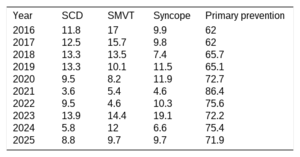
Primary prevention of sudden cardiac death was the leading indication for first ICD implants in 2025 (71.9%), followed by syncope and sustained monomorphic ventricular tachycardia (both 9.7%) and aborted sudden cardiac death (8.8%). As illustrated in table 3, which details the indications over the last 10 years, primary prevention peaked in 2021 and has since gradually declined.
Trends in the main indications for implantable cardioverter-defibrillators (2016-2025)
| Year | SCD | SMVT | Syncope | Primary prevention |
|---|---|---|---|---|
| 2016 | 11.8 | 17 | 9.9 | 62 |
| 2017 | 12.5 | 15.7 | 9.8 | 62 |
| 2018 | 13.3 | 13.5 | 7.4 | 65.7 |
| 2019 | 13.3 | 10.1 | 11.5 | 65.1 |
| 2020 | 9.5 | 8.2 | 11.9 | 72.7 |
| 2021 | 3.6 | 5.4 | 4.6 | 86.4 |
| 2022 | 9.5 | 4.6 | 10.3 | 75.6 |
| 2023 | 13.9 | 14.4 | 19.1 | 72.2 |
| 2024 | 5.8 | 12 | 6.6 | 75.4 |
| 2025 | 8.8 | 9.7 | 9.7 | 71.9 |
SCD, sudden cardiac death; SMVT, sustained monomorphic ventricular tachycardia.
Data are expressed as a percentage of all first implants.
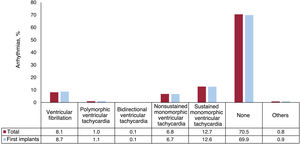
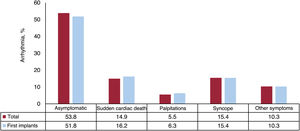
Overall, 70.5% of patients had no documented clinical arrhythmia. In patients with clinical arrhythmia (29.5%), sustained monomorphic ventricular tachycardia was the most frequent arrhythmia (12.7%), followed by ventricular fibrillation (8.1%) and nonsustained ventricular tachycardia (6.8%) (figure 6). As shown in figure 7, most patients (53.8%) were asymptomatic.
Device type

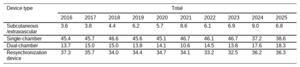
The most frequently implanted transvenous ICDs were single-chamber (38.6%), resynchronization (36.3%), and dual-chamber devices (18.3%). Subcutaneous and extravascular ICDs represented 6.8% of the total (table 4).
Changes in the distribution of implanted devices types (2016-2025)
| Device type | Total | |||||||||
|---|---|---|---|---|---|---|---|---|---|---|
| 2016 | 2017 | 2018 | 2019 | 2020 | 2021 | 2022 | 2023 | 2024 | 2025 | |
| Subcutaneous/extravascular | 3.6 | 3.8 | 4.4 | 6.2 | 5.7 | 8.6 | 6.1 | 6.9 | 9.0 | 6.8 |
| Single-chamber | 45.4 | 45.7 | 46.6 | 45.6 | 45.1 | 46.7 | 46.1 | 46.7 | 37.2 | 38.6 |
| Dual-chamber | 13.7 | 15.0 | 15.0 | 13.8 | 14.1 | 10.6 | 14.5 | 13.8 | 17.6 | 18.3 |
| Resynchronization device | 37.3 | 35.7 | 34.0 | 34.4 | 34.7 | 34.1 | 33.2 | 32.5 | 36.2 | 36.3 |
Data are expressed as a percentage of the total.
The reasons for ICD replacement were battery depletion (74.7%), device dysfunction (4.7%), infection (2.4%), and other causes (18.3%). In addition, there were 6 instances of generator dysfunction and 33 of lead dysfunction. An additional lead was implanted in 16 procedures.
Device programmingVVI/R mode was the most frequent antibradycardia programming mode (48%), followed by DDD (20%), resynchronization therapy (14%), VVI (6%), DDD/R (4%), and other (8%). Antitachycardia pacing (ATP) was programmed in 92% of transvenous devices. Ventricular fibrillation induction testing was performed following ICD implantation in 7.2% of cases.
ComplicationsThe cumulative incidence of patients with complications was 0.92%. One patient died of cardiac tamponade. There were 24 nonfatal complications: 9 subacute lead dislodgements, 3 coronary sinus dissections, 3 hematomas, 3 pneumothoraces, 2 cardiac tamponades, 1 ventricular tachycardia, 1 arrhythmic storm, 1 allergic reaction to an antibiotic, and 1 case of cardiogenic shock.
DISCUSSIONThis Spanish implantable cardioverter-defibrillator registry report is the 22nd since the inception of the registry in 2005.10 The implantation rate of 182 implants per million population is the second highest recorded in the registry.
Comparison with registries of previous yearsIn 2025, 200 hospitals submitted data to the registry. This is one of the highest figures in registry history and reflects virtually all implantation activity in Spain. The implantation rate per million population was 182 in 2025, the second highest since registry inception. However, the rate of first implants was lower than that of the previous year for the first time since 2013.
The most frequent indication was once again primary prevention (representing 71.9%), although the data show that the peak was reached in 2021, at 86.4%. This finding appears to be mirrored in other countries11 and is observed in the 2 most common conditions—ischemic heart disease and dilated cardiomyopathy—which accounted for 73% of implants in Spain in 2025. The decline in primary prevention is likely the result of the beneficial effects of drugs used to treat heart failure with reduced ejection fraction12 and of improved prognostic stratification of dilated cardiomyopathy, through the use of imaging techniques (particularly cardiac magnetic resonance13) and genetic testing.
It remains surprising that less than 20% of ICD implants are performed in women, with some autonomous communities reporting rates below 15%. The lower rate of implants in women is not unique to Spain and has been systematically reported in the literature since the beginning of this century.14,15 This disparity appears to be due to clinical, social, and economic factors.16 It should spark the interest of professionals in the field, driving efforts to better understand its causes and, where applicable, propose solutions.
Finally, the decline in subcutaneous/extravascular ICDs is striking: they comprised 6.8% of all implants in 2025 vs 9% in 2024. One of the barriers, potentially the most important, that may explain the limited use of subcutaneous ICDs is their inability to deliver ATP. Indeed, ATP was programmed in 92% of transvenous devices implanted in 2025. Since subcutaneous ICDs with ATP capability will be available in the near future, the trend in the use of this device could change.
Differences among autonomous communitiesAs shown in figure 1, the disparity in implantation rates among autonomous communities persisted in 2025, reflecting the historic trend. The degree of dispersion is such that autonomous communities with higher rates can have triple the implantation rate of the autonomous communities with the fewest implanted devices. It is difficult to determine the pattern governing these data, but it very likely does not reflect differences in economic and social development or the prevalence of cardiovascular disease. In the relatively homogeneous Spanish public health system, it is possible that local organizational issues explain these differences.16
Comparison with other countriesAccording to Eucomed data, the ICD implantation rate per million population was 191 in Spain in 2025, well below the European average of 317 in 2024 (the latest year for which data are available).7 Thus, the historic trend persists, with Spain among the European countries with the lowest implantation rates, particularly for resynchronization ICDs. Indeed, the implantation rate for resynchronization ICDs in Spain in 2025 was 69, compared with the Eucomed average of 125 in 2024.7
The disparity in implantation figures among countries is likely attributable to various factors,16 including economic development (countries with greater resources generally exhibit higher rates), cardiovascular disease burden, and type of health care funding.17 According to the 2023 European survey,16 electrophysiology professionals consider the primary barriers to the implementation of clinical practice guidelines to be, in order of importance, inadequate funding, difficulties in accessing new technological advances (which are a consequence of the previous factor), and the scarcity of professionals and clinical referral pathways for potential implant candidates.
LimitationsThe registry collects data on most ICD implants in Spain. As in previous years, completion of the different fields in the implantation form was inconsistent and lower than desired. Although a web platform for recording device implantation has been available since 2019 (CardioDispositivos),3 completion remains inconsistent. This, together with the absence of follow-up data, could lead to the frequency of complications being underestimated.
CONCLUSIONSThe 2025 Spanish implantable cardioverter-defibrillator registry received information on almost all implants performed in Spain. The total number of implants per million population has plateaued at historic highs, but major differences in ICD implantation rates persist among autonomous communities. The proportion of implants in women is low, with highly variable rates among communities. The implantation rate in Spain remains well below the European average.
FUNDINGThe registry is partly funded through an agreement between the Spanish Agency of Medicines and Medical Devices and the Casa del Corazón Foundation. This agreement channels a registered grant established in the 2025 Spanish budget for the management and maintenance of the national pacemaker and implantable cardioverter-defibrillator registries.
ETHICAL CONSIDERATIONSThis article was drafted in accordance with the recommendations of the Declaration of Helsinki of the World Medical Association and the Protection of Personal Data and Guarantee of Digital Rights.
STATEMENT ON THE USE OF ARTIFICIAL INTELLIGENCENo artificial intelligence tools were used in the preparation of this article.
AUTHORS’ CONTRIBUTIONSJ. Jiménez-Candil: conception, data analysis, and manuscript drafting. V. Bertomeu González: conception and critical revision. E. Arana Rueda: conception and critical revision. J. Osca Asensi: conception and critical revision. D. Calvo: conception, data analysis, and critical revision.
CONFLICTS OF INTERESTThe authors declare that they have no conflicts of interest related to the present article.
We would like to thank the technical team of the Heart Rhythm Association registries of the SEC (Gonzalo Justes, Miguel Ángel Salas, Israel García, Raquel Chica, and Jesús V. de la Torre). We also thank the manufacturing and marketing industry and all technicians and other contributors to the Spanish implantable cardioverter-defibrillator registry.
| Autonomous community | Center |
|---|---|
| Andalusia | Hospital HLA Mediterráneo |
| Hospital Universitario Torrecárdenas | |
| Hospital Vithas Virgen del Mar | |
| Hospital HLA Jerez Puerta del Sur | |
| Hospital Puerta del Mar | |
| Hospital Quirónsalud Campo de Gibraltar | |
| Hospital San Carlos de San Fernando | |
| Hospital Universitario de Jerez de la Frontera | |
| Hospital Universitario Puerto Real | |
| Hospital San Rafael Cádiz | |
| Hospital de la Cruz Roja de Córdoba | |
| Hospital Universitario Reina Sofía | |
| Hospital Quirónsalud Córdoba | |
| Hospital HLA Inmaculada | |
| Hospital Universitario San Cecilio | |
| Hospital Universitario Virgen de las Nieves | |
| Hospital Vithas Granada | |
| Hospital Costa de la Luz | |
| Hospital Universitario Juan Ramón Jiménez | |
| Complejo Hospitalario de Jaén | |
| Clínica El Ángel | |
| Clínica Parque San Antonio | |
| Clínica Santa Elena | |
| Hospital Universitario Virgen de la Victoria | |
| Hospital Vithas Málaga | |
| Hospital Quirónsalud de Málaga | |
| Hospital Quirónsalud de Marbella | |
| Hospital Regional Universitario de Málaga | |
| Clínica HLA Santa Isabel | |
| Hospital Fátima | |
| Hospital Infanta Luisa | |
| Hospital Quirónsalud Sagrado Corazón | |
| Hospital Universitario Virgen de Valme | |
| Hospital Universitario Virgen del Rocío | |
| Hospital Universitario Virgen Macarena | |
| Clínica Nuestra Señora de la Salud | |
| Hospital Nisa Sevilla-Aljarafe | |
| Hospital Quirónsalud Huelva | |
| Hospital San Juan de Dios | |
| Hospital Universitario Médico-Quirúrgico | |
| Hospiten Estepona | |
| Hospiten Roca | |
| Aragon | Hospital Clínico Universitario Lozano Blesa |
| Hospital Universitario Miguel Servet | |
| Hospital Quirónsalud Zaragoza | |
| Hospital Viamed Montecanal | |
| Clínica Montpellier | |
| Hospital Royo Villanova | |
| Cantabria | Hospital Universitario Marqués de Valdecilla |
| Hospital Mompía | |
| Castile and León | Hospital Universitario de Burgos |
| Hospital de León | |
| Hospital Universitario de Salamanca. Complejo Asistencial Universitario de Salamanca | |
| Hospital Universitario Río Hortega | |
| Hospital Clínico Universitario de Valladolid | |
| Hospital Nuestra Señora de Sonsoles | |
| Hospital Recoletas Campo Grande | |
| Castile-La Mancha | Complejo Hospitalario Universitario de Albacete |
| Hospital Universitario de Toledo | |
| Hospital General Universitario de Ciudad Real | |
| Hospital Virgen de la Luz | |
| Hospital Quirónsalud Albacete | |
| Hospital Quirónsalud Ciudad Real | |
| Hospital Universitario de Guadalajara | |
| Hospital General Nuestra Señora del Prado | |
| Catalonia | Hospital Sant Joan de Déu |
| Hospital del Mar | |
| Hospital Universitari Germans Trias i Pujol | |
| Hospital Universitario Vall d’Hebron | |
| Hospital Clínic | |
| Clínica Corachan | |
| Hospital Universitari de Bellvitge | |
| Hospital Universitario Arnau de Vilanova Lleida | |
| Hospital Santa Cruz y San Pablo | |
| Hospital Josep Trueta Girona | |
| Parc Taulí de Sabadell | |
| Joan XXIII de Tarragona | |
| Hospital Vithas Lleida | |
| Clínica Teknon | |
| Hm Nou Delfos | |
| Hospital Quirónsalud Barcelona | |
| Hospital Universitario General de Catalunya | |
| Hospital El Pilar | |
| Hospital Universitario Quirónsalud Dexeus | |
| Clínica Girona | |
| Vithas Hospital Montserrat | |
| Hospital Universitari de Sant Joan de Reus | |
| Clínica Sagrada Familia | |
| Community of Madrid | Clínica La Luz |
| Clínica Santa Elena | |
| Clínica Universitaria de Navarra | |
| Hospital Universitario San Rafael Madrid | |
| Hospital Central de la Defensa Gómez Ulla | |
| Hospital Clínico San Carlos | |
| Hospital General de Villalba | |
| Hospital General Universitario Gregorio Marañón | |
| Hospital HM Montepríncipe | |
| Hospital HM Puerta del Sur Madrid | |
| Hospital Quirónsalud Sur | |
| Hospital Ruber Internacional | |
| Hospital Universitario 12 de Octubre | |
| Hospital Universitario de Fuenlabrada | |
| Hospital Universitario de Getafe | |
| Hospital Universitario de Torrejón | |
| Hospital Universitario de Henares | |
| Hospital Universitario Fundación Alcorcón | |
| Hospital Universitario Fundación Jiménez Díaz | |
| Hospital Universitario Infanta Elena | |
| Hospital Universitario Infanta Leonor | |
| Hospital Universitario Infanta Sofía | |
| Hospital Universitario La Paz | |
| Hospital Universitario Puerta de Hierro Majadahonda | |
| Hospital Universitario Quirónsalud Madrid | |
| Hospital Universitario Ramón y Cajal | |
| Hospital Universitario Ruber Juan Bravo | |
| Hospital Universitario San Francisco de Asís | |
| Hospital Universitario Severo Ochoa | |
| Hospital Universitario Vithas Madrid La Milagrosa | |
| Hospital Quirónsalud Torrevieja | |
| Hospital Rey Juan Carlos | |
| Hospital Universitario La Paz (Unidad de Arritmias y Electrofisiología Robotizada) | |
| Clínica Nuestra Señora del Rosario | |
| Hospital Pardo de Aravaca | |
| Sanatorio San Francisco de Asís | |
| Valencian Community | Hospital Clínica Benidorm |
| Hospital General Universitario de Alicante | |
| Hospital General Universitario de Elche | |
| Hospital General Universitario Dr. Balmis | |
| Hospital HLA Vistahermosa | |
| Hospital Universitario de San Juan de Alicante | |
| Hospital Universitario de Vinalopó | |
| Hospital IMED Elche | |
| Hospital General Universitario de Castelló | |
| Hospital Vithas Nisa Rey Don Jaime | |
| Hospital Arnau de Vilanova de Valencia | |
| Hospital Clínico Universitario de Valencia | |
| Hospital de Manises | |
| Consorcio Hospital General Universitario de Valencia | |
| Hospital Quirónsalud Valencia | |
| Hospital Universitario de La Ribera | |
| Hospital Universitario Dr. Peset | |
| Hospital Universitario y Politécnico La Fe | |
| Hospital Vithas Valencia 9 de Octubre | |
| Hospital Católico Casa de Salud | |
| Hospital Perpetuo Socorro | |
| Clínica Vithas del Consuelo | |
| Extremadura | Hospital de Zafra |
| Hospital de Cáceres | |
| Hospital San Pedro de Alcántara de Cáceres | |
| Complejo Hospital Universitario de Badajoz | |
| Hospital de Mérida | |
| Clínica Quirúrgica Cacereña San Francisco | |
| Hospital Quirónsalud Clideba | |
| Hospital Parque San Francisco | |
| Galicia | Hospital Clínico Universitario Santiago de Compostela |
| Hospital Álvaro Cunqueiro | |
| Complejo Hospitalario Universitario de A Coruña | |
| Hospital Universitario Lucus Augusti | |
| Complejo Hospitalario Universitario de Pontevedra (Montecelo) | |
| Hospital Público de Monforte | |
| Hospital HM Modelo-Belén | |
| Hospital Quirónsalud A Coruña | |
| Hospital San Rafael | |
| Grupo Quirónsalud Pontevedra | |
| Hospital Ribera Povisa | |
| Vithas Hospital Nosa Señora de Fátima | |
| Balearic Islands | Hospital Universitari Son Espases |
| Hospital Comarcal de Inca | |
| Grupo Juaneda | |
| Clínica Rotger | |
| Hospital Quirónsalud Palmaplanas | |
| Hospital Son Llàtzer | |
| Canary Islands | Hospital Universitario Nuestra Señora de Candelaria |
| Hospital Universitario de Gran Canaria Dr. Negrín | |
| Complejo Hospitalario Universitario de Canarias | |
| Hospital Universitario Dr. José Molina Orosa | |
| Hospital General de Fuerteventura | |
| Complejo Hospitalario Universitario Insular Materno Infantil | |
| Hospital Parque | |
| La Rioja | Complejo Hospitalario San Millán-San Pedro |
| Hospital de San Pedro | |
| Chartered Community of Navarre | Clínica Universidad de Navarra |
| Hospital Universitario de Navarra | |
| Clínica Arcángel San Miguel - Pamplona | |
| Basque Country | Hospital de Basurto |
| Hospital Universitario de Álava | |
| Policlínica Guipúzcoa | |
| Hospital de Cruces | |
| Hospital Universitario Donostia | |
| Hospital Universitario de Galdakao | |
| Principality of Asturias | Hospital Universitario Central de Asturias |
| Hospital Universitario de Cabueñes | |
| Centro Médico de Asturias | |
| Region of Murcia | Hospital General Universitario Santa Lucía |
| Hospital General Universitario Morales Meseguer (Murcia) | |
| HLA La Vega Murcia | |
| Hospital General Universitario Rafael Méndez | |
| Hospital General Universitario Reina Sofía de Murcia | |
| Hospital IMED Virgen de la Fuensanta | |
| Hospital Clínico Universitario Virgen de la Arrixaca |