
ISSN: 0300-8932 Factor de impacto 2025 4,2
Vol. 78. Núm. 12.
Páginas 1064-1075 (Diciembre 2025)

Artículo original
Consecuencias clínicas de los límites superiores de referencia ajustados al sexo de la troponina cardiaca I ultrasensible en el diagnóstico del infarto agudo de miocardio

Clinical implications of sex-specific upper reference limits for high-sensitivity cardiac troponin I in myocardial infarction diagnosis

María Rubini Giménezabcd1Luca Koechlinabe1Pedro López-AyalaabCarlos SpagnuoloabJasper BoeddinghausabcdKarin WildiabThomas NestelbergerabeHanna TkachenkoabDaniel BasicaEmel KaplanabJude FormambuhabPaolo BimaabfJonas GlaeserabLuca CrisantiabgÓscar MiróbhF. Javier Martín-SánchezbiMichael ChristjDagmar I. KellerkDanielle M. GualandroabDamian KaweckiblKatharina RentschmAndreas BusernoIvo StrebelaFelix MahfoudabChristian Muellerab en representación de los investigadores de APACE Gabrielle HurepKlara RumoraqTamar Muench-GerberrNoemi GlarnersChristian PuelachertRaphael TwerenbolduDesiree WusslervJeanne du Fay de LavallazwTobias ZimmermannxJulia ReinhardtyzBeata MorawiecaaPiotr MunzkabNicolas GeigyacSamyut Shresthaad...Arnold von Eckardsteinak
https://doi.org/10.1016/j.recesp.2025.05.001

Opciones

Material adicional
Imagen extra
Rev Esp Cardiol. 2025;78:1064-75
Resumen
Introducción y objetivos

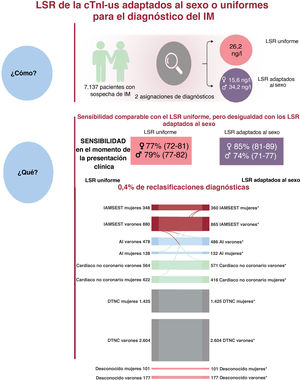
Se desconoce si el uso de límites superiores de referencia (LSR) uniformes frente a los adaptados al sexo para la troponina cardiaca I ultrasensible (cTnI-us) podría mitigar las disparidades relacionadas con el sexo en la precisión del diagnóstico del infarto agudo de miocardio (IAM).

Métodos

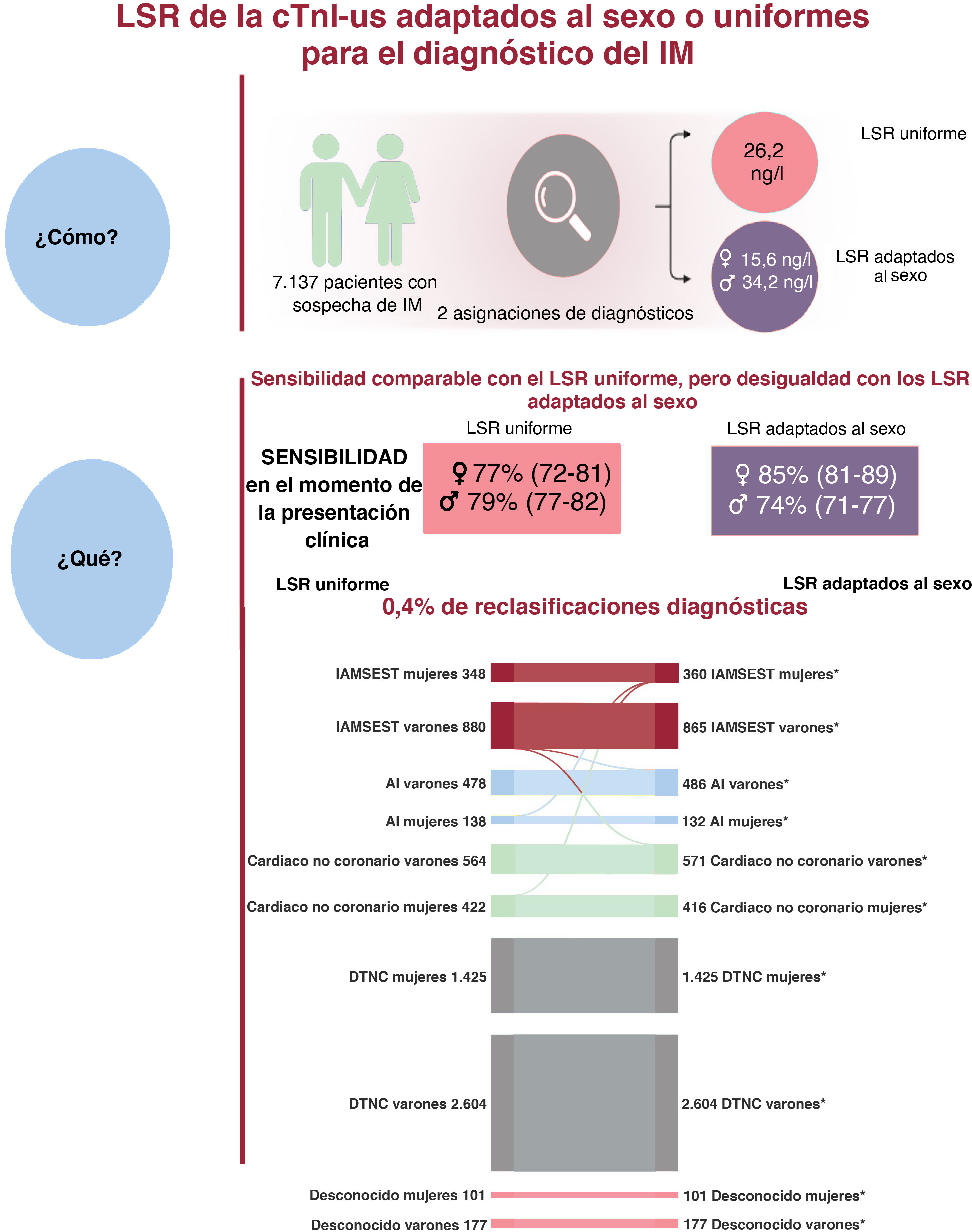
En un estudio internacional, prospectivo, multicéntrico, de pacientes con sospecha de IAM, el diagnóstico final se adjudicó 2 veces por 2 cardiólogos independientes usando toda la información disponible, incluidos los valores de cTnI-us Architect, una vez con LSR uniformes (26,2 ng/l) y otra con LSR adaptados al sexo (mujeres 15,6 ng/l; varones 34,2ng/l). Los criterios de valoración principales fueron la capacidad diagnóstica de los LSR uniformes y adaptados al sexo para IAM.

Resultados

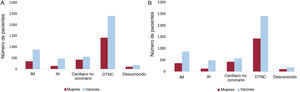
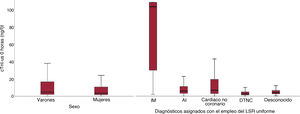
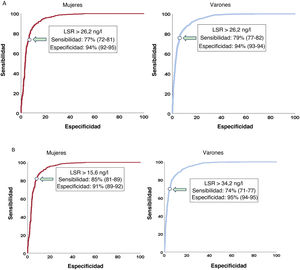
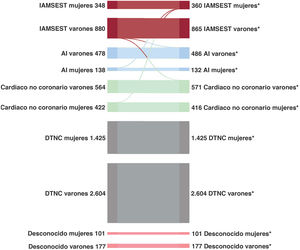
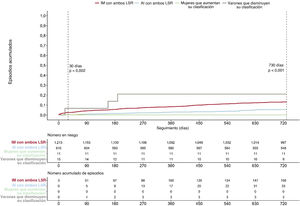
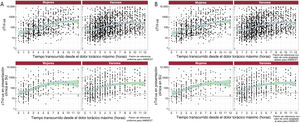
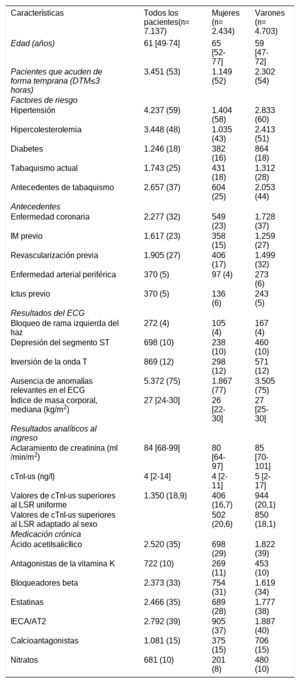
De los 7.137 pacientes, 2.434 eran mujeres (34%), con una edad media de 65 años, y 4.703 varones (66%), con una edad media de 59 años. Con los LSR uniformes, se identificó a 348 mujeres y 880 varones como IAM. La sensibilidad y especificidad de valores de cTnI-us a su llegada fueron altas y comparables en mujeres (77%; IC95%, 72-81, y 93%; IC95%, 92-94, respectivamente) y varones (79%; IC95%, 77-82, y 94%; IC95%, 93-94). Con LSR adaptados al sexo, la sensibilidad y especificidad fueron del 85 (IC95%, 81-89) y del 91% (IC95%, 89-92) en mujeres frente al 74 (IC95%, 71-77) y al 95% (IC95%, 94-95) en varones (p<0,001). Con los LSR adaptados, se reclasificó, respecto al diagnóstico final, a 27 pacientes: 12 mujeres (nuevo diagnóstico de IAM) y 15 varones (perdieron el diagnóstico de IAM), lo que representa un 0,4% (IC95%, 0,3-0,6) de todos los pacientes.

Conclusiones

El uso de un LSR uniforme para cTnI-us ofrece una elevada y prácticamente idéntica sensibilidad y especificidad en varones y mujeres. Al contrario de lo esperado, los LSR adaptados al sexo suponen desigualdades entre sexos. Estos datos sugieren continuar usando valores comunes para ambos sexos.

Palabras clave

Desigualdades de sexo
Infarto agudo de miocardio
Troponina ultrasensible

Abreviaturas

cTn-us
DTNC
ESC
LSR

Identifíquese

¿Aún no es suscriptor de la revista?
Comprar el acceso al artículo

Comprando el artículo el pdf del mismo podrá ser descargado

Precio: 19,34 €

Teléfono para incidencias

De lunes a viernes de 9h a 18h (GMT+1) excepto los meses de julio y agosto que será de 9 a 15h

Llamadas desde España 932 415 960
Llamadas desde fuera de España +34 932 415 960
Bibliografía
[1]
B. Vogel, M. Acevedo, Y. Appelman, et al.
The Lancet women and cardiovascular disease Commission: reducing the global burden by 2030.
Lancet., (2021), 397 pp. 2385-2438
[2]
A. Timmis, P. Vardas, N. Townsend, et al.
European Society of Cardiology: cardiovascular disease statistics 2021.
Eur Heart J., (2022), 43 pp. 716-799
[3]
M. Zuin, G. Rigatelli, P. Temporelli, et al.
Trends in acute myocardial infarction mortality in the European Union, 2012-2020.
Eur J Prev Cardiol., (2023), 30 pp. 1758-1771
[4]
C.W. Tsao, A.W. Aday, Z.I. Almarzooq, et al.
Heart Disease and Stroke Statistics-2023 Update: A Report From the American Heart Association.
Circulation., (2023), 147 pp. e93-e621
[5]
M. Lawless, Y. Appelman, J.F. Beltrame, et al.
Sex differences in treatment and outcomes amongst myocardial infarction patients presenting with and without obstructive coronary arteries: a prospective multicentre study.
Eur Heart J Open., (2023), 3 pp. oead033
[6]
J.G. Canto, W.J. Rogers, R.J. Goldberg, et al.
Association of age and sex with myocardial infarction symptom presentation and in-hospital mortality.
JAMA., (2012), 307 pp. 813-822
[7]
M.O. Gore, S.L. Seliger, C.R. Defilippi, et al.
Age- and sex-dependent upper reference limits for the high-sensitivity cardiac troponin T assay.
J Am Coll Cardiol., (2014), 63 pp. 1441-1448
[8]
V. Vaccarino, L. Parsons, E.D. Peterson, W.J. Rogers, C.I. Kiefe, J. Canto.
Sex differences in mortality after acute myocardial infarction: changes from 1994 to 2006.
Arch Intern Med., (2009), 169 pp. 1767-1774
[9]
L.S. Mehta, T.M. Beckie, H.A. DeVon, et al.
Acute Myocardial Infarction in Women: A Scientific Statement From the American Heart Association.
Circulation., (2016), 133 pp. 916-947
[10]
European society of Cardiology. ESC Cardiovascular Realities. EU 27 Cardiovascular Realities 2025. Disponible en: https://www.flipsnack.com/escardio/eu-27-cardiovascular-realities-2025/full-view.html. Consultado 20 Jan 2025.
[11]
A.V. Ferry, A. Anand, F.E. Strachan, et al.
Presenting Symptoms in Men and Women Diagnosed With Myocardial Infarction Using Sex-Specific Criteria.
J Am Heart Assoc., (2019), 8 pp. e012307
[12]
M. Rubini Gimenez, M. Reiter, R. Twerenbold, et al.
Sex-specific chest pain characteristics in the early diagnosis of acute myocardial infarction.
JAMA Intern Med., (2014), 174 pp. 241-249
[13]
M. Rubini Gimenez, R. Twerenbold, J. Boeddinghaus, et al.
Clinical Effect of Sex-Specific Cutoff Values of High-Sensitivity Cardiac Troponin T in Suspected Myocardial Infarction.
JAMA Cardiol., (2016), 1 pp. 912-920
[14]
M. Rubini Gimenez, P. Badertscher, R. Twerenbold, et al.
Impact of the US Food and Drug Administration-Approved Sex-Specific Cutoff Values for High-Sensitivity Cardiac Troponin T to Diagnose Myocardial Infarction.
Circulation., (2018), 137 pp. 1867-1869
[15]
K.K. Lee, A.V. Ferry, A. Anand, et al.
Sex-Specific Thresholds of High-Sensitivity Troponin in Patients With Suspected Acute Coronary Syndrome.
J Am Coll Cardiol., (2019), 74 pp. 2032-2043
[16]
M. Lawless, S. Brown, V. Kunadian.
Raising awareness about cardiovascular disease in women.
Eur Heart J., (2023), 44 pp. 3110-3112
[17]
T. Coscia, T. Nestelberger, J. Boeddinghaus, et al.
Characteristics and Outcomes of Type 2 Myocardial Infarction.
JAMA Cardiol., (2022), 7 pp. 427-434
[18]
M. Mueller-Hennessen, B. Lindahl, E. Giannitsis, et al.
Diagnostic and prognostic implications using age- and sex-specific cut-offs for high-sensitivity cardiac troponin T-Sub-analysis from the TRAPID-AMI study.
Int J Cardiol., (2016), 209 pp. 26-33
[19]
D.M. Kimenai, B. Lindahl, T. Jernberg, O. Bekers, S.J.R. Meex, K.M. Eggers.
Sex-specific effects of implementing a high-sensitivity troponin I assay in patients with suspected acute coronary syndrome: results from SWEDEHEART registry.
Sci Rep., (2020), 10 pp. 15227
[20]
W.F. Peacock, B.M. Baumann, E.J. Rivers, et al.
Using Sex-specific Cutoffs for High-sensitivity Cardiac Troponin T to Diagnose Acute Myocardial Infarction.
Acad Emerg Med., (2021), 28 pp. 463-466
[21]
International Federation of Clinical Chemistry and Laboratory Medicine. High sensitivity cardiac troponin I and T assay analytical characteristics designated by manufacturer. Disponible en: https://ifccfiles.com/2024/03/High-Sensitivity-Cardiac-Troponin-I-and-T-Assay-Analytical-Characteristics-Designated-By-Manufacturer-v062024.pdf. Consultado 21 Oct 2024.
[22]
K. Wildi, M.R. Gimenez, R. Twerenbold, et al.
Misdiagnosis of Myocardial Infarction Related to Limitations of the Current Regulatory Approach to Define Clinical Decision Values for Cardiac Troponin.
Circulation., (2015), 131 pp. 2032-2040
[23]
M. Rubini Gimenez, P. Badertscher, R. Twerenbold, et al.
Impact of the US Food and Drug Administration-Approved Sex-Specific Cutoff Values for High-Sensitivity Cardiac Troponin T to Diagnose Myocardial Infarction.
Circulation., (2018), 137 pp. 1867-1869
[24]
M. Mueller-Hennessen, B. Lindahl, E. Giannitsis, et al.
Diagnostic and prognostic implications using age- and gender-specific cut-offs for high-sensitivity cardiac troponin T - Sub-analysis from the TRAPID-AMI study.
Int J Cardiol., (2016), 209 pp. 26-33
[25]
R.A. Byrne, X. Rossello, J.J. Coughlan, et al.
2023 ESC Guidelines for the management of acute coronary syndromes.
Eur Heart J., (2023), 44 pp. 3720-3826
[26]
M. Rubini Gimenez, J. Boeddinghaus, T. Nestelberger, L. Koechlin, P. López-ayala, C. Muller.
Implementation of the ESC 0h/1h high-sensitivity troponin algorithm for decision-making in the emergency department.
Rev Esp Cardiol., (2023), 76 pp. 468-472
[27]
K. Thygesen, J.S. Alpert, A.S. Jaffe, Executive Group on behalf of the Joint European Society of Cardiology /American College of Cardiology /American Heart Association /World Heart Federation Task Force for the Universal Definition of Myocardial I, et al.
Fourth Universal Definition of Myocardial Infarction (2018).
Circulation., (2018), 138 pp. e618-e651
[28]
M. Gulati, P.D. Levy, D. Mukherjee, E. Amsterdam.
et al., 2021 AHA/ACC/ASE/CHEST/SAEM/SCCT/SCMR Guideline for the Evaluation and Diagnosis of Chest Pain: Executive Summary: A Report of the American College of Cardiology/American Heart Association Joint Committee on Clinical Practice Guidelines.
Circulation., (2021), 144 pp. e368-e454
[29]
D.A. Korevaar, J.F. Cohen, J.B. Reitsma, et al.
Updating standards for reporting diagnostic accuracy: the development of STARD 2015.
Res Integr Peer Rev., (2016), 1 pp. 7
[30]
A.S. Shah, M. Griffiths, K.K. Lee, et al.
High sensitivity cardiac troponin and the under-diagnosis of myocardial infarction in women: prospective cohort study.
BMJ., (2015), 350 pp. g7873
[31]
Y. Zhao, M. Izadnegahdar, M.K. Lee, et al.
High-Sensitivity Cardiac Troponin-Optimizing the Diagnosis of Acute Myocardial Infarction/Injury in Women (CODE-MI): Rationale and design for a multicenter, stepped-wedge, cluster-randomized trial.
Am Heart J., (2020), 229 pp. 18-28
[32]
Y. Sandoval, A.R. Chapman, N.L. Mills, et al.
Sex-Specific Kinetics of High-Sensitivity Cardiac Troponin I and T following Symptom Onset and Early Presentation in Non-ST-Segment Elevation Myocardial Infarction.
Clin Chem., (2021), 67 pp. 321-324
[33]
O. Hammarsten, M.L. Fu, R. Sigurjonsdottir, T. Troponin, et al.
percentiles from a random population sample, emergency room patients and patients with myocardial infarction.
Clin Chem., (2012), 58 pp. 628-637
[34]
M. Rubini Gimenez, K. Wildi, D. Wussler, et al.
Early kinetics of cardiac troponin in suspected acute myocardial infarction.
Rev Esp Cardiol., (2021), 74 pp. 502-509
[35]
J. Boeddinghaus, T. Nestelberger, R. Twerenbold, et al.
Impact of age on the performance of the ESC 0/1h-algorithms for early diagnosis of myocardial infarction.
Eur Heart J., (2018), 39 pp. 3780-3794
[36]
R. Twerenbold, P. Badertscher, J. Boeddinghaus, et al.
0/1-Hour Triage Algorithm for Myocardial Infarction in Patients With Renal Dysfunction.
Circulation., (2018), 137 pp. 436-451
[37]
P. Hillinger, R. Twerenbold, K. Wildi, et al.
Gender-specific uncertainties in the diagnosis of acute coronary syndrome.
Clin Res Cardiol., (2017), 106 pp. 28-37
[38]
R. Twerenbold, J.T. Neumann, N.A. Sorensen, et al.
Prospective Validation of the 0/1-h Algorithm for Early Diagnosis of Myocardial Infarction.
J Am Coll Cardiol., (2018), 72 pp. 620-632
[39]
N.A. Sorensen, J.T. Neumann, F. Ojeda, et al.
Relations of Sex to Diagnosis and Outcomes in Acute Coronary Syndrome.
Journal of the American Heart Association., (2018), 7
[40]
D. Doudesis, K.K. Lee, J. Boeddinghaus, et al.
Machine learning for diagnosis of myocardial infarction using cardiac troponin concentrations.
Nat Med., (2023), 29 pp. 1201-1210
[41]
J. Boeddinghaus, D. Doudesis, P. López-ayala, et al.
Machine Learning for Myocardial Infarction Compared With Guideline-Recommended Diagnostic Pathways.
Circulation., (2024), 149 pp. 1090-1101
[42]
J.W. McEvoy, N. Daya, O. Tang, et al.
High-sensitivity troponins and mortality in the general population.
Eur Heart J., (2023), 44 pp. 2595-2605
[43]
Y. Sandoval, S.W. Smith, A. Sexter, I.L. Gunsolus, K. Schulz, F.S. Apple.
Clinical Features and Outcomes of Emergency Department Patients With High-Sensitivity Cardiac Troponin I Concentrations Within Sex-Specific Reference Intervals.
Circulation., (2019), 139 pp. 1753-1755
[44]
L. Cullen, J.H. Greenslade, E.W. Carlton, et al.
Sex-specific vs overall cut points for a high sensitivity troponin I assay in predicting 1-year outcomes in emergency patients presenting with chest pain.
[45]
N. Buergin, P. López-ayala, J.R. Hirsiger, et al.
Sex-specific differences in myocardial injury incidence after COVID-19 mRNA-1273 booster vaccination.
Eur J Heart Fail., (2023), 25 pp. 1871-1881
Copyright © 2025. Sociedad Española de Cardiología