

ISSN: 1885-5857 Impact factor 2024 4.9
Vol. 78. Num. 1.
Pages 12-21 (January 2025)

Original article
Outcomes of patients with heart failure followed in units accredited by the SEC-Excelente-IC quality program according to the type of unit

Pronóstico de los pacientes con insuficiencia cardiaca seguidos en unidades acreditadas en el programa SEC-Excelente-IC con relación al tipo de unidad

María Anguita GámezaJuan L. Bonilla PalomasbAlejandro Recio MayoralcRafael González ManzanaresdeJavier Muñiz GarcíafNieves Romero RodríguezgFrancisco J. Elola SomozaghÁngel Cequier FillathiLuis Rodríguez PadialijManuel Anguita Sánchezdek
https://doi.org/10.1016/j.rec.2024.04.017

Options

Imagen extra
Rev Esp Cardiol. 2025;78:12-21
Abstract
Introduction and objectives

The development of specific heart failure (HF) units has improved the management of patients with this disease due to improved organization and resource management. The Spanish Society of Cardiology (SEC) has defined 3 types of HF units (community, specialized, and advanced) based on their complexity and service portfolio. Our aim was to compare the characteristics, treatment, and outcomes of patients with HF according to the type of unit.

Methods

We analyzed data from the SEC-Excelente-IC quality accreditation program registry, with 1716 patients consecutively included in two 1-month cutoffs (March and October) from 2019 to 2021 by 45 SEC-accredited HF units. We compared the characteristics, treatment and 1-year outcomes between the 3 types of units.

Results

Of the 1716 patients, 13.2% were treated in community units, 65.9% in specialized units, and 20.9% in advanced units. The rates of mortality (27.5 vs 15.5/100 patients-year; P<.001), admissions for HF (39.7 vs 29.2/100 patients-year; P=.019), total decompensations (56.1 vs 40.5/100 patients-year; P=.003), and combined death/admission for HF (45.2 vs 31.4/100 patients-year; P=.005) were higher in community units than in specialized/advanced units. Follow-up in a community unit was an independent predictor of higher mortality and admissions at 1 year.

Conclusions

Compared with follow-up by more specialized units, follow-up in a community unit was associated with a higher decompensation rate and increased 1-year mortality.

Keywords

Heart failure
SEC-Excelente
Units
Prognosis
Treatment
INTRODUCTION

In 2016, the Spanish Society of Cardiology (SEC) launched the SEC-Calidad project.1–3 SEC-Calidad has since incorporated new projects, such as SEC-Excelente, a quality accreditation program for cardiology departments and units in Spanish hospitals.4 The first process to be developed was that of heart failure (HF),4.5 whose 7-year logistical characteristics and results (2017-2023) were recently published.4

HF is not just a cardiovascular issue but is also a general health concern due to its high and growing incidence and prevalence6,7 and its elevated short- and long-term mortality.8,9 As shown by various clinical registries and the RECALCAR analysis,8–11 the in-hospital mortality of HF in Spain has not decreased in the last 15 years, remaining at about 10% and with major differences among autonomous communities.10,11 This is despite recent major advances in the diagnosis and treatment of HF.12 Long-term mortality remains very high, as do hospitalization and decompensation rates.8,9,12 The SEC-Excelente-IC program is focused on a fundamental aspect in HF care, namely, the organization of multidisciplinary HF programs and units, which is assigned a I A recommendation in clinical practice guidelines.12 The characteristics of each type of unit can be found in the consensus document serving as the basis of the program5; these basic properties have been accepted both in terms of nomenclature and characteristics by a similar accreditation program for HF units subsequently started in Europe by the European Society of Cardiology (ESC).13

As part of the SEC-Excelente program, units requesting accreditation are required to participate in a specific registry of patients followed up in the unit.4 In the present article, we report the results of the first 45 units accredited by the SEC-Excelente-IC program and analyze the characteristics, management, and 1-year outcomes of a contemporary series of patients with HF managed in specific and accredited HF units, as well as the differences among the different types of units.

METHODS

The design and logistics of the SEC-Excelente-IC program were recently published,4 as well as the characteristics of the 3 types of HF units.4,5 Briefly, community units are located in primary hospitals without cardiology departments or on-site catheterization or electrophysiology capability. Specialized and advanced units are located in secondary or tertiary hospitals, within cardiology departments. The difference between the specialized and advanced units lies in the on-site availability in advanced units of heart transplant programs and long-term circulatory assist devices.5

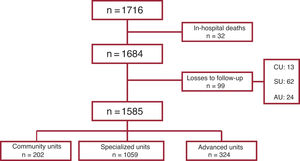
The scientific committee of the SEC-Excelente-IC program drafted a registry project with a 1-year follow-up that required each accredited unit to include consecutive patients with HF managed in the unit during 2 specific 1-month periods (March and November) for 1 year. The study adhered to the requirements of the Declaration of Helsinki for research involving humans and was approved by the clinical research ethics committee of the Hospital Central de Asturias. All patients provided written informed consent. The present analysis comprises the outcomes of the first 45 accredited HF units, which have already completed a 1-year follow-up. Each participating center included the first consecutive patients with HF managed in their unit in 2 different months (March and October) from 2019 to 2021. Overall, 1716 patients were enrolled. Both hospitalized patients and outpatients with a recent admission (within the previous 3 months) could be included. At the 1-year follow-up visit after inclusion, data were collected on events (deaths, HF hospitalizations, and HF decompensations with or without admission) and treatment changes. We excluded from this analysis patients who died during the hospitalization that prompted their inclusion in the study (32 patients). In addition, 99 patients were lost to follow-up (5.6% of the total), leaving 1585 patients for event analysis (figure 1). There were no differences in loss to follow-up among the 3 types of units (figure 1). Decompensation without need for admission was defined as a visit to the emergency department or HF day hospital due to clinical worsening of the HF that, based on the judgment of the treating physician, required a diuretic dose increase or intravenous therapy with diuretics or inotropic agents, without hospital admission. Follow-up and management of all patients were conducted in accordance with the criteria of their physicians, with no prespecified intervention in the registry protocol.

Figure 1.

Study flow chart for patient inclusion and follow-up. AU, advanced unit; CU, community unit; SU, specialized unit.

(0.07MB).
Statistical analysis

Categorical variables are expressed as percentages while quantitative variables are reported as mean ± standard deviation. To compare the differences among the 3 types of HF units (community, specialized, and advanced), the chi-square or Fisher exact test was used for categorical variables, as appropriate, while the Kruskal-Wallis test was used for quantitative variables. The 1-year incidences of the following events were analyzed in the overall series and by type of unit: a) mortality; b) HF hospitalization; c) composite of mortality or HF hospitalization (the first to occur); d) HF decompensation without hospitalization; and e) HF decompensation (including HF hospitalizations and treatment of HF decompensation without hospitalization managed in either the emergency department or day hospital). For the analysis of hospitalizations and decompensations, all recurrent events were considered. This incidence was expressed as percentages and as incidence rates per 100 patient-years.

The incidences of the different events were compared among the 3 types of units in the form of relative risks, taking the incidence in the community units as the reference. Two types of comparisons were performed: a) incidence of events in the specialized and advanced units separately vs the community units; and b) incidence of events in the specialized and advanced units combined vs the community units. Finally, an analysis was performed of predictors of mortality, HF hospitalization, and HF decompensation events. A Cox multivariate regression analysis was conducted to elucidate the factors associated with mortality. To identify the factors associated with HF hospitalization and HF decompensation, a negative binomial regression model was used as an alternative to Poisson regression. The models were developed using a backward elimination procedure, retaining only those variables with P < .05 in the final model. Variables that were significant in the univariate analysis (P < .10) were included in the multivariate model.

RESULTSParticipating accredited heart failure units

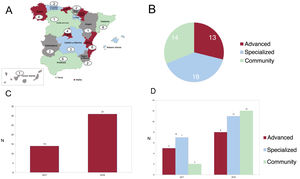
Of the 91 units accredited by the SEC in its SEC-Excelente program between 2017 and 2023, the first 45 received this accreditation in 2017 and 2018 and enrolled patients between 2019 and 2021. Accordingly, the 1-year follow-up was completed in December 2022. Figure 2 shows the distribution of these units by year of accreditation, autonomous community, and type of unit. There was a homogeneous distribution by autonomous community (figure 2A) and type of unit (figure 2B): 18 specialized, 14 community, and 13 advanced. In addition, 14 units were accredited in 2017 and 31 in 2018 (figure 2C), with an increase in this last year in the numbers of all 3 types of units, but particularly community units.

Figure 2.

Types and distribution of units participating in the analysis of the SEC-Excelente-IC accreditation program registry. A: distribution of accredited units by autonomous community. B: types of accredited units. C: number of units accredited per year. D: number of units accredited by type of unit and year. HF, heart failure.

(0.17MB).
Baseline characteristics of the overall series

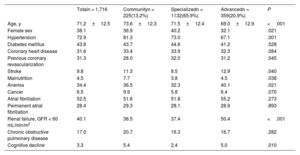
The registry included 1716 patients, with 70.4% enrolled during a HF hospitalization and the remaining 29.6% from an outpatient consultation. As shown in table 1, the mean age was 71.2 years and 38.1% were women. In addition, 72.9% of patients were hypertensive, and 43.8% were diabetic. About half of all patients had atrial fibrillation, 40% had chronic kidney disease, and approximately one-third had ischemic heart disease, a history of cardiac catheterization, or anemia.

Table 1.

Patients’ characteristics by type of heart failure unit

  Totaln = 1,716  Communityn = 225(13.2%)  Specializedn = 1132(65.9%)  Advancedn = 359(20.9%)  P 
Age, y  71.2±12.5  73.6±12.3  71.5±12.4  69.0±12.9  <.001 
Female sex  38.1  36.9  40.2  32.1  .021 
Hypertension  72.9  81.3  73.0  67.1  .001 
Diabetes mellitus  43.8  43.7  44.6  41.2  .528 
Coronary heart disease  31.6  33.4  33.9  32.3  .084 
Previous coronary revascularization  31.3  28.0  32.0  31.2  .045 
Stroke  9.8  11.3  8.5  12.9  .040 
Malnutrition  4.5  7.7  3.8  4.5  .038 
Anemia  34.4  36.5  32.3  40.1  .021 
Cancer  6.5  9.9  5.8  6.4  .070 
Atrial fibrillation  52.5  51.6  51.8  55.2  .273 
Permanent atrial fibrillation  28.4  29.3  28.1  28.9  .893 
Renal failure, GFR < 60 mL/min/m2  40.1  36.5  37.4  50.4  <.001 
Chronic obstructive pulmonary disease  17.0  20.7  16.3  16.7  .282 
Cognitive decline  3.3  5.4  2.4  5.0  .010 

GFR, glomerular filtration rate.

Unless otherwise indicated, data are expressed as percentage (%).

Demographic characteristics, risk factors, and comorbidities of the patients followed in the 3 types of heart failure units.

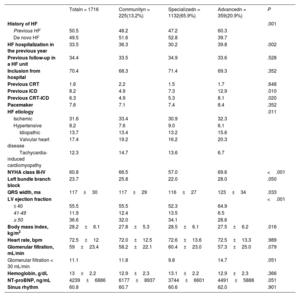
Table 2 shows the data on HF history and the clinical variables recorded at the inclusion visit. Half of the patients had a history of HF, while the other half had de novo HF. One third of the patients had been admitted for HF at least once in the previous year, while another third had previously been followed up in an HF unit. The most frequent etiology was ischemic (31.6%), 60.8% of patients were in functional class III or IV, and 11.1% had a glomerular filtration rate < 30mL/min. Analysis of the type of HF showed that ejection fraction was reduced in 55.5%, slightly reduced in 11.9%, and preserved in 36.6%.

Table 2.

Heart failure data

  Totaln = 1716  Communityn = 225(13.2%)  Specializedn = 1132(65.9%)  Advancedn = 359(20.9%)  P 
History of HF          .001 
Previous HF  50.5  48.2  47.2  60.3   
De novo HF  49.5  51.6  52.8  39.7   
HF hospitalization in the previous year  33.5  36.3  30.2  39.8  .002 
Previous follow-up in a HF unit  34.4  33.5  34.9  33.6  .528 
Inclusion from hospital  70.4  68.3  71.4  69.3  .352 
Previous CRT  1.6  2.2  1.5  1.7  .648 
Previous ICD  8.2  4.9  7.3  12.9  .010 
Previous CRT-ICD  6.3  4.9  5.3  8.1  .020 
Pacemaker  7.6  7.1  7.4  8.4  .352 
HF etiology          .011 
Ischemic  31.6  33.4  30.9  32.3   
Hypertensive  8.2  7.6  9.0  6.1   
Idiopathic  13.7  13.4  13.2  15.6   
Valvular heart disease  17.4  19.2  16.2  20.3   
Tachycardia-induced cardiomyopathy  12.3  14.7  13.6  6.7   
NYHA class III-IV  60.8  66.5  57.0  69.6  <.001 
Left bundle branch block  23.7  25.8  22.0  28.0  .050 
QRS width, ms  117±30  117±29  116±27  123±34  .033 
LV ejection fraction          <.001 
≤ 40  55.5  55.5  52.3  64.9   
41-49  11.9  12.4  13.5  6.5   
≥ 50  36.6  32.0  34.1  28.6   
Body mass index, kg/m2  28.2±6.1  27.8±5.3  28.5±6.1  27.5±6.2  .016 
Heart rate, bpm  72.5±12  72.0±12.5  72.6±13.6  72.5±13.3  .989 
Glomerular filtration, mL/min  59±23.4  58.2±22.1  60.4±23.0  57.3±25.0  .079 
Glomerular filtration < 30 mL/min  11.1  11.8  9.8  14.7  .051 
Hemoglobin, g/dL  13±2.2  12.9±2.3  13.1±2.2  12.9±2.3  .366 
NT-proBNP, ng/mL  4239±6886  6177±8937  3744±6601  4491±5888  .051 
Sinus rhythm  60.8  60.7  60.6  62.0  .901 

CRT, cardiac resynchronization therapy; HF, heart failure; ICD, implantable cardioverter-defibrillator; LV, left ventricular; NT-proBNP, N-terminal pro-B-type natriuretic peptide; NYHA, New York Heart Association.

Unless otherwise indicated, data are expressed as percentage or median.

Data related to heart failure: history or registry inclusion visit.

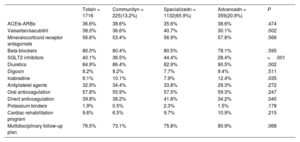
Table 3 shows the percentage prescriptions of the various drugs prescribed to patients after their inclusion visit. Notably, 84.9% of patients received diuretics and 80% received beta-blockers. In addition, 56.6% received mineralocorticoid receptor antagonists, 40.1% received sodium-glucose cotransporter 2 (SGLT2) inhibitors, and 38% received valsartan/sacubitril. Only 9.6% of patients were enrolled in a cardiac rehabilitation program but most patients (76.5%) were included in a multidisciplinary follow-up program involving nursing and primary care staff.

Table 3.

Patient management by type of unit

  Totaln = 1716  Communityn = 225(13.2%)  Specializedn = 1132(65.9%)  Advancedn = 359(20.9%)  P 
ACEIs-ARBs  36.6%  38.6%  35.6%  38.6%  .474 
Valsartan/sacubitril  38.0%  36.6%  40.7%  30.1%  .002 
Mineralocorticoid receptor antagonists  56.6%  53.4%  56.9%  57.8%  .566 
Beta-blockers  80.0%  80.4%  80.5%  78.1%  .595 
SGLT2 inhibitors  40.1%  36.5%  44.4%  28.4%  <.001 
Diuretics  84.9%  86.4%  82.9%  90.5%  .002 
Digoxin  8.2%  9.2%  7.7%  9.4%  .511 
Ivabradine  9.1%  10.1%  7.9%  12.4%  .035 
Antiplatelet agents  32.9%  34.4%  33.8%  29.3%  .272 
Oral anticoagulation  57.8%  55.9%  57.5%  59.3%  .247 
Direct anticoagulation  39.8%  38.2%  41.8%  34.2%  .040 
Potassium binders  1.9%  0.5%  2.3%  1.5%  .178 
Cardiac rehabilitation program  9.6%  6.5%  9.7%  10.9%  .215 
Multidisciplinary follow-up plan  76.5%  73.1%  75.8%  80.9%  .068 

ARBs, angiotensin II receptor blockers; ACEIs, angiotensin-converting enzyme inhibitors; SGLT2, sodium-glucose cotransporter-2.

Data are expressed as percentage.

Patient management in the 3 types of units after the registry inclusion visit.

Patients’ baseline characteristics in the 3 types of heart failure units

Of the 1716 patients, 225 (13.2%) underwent follow-up in community units, 1132 (65.9%) in specialized units, and 359 (20.9%) in advanced units. Patients managed in the community units were older and had a higher prevalence of hypertension. The proportion of women was higher in specialized units (table 1). Patients followed in the advanced units were more likely to have a history of HF, HF with reduced ejection fraction, and chronic kidney disease (table 1 and table 2). There were no differences among the 3 types of units in the prevalence of ischemic heart disease, atrial fibrillation, previous follow-up by a HF unit, and inclusion during an HF hospitalization event. The treatment received after inclusion in the registry was quite similar in the 3 types of units, as shown in table 3, with just slight but significant increases in the prescription of valsartan/sacubitril, diuretics, and ivabradine in the advanced units and of SGLT2 inhibitors in the specialized units.

Incidence of events at 1 year of follow-up

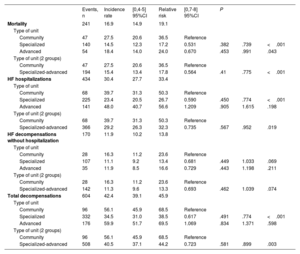
Of the 1239 patients included in the registry during an HF hospitalization event, 32 died during admission (in-hospital mortality, 2.6%). In addition, 99 patients were lost to follow-up (5.6% of the total), leaving 1585 patients for event analysis (figure 1). During the 1-year follow-up, there were 241 deaths, 434 HF hospitalizations, and 170 HF decompensations without hospitalization. The overall series showed the following incidence rates per 100 patient-years: 16.9 (95% confidence interval [95%CI] 14.9-19.1) for mortality, 30.4 (27.7-33.4) for HF hospitalizations, 11.9 (10.2-13.8) for HF decompensation without hospitalization, and 42.4 (39.1-45.9) for total decompensations, including hospitalizations (table 4).

Table 4.

Overall incidence of events of interest by type of heart failure unit

  Events, n  Incidence rate  [0,4-5] 95%CI  Relative risk  [0,7-8] 95%CI  P     
Mortality  241  16.9  14.9  19.1         
Type of unit                 
Community  47  27.5  20.6  36.5  Reference       
Specialized  140  14.5  12.3  17.2  0.531  .382  .739  <.001 
Advanced  54  18.4  14.0  24.0  0.670  .453  .991  .043 
Type of unit (2 groups)                 
Community  47  27.5  20.6  36.5  Reference       
Specialized-advanced  194  15.4  13.4  17.8  0.564  .41  .775  <.001 
HF hospitalizations  434  30.4  27.7  33.4         
Type of unit                 
Community  68  39.7  31.3  50.3  Reference       
Specialized  225  23.4  20.5  26.7  0.590  .450  .774  <.001 
Advanced  141  48.0  40.7  56.6  1.209  .905  1.615  .198 
Type of unit (2 groups)                 
Community  68  39.7  31.3  50.3  Reference       
Specialized-advanced  366  29.2  26.3  32.3  0.735  .567  .952  .019 
HF decompensations without hospitalization  170  11.9  10.2  13.8         
Type of unit                 
Community  28  16.3  11.2  23.6  Reference       
Specialized  107  11.1  9.2  13.4  0.681  .449  1.033  .069 
Advanced  35  11.9  8.5  16.6  0.729  .443  1.198  .211 
Type of unit (2 groups)                 
Community  28  16.3  11.2  23.6  Reference       
Specialized-advanced  142  11.3  9.6  13.3  0.693  .462  1.039  .074 
Total decompensations  604  42.4  39.1  45.9         
Type of unit                 
Community  96  56.1  45.9  68.5  Reference       
Specialized  332  34.5  31.0  38.5  0.617  .491  .774  <.001 
Advanced  176  59.9  51.7  69.5  1.069  .834  1.371  .598 
Type of unit (2 groups)                 
Community  96  56.1  45.9  68.5  Reference       
Specialized-advanced  508  40.5  37.1  44.2  0.723  .581  .899  .003 

95%CI, 95% confidence interval; HF, heart failure.

Rate expressed in 100 person-years.

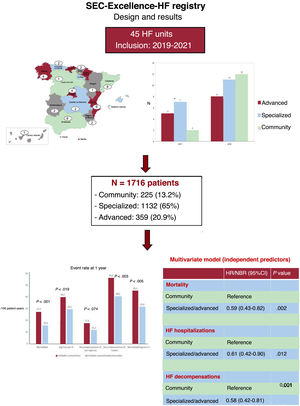
The incidence rates of all events were significantly higher in the community units than in the specialized units (table 4). The incidence of mortality was also significantly higher in the community units than in the advanced units while there were no differences between these 2 types of units in the incidence rates of HF hospitalizations and HF decompensations (table 4). When event incidences per 100 patient-years were compared between the community units and the specialized and advanced units, all incidence rates were significantly higher in the community units (table 4). Compared with the specialized and advanced units, the community units had higher rates of mortality (27.5 vs 15.5/100 patient-years; P < .001), HF hospitalizations (39.7 vs 29.2/100 patient-years; P = .019), total decompensations (56.1 vs 40.5/100 patient-years; P = .003), and a composite of death and HF hospitalization (45.2 vs 31.4/100 patient-years; P = .005). In multivariate analysis, follow-up in a community unit was an independent predictor of a higher incidence of death, HF hospitalization, and HF decompensation at 1 year (table 5). As shown in the table, management in a specialized or advanced unit was associated with 41% lower mortality (P = .002), 39% fewer HF hospitalizations (P = .012), and 42% fewer HF decompensations vs a community unit. The design and main findings of the SEC-Excelente-IC registry are shown in figure 3.

Table 5.

Type of unit as an independent predictor of events at 1 year in the multivariate study

  HR/IRR, 95%CI  P 
Mortality  HR   
Community  Reference   
Specialized/advanced  0.59 (0.43-0.82)  .002 
HF hospitalizations  IRR   
Community  Reference   
Specialized/advanced  0.61 (0.42-0.90)  .012 
HF decompensations  IRR   
Community  Reference   
Specialized/advanced  0.58 (0.42-0.81)  .001 

95%CI, 95% confidence interval; COPD, chronic obstructive pulmonary disease; HF, heart failure; HR, hazard ratio; ICD, implantable cardioverter-defibrillator; IRR, incidence risk ratio.

Role of the unit as an independent predictor of events at 1 year in the multivariate analysis*.

*Adjustment variables included in the final models:

Mortality: age, hypertension, ICD, type of inclusion, functional class III-IV, previous follow-up in a HF unit, HF hospitalization in the previous year, chronic kidney disease, hemiplegia, COPD, cancer, injuries or falls in the previous year, malnutrition.

HF hospitalization: age, hypertension, ICD, type of inclusion, functional class III-IV, left bundle branch block, previous follow-up in an HF unit, HF hospitalization in the previous year, previous coronary heart disease, previous atrial fibrillation, chronic kidney disease, COPD, cancer, injuries or falls in the previous year.

HF decompensation: age, hypertension, ICD, type of inclusion, ischemic etiology, functional class III-IV, previous follow-up in a HF unit, HF hospitalization in the previous year, previous atrial fibrillation, chronic kidney disease, hemiplegia, COPD, anemia.

Figure 3.

Central illustration. Summary of the design and results of the incidence of events at 1-year follow-up between the community units (reference) and specialized and advanced units. 95%CI, 95% confidence interval; HF, heart failure; HR, hazard ratio; NBR, negative binomial regression.

(0.5MB).
DISCUSSION

HF is a major health concern in Western countries, with epidemiological findings indicating an even worse outlook in the coming years.14,15 Recent studies indicate a prevalence of 1% to 3%, with an upward trend, due to increases in HF with preserved ejection fraction and a stabilization in the rates of HF with reduced ejection fraction.14 HF incidence ranges between 1 and 20 per 1000 person-years, with an average of 3 per 1000 person-years in Western countries and mortality rates of 15% to 30% at 1 year and 50% to 75% at 5 years.14,15 This is despite major advances in its diagnosis and management in recent decades.9,12 The wider range of treatment possibilities can improve patients’ outcomes and quality of life but also somewhat complicates their management. Consequently, the implementation and development of new health care management models have been critical, such as HF units and programs. Compared with routine health care models, these units have been shown, over many years, to reduce HF hospitalizations and decompensations, and even mortality in some studies.16 They have become the gold standard management approach for patients with this disease, with a class I A indication in clinical practice guidelines.12 However, these programs must meet recommended quality standards, maintain them over time, and achieve the appropriate outcomes.3,5

The SEC has been a pioneer, both in Europe and more globally, in the development of a quality accreditation program for HF units,4,5,17 a program currently being implemented for all member countries by the Heart Failure Association of the ESC.13,18 One of the requirements for quality accreditation in the SEC-Excelente-IC program is the participation of accredited units in a prospective registry permitting analysis of the characteristics of the patients included and monitoring of their outcomes and event rates. The present results of the first 45 units accredited by the SEC in Spain, with 1716 patients included from 2019 to 2021 and followed up for 1 year, confirm the severity of HF. The overall 1-year mortality was 16.9%, with a HF hospitalization rate of 30.4%, a HF decompensation without hospitalization rate of 11.9%, and a total decompensation rate, including hospitalizations, of 42.4%. These figures are comparable to those from the most recent European registries19,20 and clinical trials21 and are better than those from other population-based studies.14,22–24 For example, 1-year mortality was 18% in the ESC-HFA EORP Heart Failure Long-Term Registry19 and 17.4% in the ESC-HF Pilot Survey,20 while annual mortality was 14% in the GALACTIC study.24 In population-based studies, the 1-year mortality was 33% in a Danish registry22 and 18% in a British registry.23 In Spain, the 1-year mortality after HF hospitalization between 2016 and 2019 in the RECALCAR registry, which included more than 178 000 patients admitted to Spanish publicly funded hospitals, was 26.9% and the rate of HF readmissions was 28.4%.24

In-hospital mortality was low in the present study, at only 2.6%, vs 10% in the RECALCAR registry.11 This low mortality may be because patient age was lower in our study than in the RECALCAR registry11 and because our registry specifically included patients admitted to cardiology departments, who have, in addition to a younger age, a worse comorbidity profile and higher mortality. The pharmacological treatment was appropriate and comparable to that of similar studies.19,20,25 In our registry, 74.6% of the patients received angiotensin-converting enzyme inhibitors, angiotensin receptor blockers, or valsartan/sacubitril, 56.6% received mineralocorticoid receptor antagonists, 80% received beta-blockers, and 84.6% received diuretics. Given that almost 40% of the patients had HF with preserved fraction, these data are similar to those of the European registry based on type of HF.25 There was a notably low use of SGLT2 inhibitors, used by 40.1%, currently indicated for any type of HF regardless of the ejection fraction.12 This is due to the timing of patient inclusion in the registry.

In the present study, we specifically analyzed the differences among the 3 types of Spanish HF units defined by the SEC-Excellence-HF program4,5 and accepted by the Heart Failure Association of the ESC.13 Although there were some significant differences in the characteristics and management of the patients with HF followed up in the different types of units (community, specialized, and advanced), many of the most important characteristics were relatively homogeneous and management largely adhered to clinical practice guideline recommendations (table 1, table 2, and table 3). The 1-year incidence of major events, including total mortality, HF hospitalizations, and HF decompensations, was significantly higher in community units, with rates 2 to 3 times higher than those of the specialized and advanced units (table 4). This difference was largely due to the better outcomes in the specialized units, as shown in table 4 via a separate comparison of the 3 types of units. Advanced units had a significantly lower mortality than community units but similar incidences of hospitalizations, total decompensations, and a composite of death and HF hospitalization. This could be due to the characteristics of the patients followed up in the advanced units, who may be candidates for heart transplantation or circulatory support implantation owing to their more severe profile. Because specialized and advanced units are more similar to each other in terms of organization and resource access, a joint analysis was performed of both types of units vs community units. The above-mentioned multivariate results indicated that follow-up in a community unit was an independent predictor of worse outcomes (table 5).

Given that all participating units met the quality standards of the SEC-Excelente-IC program, we must consider the reason for these differences because it may have practical implications for the management of patients with HF.

First, as shown in table 1, table 2, and table 3, these results may have been influenced by the significant differences found in certain variables. Patients followed up in community units were older, had a higher prevalence of chronic pulmonary disease, were more likely to have been admitted for HF in the previous year, and were less likely to be receiving valsartan/sacubitril and SGLT2 inhibitors. However, they also had some characteristics theoretically associated with better outcomes, such as a higher proportion of tachycardia-induced cardiomyopathy as the HF etiology, more de novo HF, and a lower prevalence of renal failure. Irrespective of this consideration, follow-up in a community unit remained an independent predictor of higher mortality and hospitalization at 1 year in the multivariate study, as shown in table 5. Management in a specialized or advanced unit was associated with 41% lower mortality (P = .002), 39% fewer HF hospitalizations (P = .012), and 42% fewer HF decompensations vs a community unit.

Thus, there may be other explanations for these striking differences, probably related to the characteristics and functioning of the 3 types of units. As already mentioned and detailed in the document defining the 3 types of units, community units, due to their location in primary hospitals, their smaller size, and their likely lack of cardiology departments and, thus, on-site catheterization and electrophysiology, would have distinct organizational and resource characteristics. In contrast, specialized and advanced units are located in second- or third-level hospitals, within cardiology departments, and have a full services portfolio and the standard resources (catheterization, electrophysiology, and cardiac surgery) and, therefore, a larger number of cardiologists.

Although we did not quantify the number of cardiologists and nursing staff per unit and how many are full-time, how long the units have been operating and their trajectory, or the level of coordination with primary care, these aspects could have influenced the different outcomes. Patient volume may also be higher in specialized units, which may have affected the results. Indeed, in this registry, the mean number of patients included by specialized units was much higher (63.8% vs 16.1%) than in the community units, reflecting the higher volume of patients followed by specialized units. Regardless, we did not analyze the outcomes of patients who were not followed in any unit. Their outcomes would probably have been even worse than those of the community units. The mortality and hospitalization data of these patients were similar to or worse than those found in the above-mentioned population registries.22–24

Limitations

The limitations of this study are due to its design and are inherent to uncontrolled observational studies. The n number was low for the community unit group (comparator group). The inclusion period was long for the sample obtained (two 1-month periods in 3 years), although this aspect could have been influenced by the overlap of the inclusion period and follow-up with the COVID-19 pandemic. There may be some heterogeneity among the first 45 units to request SEC accreditation, which may have affected outcomes. Some variables, such as those related to the organization and resources of the different types of units, were not included, which could partly explain the differences found by introducing an inclusion bias. However, loss to follow-up was rare and in line with that found in registries of this type. Finally, the prescribed drug treatments may have depended on the scientific evidence available in the period analyzed.

CONCLUSIONS

The data from our study indicate that the establishment of a national accreditation program for HF units by a scientific society is both feasible and durable. Although there are notable differences in the characteristics and management of patients with HF followed up in different unit types (community, specialized, and advanced), many of the most important characteristics are largely homogeneous and management adheres to clinical practice guideline recommendations. Follow-up in a community HF unit was associated with higher rates of mortality, HF hospitalization, and HF decompensation at 1 year vs follow-up in a more specialized unit. Therefore, coordination between care levels and collaboration among different units appears necessary to further enhance outcomes.

WHAT IS KNOWN ABOUT THE TOPIC?

  • -

    The mortality and incidence of HF hospitalization and decompensation remain elevated despite advances in its management.

  • -

    The new organizational measures for HF care, in the form of specific HF units, improve the management outcomes of patients with HF but types of units and management models vary.

  • -

    No prior studies have compared the outcomes of the different HF models and units.

WHAT DOES THIS STUDY ADD?

  • -

    The development of a national quality accreditation program for HF units by a scientific society is feasible and durable.

  • -

    Although there are notable differences in the characteristics and management of the patients with HF followed up in the different unit types (community, specialized, and advanced), many of the most important characteristics are largely homogeneous and management adheres to clinical practice guideline recommendations.

  • -

    In our study, follow-up in a community HF unit was associated with higher rates of mortality, HF hospitalization, and HF decompensation at 1 year vs follow-up in a more specialized unit.

FUNDING

The SEC-Excelente-IC accreditation program has been funded by unconditional grants from Servier and Rovi to the SEC. The SEC-Excelente-IC registry has been funded by an unconditional grant from Rovi.

ETHICAL CONSIDERATIONS

The study adhered to the requirements of the Declaration of Helsinki for research involving humans and was approved by the clinical research ethics committee of the Hospital Central de Asturias. SAGER (Sex and Gender Equity in Research) guidelines have been considered.

STATEMENT ON THE USE OF ARTIFICIAL INTELLIGENCE

Artificial intelligence has not been used in the preparation of this work

AUTHORS’ CONTRIBUTIONS

All authors have contributed equally to the drafting of this document.

CONFLICTS OF INTEREST

The authors have no conflicts of interest to declare.

References
[1]
L. Rodríguez Padial, V. Bertomeu, F.J. Elola, et al.
Quality improvement strategy of the Spanish Society of Cardiology: the RECALCAR Registry.
J Am Coll Cardiol., (2016), 68 pp. 1140-1142
[2]
A. Íñiguez Romo, V. Bertomeu Martínez, Rodríguez Padial l, et al.
The RECALCAR Project. Healthcare in the cardiology units of the Spanish National Health System, 2011 to 2014.
Rev Esp Cardiol., (2017), 70 pp. 567-575
[3]
M. Anguita Sánchez, J. Alonso Martín, A. Cequier Fillat, et al.
Cardiologist and the Cardiology of the future, Vision and proposals of the Spanish Society of Cardiology for the Cardiology of the 21st century.
Rev Esp Cardiol., (2019), 72 pp. 649-657
[4]
M. Anguita Sánchez, A. Recio Mayoral, L. Rodríguez Padial.
Improving the quality of health care. Results of the SEC-Excelente accreditation program in heart failure of the Spanish Society of Cardiology.
[5]
M. Anguita Sánchez, J.L. Lambert Rodríguez, R. Bover Freire, et al.
Classification and quality standards of heart failure units: scientific consensus of the Spanish Society of Cardiology.
Rev Esp Cardiol., (2016), 69 pp. 940-950
[6]
M. Anguita Sánchez, M.G. Crespo Leiro, E. de Teresa Galván, et al.
Prevalence of heart failure in Spanish general population aged over 45 years. The PRICE study.
Rev Esp Cardiol., (2008), 61 pp. 1041-1049
[7]
A. Groenewegen, F.H. Rutter, A. Mosterd, A.W. Hoes.
Epidemiology of heart failure.
Eur J Heart Fail., (2020), 22 pp. 1342-1356
[8]
O. Chioncel, M. Lainscak, P.M. Seferovic, et al.
Epidemiology and one-year outcomes in patients with chronic heart failure and preserved, mid-range and reduced dejection fraction: an analysis of the ESC Heart Failure Lon-Term Registry.
Eur J Heart Fail., (2017), 19 pp. 1574-1585
[9]
A.P. Maggioni, S.D. Anker, U. Dahlstrom, et al.
Are hospitalized or ambulatory patients with heart failure treated in accordance with ESC guidelines? Evidence from 12,440 patients of the ESC Heart Failure Long-term registry.
Eur J Heart Fail., (2013), 15 pp. 1173-1184
[10]
J.L. Bonilla Palomas, M.M. Anguita Sánchez, F.J. Elola Somoza, et al.
Thirteen-year trends in hospitalization and outcomes of patients with heart failure in Spain.
Eur J Clin Invest., (2021), 51 pp. e13606
[11]
M. Anguita Sánchez, J.L. Bonilla Palomas, M. García Márquez, et al.
Temporal trends in hospitalizations and in-hospital mortality in heart failure in Spain 2003-2015: differences between autonomous communities.
Rev Esp Cardiol., (2020), 73 pp. 1075-1077
[12]
T.A. McDonagh, M. Metra, M. Adamo, et al.
2021 ESC Guidelines for the diagnosis and treatment of acute and chronic heart failure.
Eur Heart J., (2021), 44 pp. 3627-3639
[13]
P.M. Seferovic, M.F. Piepoli, Y. Lopatin, et al.
Heart Failure Association of the European Society of Cardiology Quality of care centres programme: design and accreditation document.
Eur J Heart Fail., (2020), 22 pp. 763-774
[14]
G. Savarese, P.M. Becher, L. Lund, et al.
Global burden of heart failure: a comprehensive and updated review of epidemiology.
Cardiovasc Res., (2022), 118 pp. 3272-3287
[15]
P.M. Seferovic, P. Vardas, E.A. Jankowska, et al.
The Heart Failure Association Atlas: heart failure epidemiology and management statistics 2019.
Eur J Heart Fail., (2021), 23 pp. 906-914
[16]
F. Atienza, M. Anguita, N. Martínez-Alzamora, et al.
Multicenter randomized trial of a comprehensive hospital discharge and outpatients heart failure management program.
Eur J Heart Fail., (2004), 6 pp. 643-652
[17]
M. Anguita Sánchez, J. González Costello, A. Recio Mayoral, et al.
Centres of excellence in heart failure: results of an accreditation program in Spain (2017-2011).
ESC Heart Failure., (2022), 9 pp. 3649-3654
[18]
P.M. Seferovic, M. Piepoli, M. Polovina, et al.
ESC/HFA quality of care centres: the ultimate frontier in unifying heart failure management.
Eur Heart J., (2021), 43 pp. 11-13
[19]
A. Kaplon-Cieslicka, L. Benson, O. Chioncel, et al.
A comprehensive characterization of acute heart failure with preserved versus mildly reduced versus reduced ejection fraction. Insights from the ESC-HFA EORP Heart Failure Long-Term Registry.
Eur J Heart Fail., (2022), 24 pp. 335-350
[20]
A.P. Maggioni, U. Dahlstrom, G. Filippatos, et al.
EURObservational Research programme: regional differences and 1-year follow-up results of the Heart Failure Pilot Survey (ESC-HF Pilot).
Eur J Heart Fail., (2013), 15 pp. 808-817
[21]
M. Pabon, J. Cunnigham, B. Claggett, et al.
Sex differences in heart failure with reduced ejection fraction in the GALACTIC-HF trial.
JACC Heart Failure., (2023), 11 pp. 1729-1738
[22]
M. Schmidt, S.P. Ulrichsen, L. Pedersen, et al.
Thirty-year trends in heart failure hospitalization and mortality rates and the prognostic impact of comorbidity: a Danish nation-wide cohort study.
Eur J Heart Fail., (2016), 18 pp. 490-499
[23]
N. Conrad, A. Judge, D. Canoy, et al.
Temporal trends and patterns in mortality after incident heart failure: a longitudinal analysis of 86000 individuals.
JAMA Cardiol., (2019), 4 pp. 1102-1111
[24]
A. Esteban-Fernández, M. Anguita-Sánchez, J.L. Bonilla-Palomas, et al.
One-year readmissions for circulatory diseases and in-hospital mortality after an index episode of heart failure in elderly patients. A nationwide data from public hospitals in Spain between 2016 and 2018.
Clin Res Cardiol., (2023), 112 pp. 1119-1128
[25]
O. Chioncel, M. Lainscak, P.M. Seferovic, et al.
Epidemiology and one-year outcomes in patients with chronic heart failure and preserved, midrange and reduced ejection fraction. An analysis of the ESC Heart Failure Long-Term Registry.
Eur J Heart Fail., (2017), pp. 1574-1585
Copyright © 2024. Sociedad Española de Cardiología