
A research team designing a clinical research project must bear in mind numerous aspects, such as the literature review, statistical analysis plan, and hypothesis and objective formulation. However, ethical aspects can sometimes be overlooked. The aim of this article is to review, in a practical manner, the types of research studies and to resolve some of the frequent practical doubts concerning ethics committees.
First, we should note 2 basic points:
- •
Our research should always be governed by the Declaration of Helsinki.1 We strongly recommend a repeat read: there is always something to learn.
- •
A research study must first be approved by an institutional review board (IRB).
For conference presentations or the potential publication of a case (or case series), informed consent (IC) must be obtained from the patient (or patients). In this case, data protection rights are a particularly sensitive issue because patients can often be readily identified: anonymization techniques are rarely effective. In addition, many journals and conferences may demand that the clinical case be assessed and approved by an IRB. We recommend consulting the specific guidelines of each conference or journal.
THE PATIENT HAS ALREADY PROVIDED WRITTEN IC FOR THE PROCEDURE/TREATMENT. IS ANOTHER IC REQUIRED?Medical IC covers all aspects related to diagnosis and treatment, not those concerning the use of data for research. In addition, patients cannot sign a generic IC form at hospital admission that grants broad and indefinite permission. Such an approach is not only ethically incorrect but also legally inadequate, with associated legal repercussions.
FOR A RETROSPECTIVE STUDY COLLECTING MEDICAL RECORD DATA OR DATA FROM A HEALTH CARE DATABASE, IS IRB APPROVAL REQUIRED? AND IC?Regardless of its type, a clinical trial must be evaluated by the corresponding IRB. The board will provide advice on many aspects that may be unclear to the researchers involved, including the need to obtain IC. As a general rule, an attempt must be made to obtain IC but this may not be possible for retrospective studies or may involve unreasonable effort. Irrespective of these considerations, the researcher must always sign a nondisclosure agreement. In this regard, the Spanish Biomedical Research Law (Ley de Investigación Biomédica)2 may allow an IC exemption whenever the data are deidentified or anonymized. The difference between the 2 methods lies in their reversibility: deidentification is reversible, as long as additional information is available (typically sequential identification codes), whereas anonymization is irreversible, although it may be very difficult to achieve. All of this applies whenever the individual being studied has not previously refused to allow the use of their data.
FOR PROSPECTIVE OBSERVATIONAL STUDIES THAT DO NOT SPECIFICALLY ANALYZE MEDICINAL PRODUCTS OR MEDICAL DEVICES, ARE THERE ANY ADDITIONAL REQUIREMENTS?The studies discussed in this section analyze the results of a surgical technique or a treatment protocol for a disease. In this case, it is difficult to justify an IC exemption given that the participants will be prospectively followed up. Nonetheless, IRBs may consider an exemption in exceptional cases.3 A consultation regarding the need for insurance is not uncommon in these studies: insurance is not required if routine clinical practice is not modified, but in Spain, the corresponding IRB for medicinal products (CEIm, the Spanish acronym for comité de ética en la investigación con medicamentos) may require insurance if the protocol involves a modification of routine practice that could increase risk, even if the risk is low.
FOR OBSERVATIONAL STUDIES OF MEDICINAL PRODUCTS, IS THE PROCEDURE MORE COMPLICATED?This type of study is more complex, particularly if it is to be performed in multiple centers. In this case, Spanish law is very clear, with these studies being regulated by Royal Decree (RD) 957/2020.4 This legislation introduces a highly relevant concept: that of a single and binding decision, issued by the central IRB. For this course of action to be effective, the IRB must be accredited as a CEIm, as specified in RD 1090/2015.5 If the study is to be performed in a single center, the local IRB can assess the protocol and issue an opinion. If several centers are involved, the central CEIm will issue its ruling and each participating center will have to locally approve the study by signing a contract.
In terms of ethics, observational studies of medicinal products (estudio observacional con medicamentos [EOm]) carry a risk that must be indicated: inducement to prescribe. The job of the IRB is to monitor and prevent this influence as much as possible, but it is the researchers’ ethical responsibility to avoid this shortcoming, although it is not always easy. Research must not be an excuse for the prescription of a medication but should provide data on its use. The analysis of the use of drugs in real-world clinical practice complements the information obtained from clinical trials and extends the use of these drugs to broader populations, with fewer restrictions than in the trials. A good definition of the objectives that explains the need for an EOm will help to limit this issue.
IS IT ESSENTIAL TO SIGN A CONTRACT WITH THE CENTER WHEN THE STUDY IS BEING PERFORMED IN A SINGLE CENTER? AND IF IT IS A MULTICENTER STUDY BUT HAS A “ZERO” FINANCIAL REPORT?The concept of a “zero” financial report (memoria económica cero) refers to the absence of study-related costs and returns, whether for the center or for the team. This type of study usually entails collaborative studies sponsored by scientific bodies or nonprofit research groups without commercial backers. Many IRBs consider these studies to be tax exempt but this must be adequately justified. Regarding contract signing, each center, foundation, or biomedical research institute has its own policy and is independent in its decision.
DOES THE LAW DIFFER FOR PLANNED OBSERVATIONAL STUDIES ANALYZING MEDICAL DEVICES RATHER THAN MEDICINAL PRODUCTS?The recently published RD 192/20236 regulates the use of medical devices and clinical trials of medical devices (CTMDs). The medical device field is enormously broad and ranges from extremely basic devices (eg, plasters) to exceedingly complex devices (eg, ventricular support systems) or software or artificial intelligence systems. A large part of the law related to EOms corresponds to that of CTMDs, such as the single and binding decision of the central CEIm. However, in contrast to EOms, various situations are distinguished by the Spanish Agency of Medicines and Medical Devices (AEMPS),7 based on the availability of the CE mark for the study of medical devices (the requirements are more complex if the CE mark is not available) and on the use of the appropriate indication (if so, the procedures are simpler, with no need for AEMPS approval). As for approval, the need for insurance depends on the above-mentioned criteria: CE mark and use of the approved indication.
The CTMD field has seen a clear increase in PMCF research projects (for postmarket clinical follow-up). These studies involve clinical follow-up after marketing authorization and are required to obtain and renew the CE mark according to new European medical device regulations (MDR). The major change in this legislation is due to the need for clinical follow-up data and not just technical surveys of functioning. PMCF studies can be considered equivalent to phase IV studies, which were classically performed for drugs after their approval. As in EOms, CTMDs exhibit a considerable risk of inducement for prescription; the contents of this section are applicable to this case.
WHAT IS REQUIRED FOR PARTICIPATION IN A RANDOMIZED MULTICENTER CLINICAL TRIAL?If there is any research activity that is tightly regulated and monitored, it is clinical trials involving medicinal products or medical devices. The relevant European regulations were transposed into Spanish law by RD 1090/2015.5 The aim of this regulation is to simplify and harmonize the processes for their conduct, even in a multinational setting, although the attempt is not always successful. As mentioned above, the single and binding decision of a central CEIm is key, and the performance of the trial in the other centers is based on their suitability, as corroborated by the responsible parties, and on the signing of a development contract.
These studies almost always require a commercial or academic research organization. The regulatory, development, monitoring, and supervisory tasks of the study are too complex for a sole researcher. This means that the local principal investigator often pays less attention to the necessary procedures and to the important details of the study. The responsibilities of this role begin the moment the center suitability document is signed.
In this type of study, the ethical risk is not so much inducement for the treatment being analyzed (typically borne by the sponsor) but inducement for participation. A classic error is to include the supposed benefits of the therapy under study in the patient information sheet: the aim of the study is to assess these benefits. In addition, how do you explain to participants in the placebo arm that they will not benefit from being included in the study? Another classic cause of participation inducement is to assure that a tighter or stricter follow-up will be performed: will individuals who do not participate receive the appropriate care? This type of ethically incorrect information must be avoided.
IS IT IMPOSSIBLE TO INDEPENDENTLY CONDUCT A RANDOMIZED CLINICAL TRIAL?The randomized clinical trial (RCT) is the highest tier of clinical research. By providing solid evidence, the results of RCTs definitively modify clinical practice guidelines. RCT participation involves considerable work, and their coordination and development are an almost titanic task. However, that should not discourage researchers with good ideas and initiative: indeed, it is in these cases that the guidelines and corresponding IRB advice are key. These factors are even more important for multicenter RCTs because the central CEIm must comply with the strict procedures of the European RCT portal, the Clinical Trials Information System (CTIS).8 Both the sponsor and the central CEIm must adhere to strict rules for their final approval.
ARE ALL RCTS EQUAL? EVEN WITHOUT INDUSTRY PARTICIPATION?In this case, RD 1090/20155 considers a special type of RCT: noncommercial clinical trials (investigaciones clínicas sin ánimo commercial). These trials are conducted by researchers without the participation of the pharmaceutical or medical devices industry and meetall of the following characteristics:
- 1.
The sponsor is a university, hospital, public research organization, nonprofit organization, patient body, or individual researcher.
- 2.
The research data belong to the sponsor from the outset of the study.
- 3.
There are no agreements between the sponsor and third parties allowing the use of data for regulatory purposes or to generate industrial property.
- 4.
The design, conduct, participant enrollment, data collection, and reporting of the research results remains under the control of the sponsor.
- 5.
Based on their characteristics, these studies cannot be part of a development program for the marketing approval of a product.
Does this type of RCT have any advantages? The answer is yes: although insurance must be obtained, the policy can be presented after assessment of the study by the corresponding CEIm. In addition, these RCTs benefit from tax exemption or reduction.
IS THERE SOME TYPE OF RCT THAT DOES NOT REQUIRE SPECIFIC INSURANCE?Yes. RD 1090/20155 defines a special type of RCT with a low level of intervention (ensayo clínico de bajo nivel de intervención). These RCTs meet the following 3 criteria:
- 1.
The investigational medicinal product is approved.
- 2.
The investigational medicinal product is used in line with the marketing approval or the use of the investigational medicinal product is based on tests and supported by published scientific data.
- 3.
The complementary diagnostic or follow-up procedures involve an additional risk or burden for participant safety that is minimal compared with that of routine clinical practice.
Watch out! For this type of RCT, the insurance of the person responsible in the center performing the RCT must cover this type of risk and this is not the case in all Spanish autonomous communities.
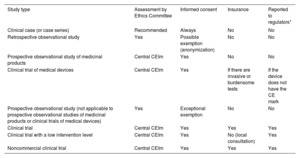
Table 1 attempts to summarize all of the points covered.
Types of studies and their requirements
| Study type | Assessment by Ethics Committee | Informed consent | Insurance | Reported to regulators* |
|---|---|---|---|---|
| Clinical case (or case series) | Recommended | Always | No | No |
| Retrospective observational study | Yes | Possible exemption (anonymization) | No | No |
| Prospective observational study of medicinal products | Central CEIm | Yes | No | No |
| Clinical trial of medical devices | Central CEIm | Yes | If there are invasive or burdensome tests | If the device does not have the CE mark |
| Prospective observational study (not applicable to prospective observational studies of medicinal products or clinical trials of medical devices) | Yes | Exceptional exemption | No | No |
| Clinical trial | Central CEIm | Yes | Yes | Yes |
| Clinical trial with a low intervention level | Central CEIm | Yes | No (local consultation) | Yes |
| Noncommercial clinical trial | Central CEIm | Yes | Yes | Yes |
CEIm, Institutional Review Board for medicinal products (from comité de ética en la investigación con medicamentos).
By way of conclusion, we wish to provide 2 simple recommendations:
- •
Participation in a multicenter clinical research study requires valid Good Clinical Practice certification. Researchers sometimes fail to meet this requirement and commit errors. The entire team should undergo certification when it is up for renewal. It can be completed free of charge on several websites.9
- •
Talk to your Ethics Committee. They are not inquisitorial courts: their main aim is to help you to do things well.
None.
CONFLICTS OF INTERESTThe authors report no conflicts of interest in relation to this article.