
ISSN: 1885-5857 Impact factor 2024 4.9
Vol. 77. Num. 11.
Pages 899-909 (November 2024)

Original article
Outcomes of a 24/7 service for urgent permanent pacemaker implantation

Resultados de un servicio ininterrumpido de implante urgente de marcapasos permanente

Javier Jiménez-CandilabcArmando OterinoaAlba Cruz GalbánaJesús HernándezaJosé Luis MoríñigoacManuel Sánchez GarcíaaPedro L. Sánchezabc
Rev Esp Cardiol. 2024;77:910-110.1016/j.rec.2024.04.020
Moisés Rodríguez-Mañero, José R. González-Juanatey
https://doi.org/10.1016/j.rec.2024.03.003

Options

Imagen extra
Rev Esp Cardiol. 2024;77:899-909
Abstract
Introduction and objectives

Most of the complications associated with acute and symptomatic bradyarrhythmia (ASB) occur in the time from diagnosis to permanent pacemaker implantation (PPI). We aimed to evaluate the outcomes of an urgent 24/7 PPI service (PPI-24/7) for patients with ASB.

Methods

A total of 664 patients undergoing first-time PPI for ASB were prospectively assessed during 2 periods of identical length (18 months): 341 patients who underwent the procedure during working hours only (PPI-WH), and 323 patients who underwent the procedure after the implementation of the PPI-24/7 service. The primary safety endpoint was established as the cumulative 180-day incidence of complications related to the index arrhythmia and device implant. The primary efficacy endpoint was determined as the average number of hospital stays per patient.

Results

The PPI-24/7 period was associated with a significant shortening of the time from diagnosis to implantation (median [interquartile range]): 3hours [2-6] vs 16 [5-21]). The cumulative incidence of patients with complications at 180 days was lower in the PPI-24/7 period: 9% vs 17% (adjusted odds ratio, 0.5; P=.002), due to a significant reduction in preimplant complications: 2.5% vs 12% (P <.001). The average number of hospital stays was reduced by 2 per patient in the PPI-24/7 period (nonparametric P <.001). PPI-24/7 implants performed outside working hours (n=178) were safe, with a 180-day cumulative incidence in procedure-related complications of 3.9%.

Conclusions

Among patients with ASB, PPI-24/7 was associated with a significant reduction in patient morbidity and efficient hospital resource use.

Keywords

Bradyarrhythmia
Pacemaker
Prognosis
Outcomes 24/7 service
INTRODUCTION

Although there is some variation among countries, the continuous growth of pacemaker indication is evident due to increased life expectancy and aging populations.1,2 Indeed, most bradycardias requiring cardiac pacing are observed in older adults, with> 80% of pacemakers being implanted in patients older than 65 years.3 Consequently, this situation poses a logistical challenge for electrophysiology laboratories and implant operating rooms. Programs based on same-day discharge after implantation are safe and efficient as they reduce hospitalization time.4,5 Additionally, most complications associated with acute and symptomatic bradyarrhythmia (ASB) are concentrated within the period from diagnosis to permanent pacemaker implantation (PPI).6 Thus, in theory, shortening the waiting time until treatment could reduce the incidence of patient morbidity and optimize hospital resource use. To test this, and due to the COVID-19 pandemic, in March 2020 our institution implemented a service that allowed urgent PPI to be available 24hours a day, 7 days a week (PPI-24/7). This article reports the outcomes of this pioneering PPI-24/7 service, which is still currently running, to treat patients with ASB.

METHODSStudy population

We prospectively assessed the outcomes of 664 patients aged 60 years or older who underwent their first PPI due to ASB during 2 periods of identical length: from September 1, 2018 to February 28, 2020, when the implants were performed during working hours only [PPI-WH, n=341]); and from 31 July 2020 to 31 December 2021, when urgent implants were made available 24hours a day, 7 days a week [PPI-24/7, n=323]). The months from March to June 2020 were excluded from the analysis due to the COVID-19 pandemic, as the normal activity of our health care service was interrupted (table 1).

Table 1.

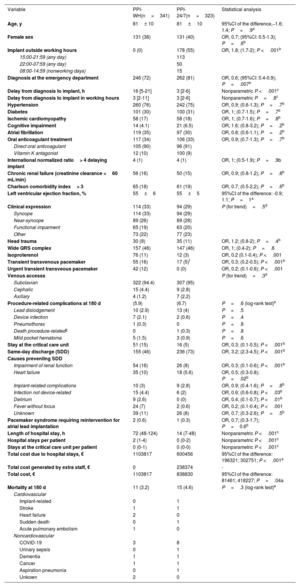
Comparison of patient characteristics and outcomes according to the period under study

Variable  PPI-WH(n=341)  PPI-24/7(n=323)  Statistical analysis 
Age, y  81± 10  81±10  95%CI of the difference,−1.6; 1.4; P=.9a 
Female sex  131 (38)  131 (40)  OR, 0.7; (95%CI: 0.5-1.3); P=.6b 
Implant outside working hours  0 (0)178 (55)  OR, 1.8; (1.7-2); P <.001b
15:00-21:59 (any day)  113 
22:00-07:59 (any day)  50 
08:00-14:59 (nonworking days)  15 
Diagnosis at the emergency department  246 (72)  262 (81)  OR, 0.6; (95%CI: 0.4-0.9); P=.007b 
Delay from diagnosis to implant, h  16 [5-21]  3 [2-6]  Nonparametric P <.001c 
Delay from diagnosis to implant in working hours  3 [2-11]  3 [2-6]  Nonparametric P=.8c 
Hypertension  260 (76)  242 (75)  OR, 0.9; (0.6-1.3); P=.7b 
Diabetes  101 (30)  100 (31)  OR, 1; (0.7-1.5); P=.7b 
Ischemic cardiomyopathy  58 (17)  58 (18)  OR, 1; (0.7-1.6); P=.8b 
Cognitive impairment  14 (4.1)  21 (6.5)  OR, 1.6; (0.8-3.2); P=.2b 
Atrial fibrillation  119 (35)  97 (30)  OR, 0.8; (0.6-1.1); P=.2b 
Oral anticoagulant treatment  117 (34)  106 (33)  OR, 0.9; (0.7-1.3); P=.7b
Direct oral anticoagulant  105 (90)  96 (91) 
Vitamin K antagonist  12 (10)  100 (9) 
International normalized ratio> 4 delaying implant  4 (1)  4 (1)  OR, 1; (0.5-1.9); P=.9b 
Chronic renal failure (creatinine clearance <60 mL/min)  56 (16)  50 (15)  OR, 0.9; (0.8-1.2); P=.8b 
Charlson comorbidity index> 3  65 (18)  61 (19)  OR, 0.7; (0.5-2.2); P=.6b 
Left ventricular ejection fraction, %  55±55±95%CI of the difference: -0.9; 1.1; P=1a 
Clinical expression  114 (33)  94 (29)  P (for trend)=.5d
Syncope  114 (33)  94 (29) 
Near-syncope  89 (26)  89 (28) 
Functional imparment  65 (19)  63 (20) 
Other  73 (22)  77 (23) 
Head trauma  30 (9)  35 (11)  OR, 1.2; (0.8-2); P=.4b 
Wide QRS complex  157 (46)  147 (46)  OR, 1; (0.4-2); P=.8 
Isoproterenol  76 (11)  12 (3)  OR, 0.2 (0.1-0.4); P <.001 
Transient transvenous pacemaker  55 (16)  17 (5)f  OR, 0.3; (0.2-0.5); P <.001b 
Urgent transient transveous pacemaker  42 (12)  0 (0)  OR, 0.2; (0.1-0.6); P <.001 
Venous accesss      P (for trend)=.3d
Subclavian  322 (94.4)  307 (95) 
Cephalic  15 (4.4)  9 (2.8) 
Axillary  4 (1.2)  7 (2.2) 
Procedure-related complications at 180 d  (5.9)  (6.7)  P=.6 (log-rank test)e 
Lead dislodgement  10 (2.9)  13 (4)  P=.5 
Device infection  7 (2.1)  2 (0.6)  P=.4 
Pneumothorax  1 (0.3)  P=.8 
Death procedure-relatedg  1 (0.3)  P=.8 
Mild pocket hematoma  5 (1.5)  3 (0.9)  P=.6 
Stay at the critical care unit  51 (15)  16 (5)  OR, 0.3; (0.1-0.5); P <.001b 
Same-day discharge (SDD)  155 (46)  236 (73)  OR, 3.2; (2.3-4.5); P <.001b 
Causes preventing SDD       
Impairment of renal function  54 (16)  26 (8)  OR, 0.3; (0.1-0.6); P <.001b 
Heart failure  35 (10)  18 (5.6)  OR, 0.5; (0.3-0.8); P=.02b 
Implant-related complications  10 (3)  9 (2.8)  OR, 0.9; (0.4-1.6); P=.8b 
Infection not device-related  15 (4.4)  6 (2)  OR, 0.6; (0.6-0.8); P <.03b 
Delirium  9 (2.6)  0 (0)  OR, 0.4; (0.1-0.7); P <.01b 
Fever without focus  24 (7)  2 (0.6)  OR, 0.2; (0.1-0.4); P <.001 
Unknown  39 (11)  26 (8)  OR, 0.7; (0.3-2.6); P=.5b 
Pacemaker syndrome requiring reintervention for atrial lead implantation  2 (0.6)  1 (0.3)  OR, 0.7; (0.3-1.7); P=0.6b 
Length of hospital stay, h  72 (48-124)  14 (7-48)  Nonparametric P <.001c 
Hospital stays per patient  2 (1-4)  0 (0-2)  Nonparametric P <.001c 
Stays at the critical care unit per patient  0 (0-1)  0 (0-0)  Nonparametric P <.001c 
Total cost due to hospital stays, €  1103817  600456  95%CI of the difference: 196321; 302751; P <.001a 
Total cost generated by extra staff, €  238374 
Total cost, €  1103817  838830  95%CI of the difference: 81461; 418227; P=.04a 
Mortality at 180 d  11 (3.2)  15 (4.6)  P=.3 (log-rank test)e 
Cardiovascular       
Implant-related   
Stroke   
Heart failure   
Sudden death   
Acute pulmonary embolism   
Noncardiovascular       
COVID-19   
Urinary sepsis   
Dementia   
Cancer   
Aspiration pneumonia   
Unkown   

95%CI, 95% confidence interval; OR, odds ratio; PPI-24/7, pacemaker implantation 24/7; PPI-WH, pacemaker implantation in working hours.

Data are expressed as No. (%) or mean±standard deviation.

a

Student t-test.

b

Chi-squared test.

c

Mann-Whitney test.

d

Chi-squared test for trend.

e

Log-rank test.

f

Implanted per protocol during transcatheter aortic valve replacement in patients with intraventricular conduction disturbances present before or occurring during the procedure.

g

The deceased patient was a 92-year-old man with Charlson> 3 and a recent diagnosis (5 days earlier) of acute coronary syndrome in the presence of left bundle branch block, who underwent coronary angioplasty and stent implantation. He was under treatment with dual antiplatelet therapy. He presented with symptomatic complete AV block. Implantation occurred during normal working hours (weekday morning), 3hours after clinical onset. He developed a massive hemothorax after the procedure, diagnosed by computed tomography angiography. He was assessed for embolization, which was not performed as there was no evidence of life-threatening active bleeding. He died 8hours later.

The inclusion criterion was the indication for PPI (class I or IIa) according to the current clinical practice guidelines of the European Society of Cardiology.3,7 Exclusion criteria were scheduled pacemaker implantation, and a class I or IIa indication for advanced pacing strategies (leadless pacemaker, resynchronization therapy, left bundle branch area pacing) according to current European guidelines. Leadless pacemakers were considered when there was no upper extremity venous access and in patients on hemodialysis.3 Resynchronization therapy was indicated for patients with left ventricular ejection fraction <40% who had indication for pacing and a high degree of AV block.3 Left bundle branch area pacing was used in resynchronization therapy candidates when the coronary sinus lead implantation was unsuccessful.3 Patients with exclusion criteria underwent implantation of the indicated device on a scheduled basis and during normal working hours. Finally, according to our institution's protocol, patients younger than 60 years with AV block undergo an etiological study with MRI and subsequent scheduled implantation with left bundle branch pacing.

All patients were informed about the study and provided their written consent. This study was carried out in accordance with internationally accepted recommendations for clinical investigation (Declaration of Helsinki of the World Medical Association). The protocol for the PPI-24/7 service was approved by the administrative authorities of our institution.

Patient flow, implant technique, and postimplant care

After the diagnosis of ASB, which usually occurred in the hospital emergency room, and according to the established protocol, an urgent transthoracic echocardiogram and laboratory tests were performed to rule out a potentially reversible cause and to define the most appropriate pacing strategy. The care of patients with ASB with pacemaker indication during regular working hours was exactly the same in both study periods.

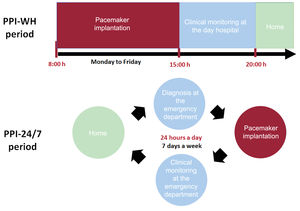
In the PPI-WH period, all pacemaker implants were performed during normal working hours (Monday to Friday, from 8:00 to 15:00hours). When the indication was established during normal working hours, the implantation was performed as soon as an operating room was made available as the rooms could be busy following the usual scheduling of patients. When the indication was established outside normal working hours, the patients were hospitalized under continuous electrocardiographic monitoring in the cardiovascular intensive care unit (in case they showed clinical instability or the need for transvenous transient pacing) or in the conventional hospitalization area. Implantation of the permanent pacemaker was then performed at the beginning of the next normal working day.

For the PPI-24/7 period, the device implant was performed as soon as an operating room was available (if the indication occurred during normal working hours) or immediately if it took place outside these hours. In the latter case, the 24-hour Implant Team was activated comprising an electrophysiologist and a nurse, supported in cases of unstable patients by a physician from the general cardiology on-call service.

Device implant and postimplant patient management were identical for both approaches. The patient's written consent was obtained prior to the procedure and cefazolin or vancomycin (if the patient was allergic to beta-lactam) was administered.8 The surgery was carried out following the current standards for cardiac device implants, with the atrial electrode positioned in the right atrial appendage and the ventricular electrode in the right ventricular apex. Venous access (cephalic, subclavian, or axillary vein) was determined by the operator.

A clinical evaluation by the general cardiology emergency team (including an electrocardiogram and a chest radiograph) was carried out 4hours after pacemaker implantation. Early patient discharge was then allowed in the absence of complications or other clinical processes that prevented their leaving. Patients were treated with the support of a Gilchrist bandage for 24hours and were instructed not to lift their arm homolateral to the implanted device, above shoulder level. In addition, pressure dressing of the pocket was applied for 4hours postintervention in all participants. Figure 1 shows the flow chart of patients in the procedures performed during the 2 periods.

Figure 1.

Flow chart of patients according to the approach under study. Diagram depicting the flow of patients in the procedures performed during PPI-WH (top) and PPI-24/7 (bottom). PPI-24/7, implant of permanent pacemaker 24hours a day, 7 days a week; PPI-WH, implant of permanent pacemaker during working hours.

(0.21MB).
Endpoints

The primary safety endpoint was established as the cumulative 180-day incidence of complications related to the index arrhythmia and device implant. In addition, complications occurring before implantation and those related to implantation (peri- and postimplantation) were analyzed separately. Major complications following implantation included cardiac perforation, pericardial tamponade, valve damage, hemothorax, pneumothorax, hematoma requiring surgery, myocardial infarction, peripheral embolus, ictus, and death. The primary efficacy endpoint was determined as the average number of hospital stays per patient due to the index arrhythmia. A hospital stay was defined as an overnight stay plus a main meal (lunch or dinner).9,10 Two secondary endpoints were predefined: cumulative survival at 180 days, and cumulative survival free from cardiovascular mortality at 180 days. We performed a cost analysis, defined as the savings from the use of hospital resources (stay in conventional hospitalization, stay in the cardiovascular intensive care unit and hospital emergency) in the 6 months following the index clinical event. The costs generated by the use of hospital resources are regulated by the National Health System:11,12 €642.2 for a stay in conventional hospitalization, €1053 for a stay in an intensive care unit and €119.14 for a stay in an emergency room. Likewise, the remuneration of the extra staff of the 24/7 service (on call physician and nurse) is legally established.13 Finally, an incremental cost-effectiveness analysis (ICE) was performed, following the formula: ICE=C PPI-WH – CB PPI-24/7 / E PPI-WH -E PPI-24/7, where C is cost, and E is efficacy (survival at 6 months)14 (table 1).

Follow-up

Follow-up was performed by face-to-face consultation: 10 days after implantation, 180 days after implantation, and then annually or biannually thereafter, depending on the patients’ clinical characteristics. For the endpoint analysis, follow-up began at the time of diagnosis of the arrhythmia leading to pacemaker implantation.

Statistical analysis

The analysis was performed using SPSS 25.0 for Windows (SPSS Inc, United States). Normally distributed continuous variables are described by mean and standard deviation, while categorical variables are expressed by absolute number and percentage. Continuous variables without normal distribution (determined by the Kolgomorov-Smirnov test) are described by the median and interquartile range (IQR). A comparison of categorical variables was performed using the chi-square test (or Fisher exact test if n <5). A comparison of 2 continuous variables with normal distribution was performed using the Student t test. The comparison of t2 continuous variables without normal distribution was performed using the Mann-Whitney U test. The log-rank method was used to compare the cumulative incidences at 180 days, expressed graphically with Kaplan-Meier curves. Multivariable analysis of the incidence of complications at 180 days was performed using the Cox regression method, including the following variables: age, sex, hypertension, diabetes, previous ischemic heart disease, atrial fibrillation, chronic oral anticoagulation, cognitive impairment, dual-chamber pacemaker implantation, and study period (PPI-WH vs PPI-24/7). A value of P <.05 was considered statistically significant.

RESULTSPatient characteristics, implantation timing, and procedures

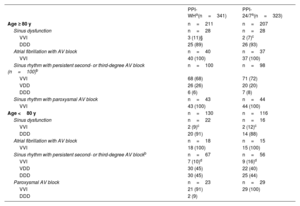
As depicted in table 1, the baseline characteristics of the patients, the prevalence of wide QRS complex and venous access were similar in the 2 periods analyzed. Table 2 shows the distribution of pacing mode according to clinical arrhythmia and age. There were no significant differences in pacing mode in PPI-WH vs PPI-24/7.

Table 2.

Pacemaker pacing mode according to age and clinical arrhythmia

  PPI-WHa(n=341)  PPI-24/7a(n=323) 
Age ≥ 80 y  n=211  n=207 
Sinus dysfunction  n=28  n=28 
VVI  3 (11)§  2 (7)c 
DDD  25 (89)  26 (93) 
Atrial fibrillation with AV block  n=40  n=37 
VVI  40 (100)  37 (100) 
Sinus rhythm with persistent second- or third-degree AV block (n=100)b  n=100  n=98 
VVI  68 (68)  71 (72) 
VDD  26 (26)  20 (20) 
DDD  6 (6)  7 (8) 
Sinus rhythm with paroxysmal AV block  n=43  n=44 
VVI  43 (100)  44 (100) 
Age <80 y  n=130  n=116 
Sinus dysfunction  n=22  n=16 
VVI  2 (9)c  2 (12)c 
DDD  20 (91)  14 (88) 
Atrial fibrillation with AV block  n=18  n=15 
VVI  18 (100)  15 (100) 
Sinus rhythm with persistent second- or third-degree AV blockb  n=67  n=56 
VVI  7 (10)d  9 (16)d 
VDD  30 (45)  22 (40) 
DDD  30 (45)  25 (44) 
Paroxysmal AV block  n=23  n=29 
VVI  21 (91)  29 (100) 
DDD  2 (9)   

PPI-24/7, pacemaker implantation 24/7; PPI-WH, pacemaker implantation in working hours.

Data are expressed as No. (%).

a

There were not significant differences in the mode of stimulation between the 2 periods analyzed.

b

The use of VVI was significantly more frequent in patients aged> 80 years with persistent AV bock in sinus rhythm (P=.03 - Chi-squared test).

c

The VVI pacing mode was used in patients with sinus dysfunction due to concomitant advanced state of cognitive impairment.

d

Patients with Charlson comorbidity index> 3.

Diagnosis of ASB was most frequently established in the emergency department (76%). For PPI-24/7, 178 (55%) device implants were performed out of working hours: 113 in the afternoon (from 15:00 to 21:59h), 50 at night (22:00 to 07:59h), and 15 in the morning on a nonworking day. This strategy was associated with a significant reduction of 13hours in the average delay from diagnosis to implantation (table 1).

Primary safety endpoint

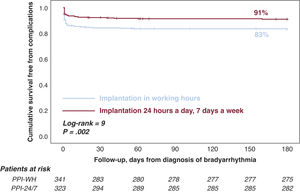
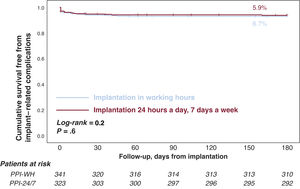
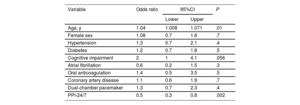
The cumulative incidence of patients with complications at 180 days was significantly lower in the PPI-24/7 period: 9% vs 17% (P=.002; log-rank test) (figure 2). In a multivariate analysis (Cox regression), age (adjusted odds ratio, 1.04, per year) and PPI-24/7 (adjusted odds ratio, 0.5) were found to be independent predictors of complications (table 3).

Figure 2.

Cumulative incidence of complications at 180 days. Kaplan-Meier plot showing the lowest incidence of complications for PPI-24/7. All complications from diagnosis of bradycardia are included. PPI-24/7, permanent pacemaker implantation 24hours a day, 7 days a week; PPI-WH, permanent pacemaker implantation during working hours.

(0.2MB).
Table 3.

Multivariable analysis (Cox regression) of predictors of complications at 180 days

Variable  Odds ratio  95%CIP 
    Lower  Upper   
Age, y  1.04  1.008  1.071  .01 
Female sex  1.08  0.7  1.6  .7 
Hypertension  1.3  0.7  2.1  .4 
Diabetes  1.2  0.7  1.8  .5 
Cognitive impairment  4.1  .056 
Atrial fibrillation  0.6  0.2  1.5  .3 
Oral anticoagulation  1.4  0.5  3.5  .5 
Coronary artery disease  1.1  0.6  1.9  .7 
Dual-chamber pacemaker  1.3  0.7  2.3  .4 
PPI-24/7  0.5  0.3  0.8  .002 

95%CI, 95% confidence interval; PPI-24/7, pacemaker implantation 24hours a day, 7 days a week.

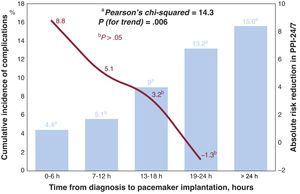
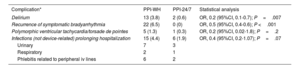
The incidence of preimplant complications increased significantly with the delay from ASB diagnosis to pacemaker implant (figure 3). PPI-24/7 was associated with a reduction in the incidence of preimplant complications (2.5% vs 12%; log-rank=20; P <.001), but the benefit was concentrated only in patients who underwent the implant within 12hours (igure 3). As shown in table 4, the recurrence of symptomatic bradyarrhythmia and the occurrence of delirium were significantly less frequent in PPI-24/7. As expected, the time from diagnosis to implant was significantly longer in patients with preimplant complications: 24hours (IQR: [12-35] vs 12 [11-13]; nonparametric P <.001.

Figure 3.

Incidence of preimplant complications according to the time from diagnosis of bradycardia. The incidence of preimplant complications increased linearly with time from the clinical onset of bradycardia among the total study population (n=664 patients). PPI-24/7, permanent pacemaker implantation 24hours a day, 7 days a week.

(0.21MB).
Table 4.

Frequency of preimplant complications according to the study periods

Complication*  PPI-WH  PPI-24/7  Statistical analysis 
Delirium  13 (3.8)  2 (0.6)  OR, 0.2 (95%CI, 0.1-0.7); P=.007 
Recurrence of symptomatic bradyarrhythmia  22 (6.5)  0 (0)  OR, 0.5 (95%CI, 0.4-0.6); P <.001 
Polymorphic ventricular tachycardia/torsade de pointes  5 (1.3)  1 (0.3)  OR, 0.2 (95%CI, 0.02-1.8); P=.2 
Infections (not device-related) prolonging hospitalization  15 (4.4)  6 (1.9)  OR, 0.4 (95%CI, 0.2-1.07); P=.07 
Urinary   
Respiratory   
Phlebitis related to peripheral iv lines   

95%CI, 95% confidence interval; OR, odds ratio; PPI-24/7, pacemaker implantation 24hours a day, 7 days a week; PPI-WH, pacemaker implantation in working hours.

Data are expressed as No. (%).

*

One patient may have had more than 1 complication.

A total of 42 (6.3%) patients had an implant-related complication. The cumulative incidence at 180 days was similar in the 2 periods analyzed: 6.7% (PPI-24/7) vs 5.9% (PPI-WH); P=0.6 (log-rank test) (figure 4). As shown in table 1, the distribution of the types of implant-related complications was also similar in the 2 periods. Out of a total of 178 patients receiving the implant outside working hours, 6 developed complications (cumulative incidence at 180 days: 3.9%): 5 lead dislocations and 1 mild hematoma.

Figure 4.

Cumulative incidence of procedure-related complications at 180 days. Kaplan-Meier plot showing that the safety profile of implantation was similar for the 2 approaches under study. PPI-24/7, permanent pacemaker implantation 24hours a day, 7 days a week; PPI-WH, permanent pacemaker implantation during working hours.

(0.2MB).
Primary efficacy endpoint

As shown in table 1, the average number of hospital stays was significantly lower with the PPI-24/7 approach, with a reduction of 2 hospital stays per patient (nonparametric P <.001). In addition, the percentage of participants requiring admission to the cardiovascular intensive care unit (66%) and the number of hours of hospital stays were reduced in PPI-24/7 (table 1). On the other hand, the average number of hospital stays per patient increased by 2 in those with preimplant complications: 3 (IQR [1-7] vs 1 [0-2]; nonparametric P <.001). This was due not only to a delay in implantation but also because the frequency of same-day discharge was significantly lower for these patients: 25% vs 62% (P <.001).

Secondary endpoints

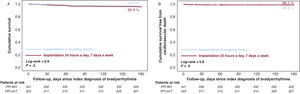
The cumulative survival at 180 days was similar in PPI-WH (96.8%) and PPI-24/7 (95.4%) (figure 5A). However, approximately 3 out of 4 participants died of noncardiovascular causes. Consequently, cardiovascular mortality at 180 days was as low as 1% (figure 5B). Table 1 summarizes the causes of death.

Figure 5.

Mortality and cardiovascular mortality. Kaplan-Meier plots depicting cumulative survival free from death (left) and cardiovascular death (right). No differences for either variable were found between the approaches under study.

(0.23MB).

The average cost per patient was €3237 (PPI-WH) vs €2597 (PPI-24/7); P=.04. Therefore, the cost per patient in the PPI-24/7 was 20% lower, corresponding to an average saving of €640 (95% confidence interval: 497-739) per patient. PPI-24/7 was cost-effective, with an ICE of457 euros (table 1).

DISCUSSION

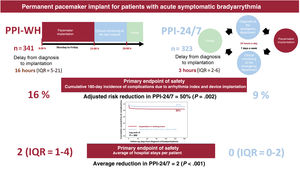
To the best of our knowledge, we present the outcomes of the first 24/7 PPI service for patients with ASB. The main findings indicate that urgent implant significantly reduces morbidity and hospital stays, with no increase in implant-related complications (figure 6).

Figure 6.

Central Illustration. Outcomes of a service for urgent permanent pacemaker implantation available 24/7. The strategy of urgent pacemaker implantation 24hours a day, 7 days a week (PPI-24/7) was associated with a significant reduction in the cumulative incidence of complications at 180 days and the use of hospital resources. PPI-WH, permanent pacemaker implantation during working hours.

(0.5MB).
Innovative strategies in the flow of patients undergoing invasive electrophysiology procedures

Although several studies have shown that the strategy of same-day discharge after invasive electrophysiology procedures is feasible, both in the settings of catheter ablation15,16 and device implants,5 many hospitals have not yet implemented this strategy in routine practice. In a recent European Heart Rhythm Association survey, only 50% of hospitals (preferably high-volume tertiary centers) used same-day discharge after pacemaker implantation. Although same-day discharge after device implantation is safe4,5 and cost-effective,5 usually leading to patient satisfaction, it does not translate into a clinical benefit.17 On the other hand, most of the morbidity (often of noncardiac origin) in patients with ASB occurs in the time interval between diagnosis and PPI. In a previous and retrospective study, 32% of patients experienced at least 1 adverse event during this waiting period.6 Generally, patients experiencing preimplant complications are not suitable for early discharge. This may explain why, according to our data, the feasibility of same-day discharge is significantly reduced by almost 50% when comparing PPI-24/7 with PPI-WH. Finally, the implant of transvenous temporary pacemakers is associated with longer hospital stays18 and a higher frequency of complications,18–20 again in a time-dependent manner. Our experience with the systematic PPI-24/7 program has allowed us to avoid the implantation of temporary pacemakers in unstable patients and the morbidity that could be associated with their use.

Benefits of shortening the waiting time to permanent pacemaker implantation

Several authors have reported that in participants with acute bradyarrhythmia, there is a positive correlation between waiting time and PPI.6,20,21 Risgaard et al.6 propose that delaying implantation for more than 24hours is associated with a higher incidence of complications. Our data support this proposal, even with waiting times that are less than 24hours, such as in the PPI-WH approach (average of 16). Moreover, an additional 13-hour reduction is associated with a significant decrease (by 80%) in the incidence of preimplantation complications. These preimplant complications, beyond their direct clinical consequences, have an additional impact on hospital management because they prolong hospitalization by 2 hospital stays per patient. Applying these data to all patients and given that PPI-24/7 reduces preimplant complications, this strategy is associated with a significant reduction of 2 hospital stays per patient, which translates into a saving of 20% in the average cost per patient.

Safety of urgent implantation of permanent pacemakers

The incidence of complications related to pacemaker implantation at 6 months ranges from 1% to 12%.3–5,22–24 The safety of this procedure is highly dependent on the operator's experience,25 the size of the center,25 and the complexity of the implant device.22 In our service, at a university hospital with trainee electrophysiologists, the cumulative 6-month incidence of implant-related complications was 6%, of which about 4% were major. These data are similar to those from international registries of routine clinical practice (ie, in the historical cohort of over 2600 patients from 6 large multicenter studies, the incidence of major complications at 6 months was 7.4%).23 Although the same-day discharge strategy is not associated with an increased incidence of complications,4 there is little information on the safety of implants performed urgently outside normal working hours. Our data indicate that urgent implantation (with a mean delay of 3hours from indication) is not associated with a higher frequency of complications21 and, when performed outside normal working hours, has an excellent safety profile with the lowest incidence of major complications (2.8%). A possible explanation is that the implants placed outside working hours were performed by experienced (> 5 years) specialists working as the first operator in the implantation of the device.

Limitations

The evidence provided by our study is based on an observational analysis. Because of the lack of randomization, it is impossible to completely rule out bias in any result. In addition, the single-center design limits the generalizability of our findings. However, this is a prospective study with systematic assessment of all consecutive patients (avoiding selection bias), representing a typical population in routine clinical practice with advanced age and a high prevalence of comorbidities. In addition, our hospital is a relatively high-volume center, and the after-hours implants were performed by highly experienced implant physicians. Therefore, our results may not be generalizable and extrapolated to low-volume settings.

In addition, slightly more than half of the implanted devices were VVI. This frequency is higher than in other contemporary series of unselected patients.2 However, in our service, according to the established protocol, we use this pacing mode in patients who, even in sinus rhythm, have sporadic paroxysmal AV block, as well as in the very old (> 80 years), and/or those with advanced comorbidities and advanced AV block. In these patients, this pacing mode shows excellent clinical performance.26,27

The venous access used in most patients was the subclavian vein. Both axillary and cephalic vein access have a lower risk of pneumothorax. The risk of pneumothorax in subclavian access depends on the experience of the institution28 and operators.25 In our series the incidence was only 0.3% (2 patients), probably due to the relatively high volume of cases per operator in our center. On the other hand, retrospective studies have suggested that subclavian vein access may be associated with an increased risk of fracture during follow-up.29

In our institution, we do not use septal pacing/conduction system pacing in patients with normal left ventricular ejection fraction (LVEF). Although this is a promising strategy, which could prevent LVEF deterioration in participants subjected to pacing rate> 20%, there is still insufficient data to implement it systematically in patients with normal LVEF according to current European guidelines.3 If this approach to pacing were to generate enough scientific evidence to be considered by clinical practice guidelines as a priority, it should be included as such in pacemaker implantation programs, whether urgent or not.

Finally, the implementation of this service in health systems may present logistical issues, as it requires specialized personnel working outside of normal hours, as well as financial difficulties due to the extra remuneration of these staff. However, according to the prices of our public system, the PPI-24/7 service is associated with a significant 20% reduction in the average cost per patient.

CONCLUSIONS

A systematic program of urgent pacemaker implantation for ASB, available 24hours a day, 7 days a week, significantly reduces the complications associated with this clinical process, primarily by reducing preimplant morbidity. This strategy leads to a reduction of 2 hospital stays per patient and better use of hospital resources. Additionally, the implants performed outside normal working hours have an excellent safety profile. Whether urgent pacemaker implantation reduces morbidity should be tested in new prospective, randomized studies.

FUNDING

This work was supported in part by the Biomedical Research Institute of Salamanca (IBSAL)-University Hospital of Salamanca (ACG) and a Ramón y Cajal contract (AOM).

ETHICAL CONSIDERATIONS

The study includes participants of both sexes as the pathology is distributed in the general population. The authors believe that the results can be extrapolated to both sexes. All patients were informed about the study and provided their written consent. This research was carried out in accordance with internationally accepted recommendations for clinical investigation (Declaration of Helsinki of the World Medical Association). The protocol for the PPI-24/7 service was approved by the administrative authorities of our institution.

STATEMENT ON THE USE OF ARTIFICIAL INTELLIGENCE

Artificial intelligence was not used in the preparation of this article.

AUTHORS’ CONTRIBUTIONS

Conceptualization: J. Jiménez-Candil, P.L. Sánchez. Data curation: A. Cruz Galbán, M. Sánchez García. Software: M. Sánchez García. Formal analysis: J. Jiménez-Candil, A. Oterino, J. Hernández, J.L. Moriñigo, M. Sánchez García. Research: J. Jiménez-Candil, A. Oterino, A. Cruz Galbán, J.Hernández, M. Sánchez García., J.L. Moriñigo. Methodology: J. Jiménez-Candil, J.L. Moriñigo, P.L. Sánchez. Supervision: P.L. Sánchez. Validation: P.L. Sánchez, J. Hernández. Writing - original draft: J. Jiménez-Candil. Writing - proofreading and editing: J. Jiménez-Candil.

CONFLICTS OF INTEREST

None declared.

WHAT IS KNOWN ABOUT THE TOPIC?

Among patients with acute and symptomatic bradyarrhythmia, most complications occur between diagnosis and permanent pacemaker implantation.

WHAT DOES THIS STUDY ADD?

This prospective observational cohort study of patients with acute and symptomatic bradyarrhytmias analyzed 2 consecutive periods: implants during working hours vs a program for urgent permanent pacemaker implantation available 24/7 (PPI-24/7). PPI-24/7 was associated with a significant decrease (50%) of the complications associated with this clinical process, primarily by reducing preimplant morbidity. This strategy led to a reduction of 2 hospital stays per patient and better use of hospital resources.

References
[1]
H.G. Mond, A. Proclemer.
The 11th world survey of cardiac pacing and implantable cardioverter-defibrillators: calendar year 2009--a World Society of Arrhythmia&apos;s project.
Pacing Clin Electrophysiol, (2011), 34 pp. 1013-1027
[2]
Spanish pacemaker registry. 19th official report of the Heart Rhythm Association of the Spanish Society of Cardiology (2021). Rev Esp Cardiol. 2022;75:946-956.
[3]
M. Glikson, J.C. Nielsen, M.B. Kronborg, et al.
2021 ESC Guidelines on cardiac pacing and cardiac resynchronization therapy.
Eur Heart J., (2021), 42 pp. 3427-3520
[4]
C. Budano, P. Garrone, D. Castagno, et al.
Same-day CIED implantation and discharge: Is it possible? The E-MOTION trial (Early MObilization after pacemaker implantaTION).
Int J Cardiol., (2019), 288 pp. 82-86
[5]
S. Archontakis, E. Oikonomou, K. Sideris, et al.
Safety of same-day discharge versus overnight stay strategy following cardiac device implantations: a high-volume single-centre experience.
J Interv Card Electrophysiol., (2023), 66 pp. 471-481
[6]
B. Risgaard, H. Elming, G.V. Jensen, J.B. Johansen, J.C. Toft.
Waiting for a pacemaker: is it dangerous?.
Europace., (2012), 14 pp. 975-980
[7]
M. Brignole, A. Auricchio, G. Baron-Esquivias, 2013 ESC guidelines on cardiac pacing and cardiac resynchronization therapy: the task force on cardiac pacing and resynchronization therapy of the European Society of Cardiology (ESC). Developed in collaboration with the European Heart Rhythm Association (EHRA), et al.
Europace, (2013), 15 pp. 1070-1118
[8]
J.C. de Oliveira, M. Martinelli, S.A. Nishioka, et al.
Efficacy of antibiotic prophylaxis before the implantation of pacemakers and cardioverter-defibrillators: results of a large, prospective, randomized, double-blinded, placebo-controlled trial.
Circ Arrhythm Electrophysiol., (2009), 2 pp. 29-34
[9]
Euskal Estatistika Erakundea. Estancias hospitalarias. Available at: https://www.eustat.eus/documentos/opt_0/tema_17/elem_1497/definicion.html. Accessed 8 Dec 2023.
[10]
J. Jimenez-Candil, J. Perez, J. Hernández, J.L. Moriñigo, M. Sanchez García, P.L. Sanchez.
Outpatient ablation for atrial fibrillation.
Rev Esp Cardiol., (2021), 74 pp. 466-468
[11]
Decreto 25/2010, de 17 de junio, por el que se actualizan los precios públicos por actos asistenciales y servicios sanitarios prestados por la Gerencia Regional de Salud de Castilla y León. Boletín Oficial de Castilla y León. Boletín Oficial de Castilla y León. 23 de junio de 2010. Núm. 119, p. 49646-49666.
[12]
GRS-SACYL. Coste de los procesos de hospitalización: costes medios de los grupos relacionados con el diagnóstico. Coste medio 2016. https://www.saludcastillayleon.es/transparencia/es/transparencia/informacion-datos-publicos/gestion-economica/coste-servicios. Accessed 12 Dec 2023.
[13]
GRS-SACYL. Orden del 18 de marzo de 2021 de la Consejería de Sanidad de la Junta de Castilla y León por la que se dictan las instrucciones para la elaboración de las nóminas del personal que presta sus servicios en los ámbitos de atención especialidaza y atención primaria en 2021. Accessed 10 Dec 2023.
[14]
M. Drummond, W.B. O’Brien, G. Stoddart, G. Torrance.
Methods for the economic evaluation of healt care programs, 2 edition.
Oxford Universtiy Press, (1997), pp. 39-54
[15]
J. Jimenez-Candil, J. Hernandez Hernandez, A. Cruz Galban, et al.
Clinical and economic outcomes of a systematic same-day discharge programme after pulmonary vein isolation: comparison between cryoballoon vs radiofrequency ablation.
Europace., (2023), 25 pp. euad265
[16]
M.W. Deyell, R.A. Leather, L. Macle, et al.
Efficacy and Safety of Same-Day Discharge for Atrial Fibrillation Ablation.
JACC Clin Electrophysiol., (2020), 6 pp. 609-619
[17]
S. Konig, M. Svetlosak, M. Grabowski, et al.
Utilization and perception of same-day discharge in electrophysiological procedures and device implantations: an EHRA survey.
Europace., (2021), 23 pp. 149-156
[18]
S.E.R. Papp, A. Torres, A.E.L. Vasquez, L. Gioli-Pereira.
Complications associated with the use of temporary pacemaker in patients waiting for definitive device implantation.
Einstein (Sao Paulo)., (2022), 20 pp. eAO8013
[19]
D.J. Hildick-Smith, M.C. Petch.
Temporary pacing before permanent pacing should be avoided unless essential.
[20]
R.K. Aggarwal, D.T. Connelly, S.G. Ray, J. Ball, R.G. Charles.
Early complications of permanent pacemaker implantation: no difference between dual and single chamber systems.
Br Heart J., (1995), 73 pp. 571-575
[21]
M. Rodriguez-Manero, F. Reyes, J. Garcia-Seara, J.L. Martinez-Sande, V. Caballer-Tarazona, J.R. Gonzalez-Juanatey.
Clinical and cost-effectiveness results of an on-call program for pacemaker implantations.
Rev Esp Cardiol., (2023), 76 pp. 936-937
[22]
M. Frausing, M.B. Kronborg, J.B. Johansen, J.C. Nielsen.
Avoiding implant complications in cardiac implantable electronic devices: what works?.
Europace., (2021), 23 pp. 163-173
[23]
D. Reynolds, G.Z. Duray, R. Omar, et al.
A Leadless Intracardiac Transcatheter Pacing System.
N Engl J Med., (2016), 374 pp. 533-541
[24]
E.O. Udo, N.P. Zuithoff, N.M. van Hemel, et al.
Incidence and predictors of short- and long-term complications in pacemaker therapy: the FOLLOWPACE study.
Heart Rhythm. May, (2012), 9 pp. 728-735
[25]
K. Tobin, J. Stewart, D. Westveer, H. Frumin.
Acute complications of permanent pacemaker implantation: their financial implication and relation to volume and operator experience.
Am J Cardiol., (2000), 85 pp. 774-776
[26]
W.D. Toff, A.J. Camm, J.D. Skehan, P. United Kingdom.
Cardiovascular Events Trial I. Single-chamber versus dual-chamber pacing for high-grade atrioventricular block.
N Engl J Med., (2005), 353 pp. 145-155
[27]
G.A. Lamas, E.J. Orav, B.S. Stambler, et al.
Quality of life and clinical outcomes in elderly patients treated with ventricular pacing as compared with dual-chamber pacing. Pacemaker Selection in the Elderly Investigators.
N Engl J Med., (1998), 338 pp. 1097-1104
[28]
R.E. Kirkfeldt, J.B. Johansen, E.A. Nohr, M. Moller, P. Arnsbo, J.C. Nielsen.
Pneumothorax in cardiac pacing: a population-based cohort study of 28,860 Danish patients.
Europace., (2012), 14 pp. 1132-1138
[29]
N.Y. Chan, N.P. Kwong, A.P. Cheong.
Venous access and long-term pacemaker lead failure: comparing contrast-guided axillary vein puncture with subclavian puncture and cephalic cutdown.
Europace., (2017), 19 pp. 1193-1197

Javier Jiménez-Candil and Armando Oterino contributed equally to this manuscript.

Copyright © 2024. Sociedad Española de Cardiología