
ISSN: 1885-5857 Impact factor 2024 4.9
Vol. 78. Num. 9.
Pages 780-788 (September 2025)

Original article
Impact of early SGLT2 inhibitors prescription on acute decompensated heart failure outcomes: insights from a real-world setting

Impacto de la prescripción temprana de inhibidores de SGLT2 en los resultados de la insuficiencia cardiaca aguda descompensada: evidencia del mundo real

Luis E. EcheverríaaLyda Z. RojasbAngie Yarlady Serrano-GarcíaaDaniel R. BoteroaMaría Cantillo-ReinesaAdriana M. JuradoaKaren Andrea García-RuedaaÁngela Torres-BustamanteaDiana Ivonne Cañón-GómezcCarolina Idrovo-TurbaycRobinson Sánchez-GarcíacJaime Alberto RodríguezcSergio A. Gómez-Ochoaad
https://doi.org/10.1016/j.rec.2025.02.006
Supplementary data
Imagen extra
Rev Esp Cardiol. 2025;78:780-8
Abstract
Introduction and objectives

Although sodium-glucose cotransporter 2 inhibitors (SGLT2i) have shown benefits in acute decompensated heart failure (ADHF), the extrapolability of clinical trial results to general populations remains limited. This study evaluated the impact of early in-hospital SGLT2i prescription on ADHF outcomes in a real-world setting.

Methods

Prospective cohort study. Adults with ADHF from a third-level cardiovascular center were included. The primary analysis compared early SGLT2i (prescribed within 48hours of admission) versus late SGLT2i (prescribed after 48hours). A secondary analysis included patients not receiving in-hospital SGLT2i. The primary outcome was in-hospital mortality. Secondary outcomes included the length of hospital stay, 30-day improvement in the Minnesota Living with Heart Failure Questionnaire score, 30-day rehospitalization due to heart failure, and 30-day all-cause mortality.

Results

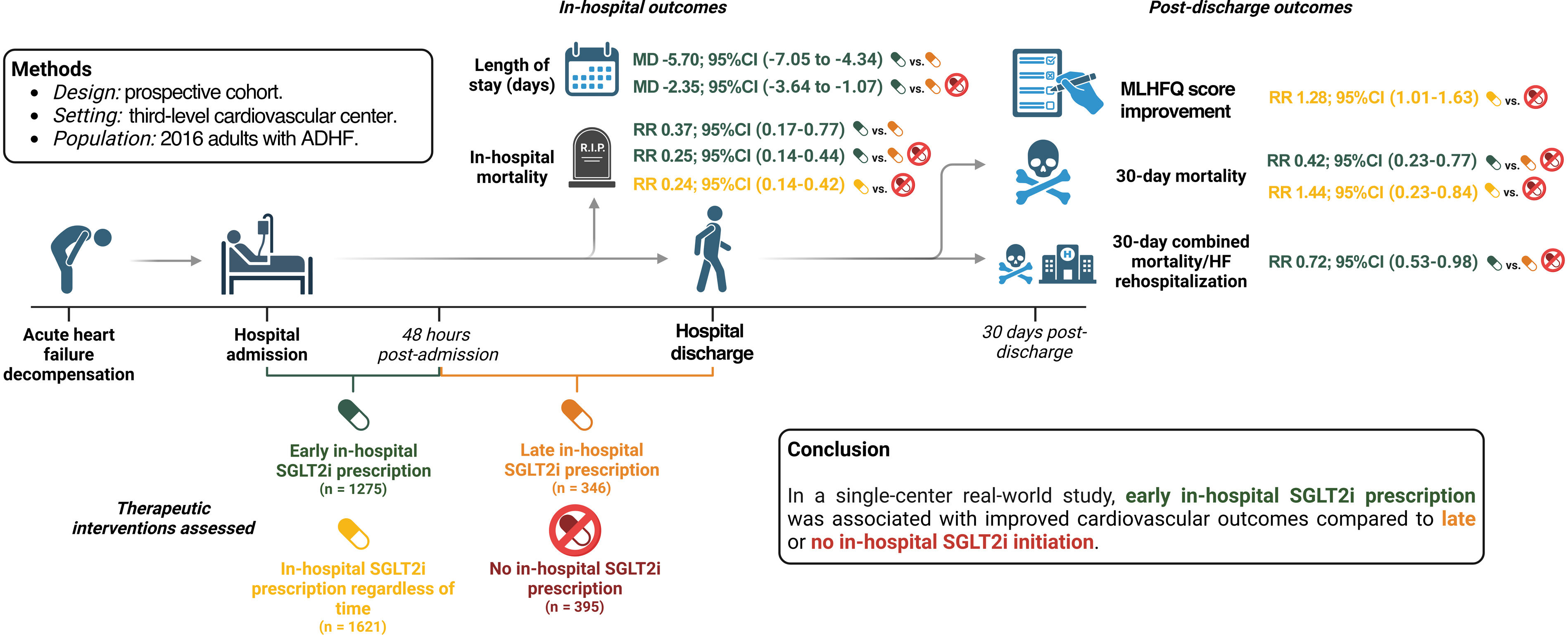
Of 2016 patients, early SGLT2i (≤ 48h) was initiated in 1275 (63.2%) patients, late SGLT2i in 346 (17.2%), and 395 (19.6%) did not receive in-hospital SGLT2i. After multivariate adjustment, early versus late SGLT2i use was associated with decreased in-hospital mortality (RR, 0.37; 95%CI, 0.17-0.77) and reduced hospital stay (mean difference −5.70 days; 95%CI, −7.05 to −4.34). Similarly, early versus late or no in-hospital SGLT2i use was associated with decreased in-hospital mortality (RR, 0.25; 95%CI, 0.14-0.44), reduced hospital stay (mean difference −2.99 days; 95%CI, −4.05 to −1.92), and lower 30-day combined mortality/heart failure rehospitalization (RR, 0.72; 95%CI, 0.53-0.98).

Conclusions

Early in-hospital SGLT2i prescription was associated with improved cardiovascular outcomes in ADHF in a real-world setting.

Keywords

SGLT2 inhibitors
Acute decompensated heart failure
Mortality
Hospitalization
INTRODUCTION

Sodium-glucose cotransporter 2 inhibitors (SGLT2i) have recently entered the heart failure (HF) treatment arena as a promising drug class, with multiple clinical trials underscoring their benefit in reducing adverse cardiovascular outcomes and improving survival, regardless of diabetes status or the ejection fraction.1–3 Consequently, contemporary clinical practice guidelines now prioritize SGLT2i as a first-line option for HF treatment, awarding them a class I recommendation.4 Yet, the ideal timing for commencing SGLT-2 inhibitor therapy remains debated. In this regard, the EMPULSE trial revealed the benefits and safety of initiating SGLT2i treatment during acute HF hospitalizations. Notably, the median time of randomization in this trial was 3 days [IQR: 2-4 days].5 This timeframe, largely dictated by patient stabilization requirements in the initial stages of hospitalization, leaves a gap in our understanding regarding the potential benefit of early SGLT2i continuation or initiation during acute episodes regarding survival and rehospitalization. Additionally, there is currently scarcity of real-world evidence on the safety and benefit of early in-hospital SGLT2i prescription in patients with acute decompensated heart failure (ADHF). Therefore, we aimed to explore the association between early in-hospital initiation of SGLT2i and clinical outcomes in patients presenting with ADHF at a tertiary cardiovascular center.

METHODSData collection and patient population

Prospective cohort study () based on the Institutional acute descompensated heart failure registry (ICARUS) of the Instituto Cardiovascular, Fundación Cardiovascular de Colombia, Floridablanca, Colombia. The ICARUS is an ongoing prospective registry aimed at improving the quality of attention in patients with HF at the institutional level, as well as collecting data on short-term patient outcomes. Trained personnel from the center of excellence in HF and heart transplant collected data related to patient demographics, clinical characteristics and vital signs, medical history, medications, laboratory values, and discharge outcomes in standardized report forms in RedCap (Research Electronic Data Capture).

Adult patients with HF, according to the modified Framingham criteria, who were admitted to the emergency department due to ADHF from 01/06/2022 to 01/03/2024 were included. All patients admitted with ADHF were included regardless of the initial admitting department (emergency department, internal medicine, cardiology, or intensive care unit). Only the first hospital admission per patient during this period was considered. While N-terminal pro-B-type natriuretic peptide measurement was available at our center, it was not included as a mandatory diagnostic criterion due to varying availability and local resource optimization. The modified Framingham criteria were chosen as the primary diagnostic tool due to their established reliability and universal applicability in our setting. This approach aligns with real-world practice patterns where natriuretic peptides testing may not be consistently available. Patients with missing information regarding age, sex, or SGLT2i prescription were excluded. No other exclusion criteria were applied. Patients were classified into 3 groups according to SGLT2i prescription: early SGLT2i (prescribed within 48hours of admission), late SGLT2i (prescribed after 48hours), and no SGLT2i (not prescribed during hospitalization). The Institutional Committee on Research Ethics approved the study protocol (CEI-2022-05104) and waived the requirement for individual informed consent due to the registry-based nature of the study, the use of de-identified data, and the absence of any direct patient contact for research purposes beyond standard clinical care.

Study outcomes and follow-up

The primary outcome was all-cause in-hospital mortality. Secondary outcomes included the length of hospital stay, 30-day change in the Minnesota Living with Heart Failure Questionnaire (MLHFQ) score, 30-day rehospitalization due to HF, and 30-day all-cause mortality. The MLHFQ is a validated 21-item instrument that comprehensively assesses health-related quality of life in HF patients. The questionnaire evaluates physical (8 items), emotional (5 items), and socioeconomic (8 items) dimensions of HF impact. Scores range from 0 to 105, with higher scores indicating a worse quality of life. Each item is scored from 0 (no impact) to 5 (severe impact) based on the patient's perception of how much their HF affected that aspect of life during the previous month. Clinical events and mortality were verified through multiple complementary sources to ensure complete and accurate follow-up, including the institutional electronic health records system, the records of the Colombian Ministry of Health, which reports the affiliation of citizens to the national health system and indicates whether an individual was disaffiliated due to death, and telephone interviews at 30 days, which are performed systematically by the HF clinic as part of the standard of care. HF rehospitalization was defined as any unplanned hospital admission lasting more than 24hours with signs and symptoms of HF requiring intravenous therapy. The diagnosis was confirmed by an independent cardiologist that reviewed the respective clinical records. Planned admissions for elective procedures or other cardiac conditions were not counted as HF rehospitalizations.

Statistical analysis

The baseline characteristics were described according to the variable type. The chi-square and Fischer's exact test were used to assess differences in categorical variables, while the Mann-Whitney U test and the Kruskal-Wallis test were used for continuous variables. To identify clinical characteristics associated with SGLT2i prescription patterns, we conducted three separate analyses examining: a) early versus late SGLT2i, b) early versus non-early (late or no) SGLT2i use, and c) any in-hospital SGLT2i use versus none. We used logistic regression models with backward selection, starting with clinically relevant variables including demographics, vital signs, laboratory values, comorbidities, and baseline medications. Variables with P<.10 in univariable analysis were included in the initial multivariable model. The final model retained variables with P<.05 after backward elimination. Results are presented as odds ratios (OR) with 95% confidence intervals (95%CI). Multivariate models for the exploration of SGLT2i benefit were adjusted for key demographic, clinical and laboratory variables including age, sex, ejection fraction, prior readmissions, estimated glomerular filtration rate (Egfr), body mass index, heart rate, New York Heart Association class, blood pressure, comorbidities, B-type natriuretic peptide levels, potassium, and baseline medications. Detailed information about model adjustment variables is available in . Relative risks were estimated using quasibinomial regression models to account for potential overdispersion. Variables with missing observations in less than 15% of the total were subjected to multiple imputations using the mice package. A 2-tailed P<.05 was considered statistically significant. All statistical analyses were performed using R Statistical Software (v4.3.1; R Core Team 2023).

RESULTS

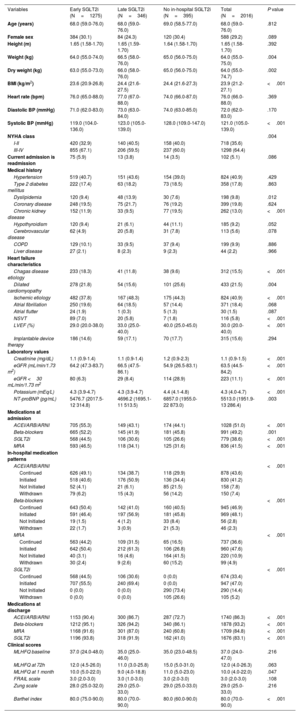
Among 3042 ADHF admissions at the Fundación Cardiovascular de Colombia during the evaluated period, 2016 eligible patients (mean age: 68.0 years; 29.2% females) were included in the present analysis (table 1, figure 1, and ). Patients receiving early SGLT2i presented with distinct clinical characteristics compared to those receiving late or no SGLT2i. The early SGLT2i group had lower systolic blood pressure (119 versus 123 versus 128mmHg, P<.001), lower left ventricular ejection fraction (29% versus 33% versus 40%, P<.001), and higher prevalence of New York Heart Association class III-IV symptoms (67.1% versus 59.5% versus 60.0%, P=.004). These patients also had a higher prevalence of prior SGLT2i use (44.5% versus 30.6% versus 26.6%, P<.001) and better baseline optimization of guideline-directed medical therapy, including angiotensin-converting enzyme inhibitor/angiotensin receptor blocker/angiotensin receptor-neprilysin inhibitor (55.3% versus 43.1% versus 44.1%, P<.001), beta-blockers (52.2% versus 41.9% versus 45.8%, P=.001), and aldosterone receptor antagonists (46.5% vs 34.1% versus 31.6%, P<.001) (table 1). No episodes of ketoacidosis were reported.

Table 1.

Baseline characteristics of the studied population according to early in-hospital SGLT2i prescription

Variables  Early SGLT2i (N=1275)  Late SGLT2i (N=346)  No in-hospital SGLT2i (N=395)  Total (N=2016)  P value 
Age (years)  68.0 (59.0-76.0)  68.0 (59.0-76.0)  69.0 (58.5-77.0)  68.0 (59.0-76.0)  .812 
Female sex  384 (30.1)  84 (24.3)  120 (30.4)  588 (29.2)  .089 
Height (m)  1.65 (1.58-1.70)  1.65 (1.59-1.70)  1.64 (1.58-1.70)  1.65 (1.58-1.70)  .392 
Weight (kg)  64.0 (55.0-74.0)  66.5 (58.0-76.0)  65.0 (56.0-75.0)  64.0 (55.0-75.0)  .004 
Dry weight (kg)  63.0 (55.0-73.0)  66.0 (58.0-76.0)  65.0 (56.0-75.0)  64.0 (55.0-74.7)  .002 
BMI (kg/m2)  23.6 (20.9-26.8)  24.4 (21.6-27.5)  24.4 (21.6-27.3)  23.9 (21.2-27.1)  <.001 
Heart rate (bpm)  76.0 (65.0-88.0)  77.0 (67.0-88.0)  74.0 (66.0-87.0)  76.0 (66.0-88.0)  .369 
Diastolic BP (mmHg)  71.0 (62.0-83.0)  73.0 (63.0-84.0)  74.0 (63.0-85.0)  72.0 (62.0-83.0)  .170 
Systolic BP (mmHg)  119.0 (104.0-136.0)  123.0 (105.0-139.0)  128.0 (109.0-147.0)  121.0 (105.0-139.0)  <.001 
NYHA class          .004 
I-II  420 (32.9)  140 (40.5)  158 (40.0)  718 (35.6)   
III-IV  855 (67.1)  206 (59.5)  237 (60.0)  1298 (64.4)   
Current admission is readmission  75 (5.9)  13 (3.8)  14 (3.5)  102 (5.1)  .086 
Medical history           
Hypertension  519 (40.7)  151 (43.6)  154 (39.0)  824 (40.9)  .429 
Type 2 diabetes mellitus  222 (17.4)  63 (18.2)  73 (18.5)  358 (17.8)  .863 
Dyslipidemia  120 (9.4)  48 (13.9)  30 (7.6)  198 (9.8)  .012 
Coronary disease  248 (19.5)  75 (21.7)  76 (19.2)  399 (19.8)  .624 
Chronic kidney disease  152 (11.9)  33 (9.5)  77 (19.5)  262 (13.0)  <.001 
Hypothyroidism  120 (9.4)  21 (6.1)  44 (11.1)  185 (9.2)  .052 
Cerebrovascular disease  62 (4.9)  20 (5.8)  31 (7.8)  113 (5.6)  .078 
COPD  129 (10.1)  33 (9.5)  37 (9.4)  199 (9.9)  .886 
Liver disease  27 (2.1)  8 (2.3)  9 (2.3)  44 (2.2)  .966 
Heart failure characteristics           
Chagas disease etiology  233 (18.3)  41 (11.8)  38 (9.6)  312 (15.5)  <.001 
Dilated cardiomyopathy  278 (21.8)  54 (15.6)  101 (25.6)  433 (21.5)  .004 
Ischemic etiology  482 (37.8)  167 (48.3)  175 (44.3)  824 (40.9)  <.001 
Atrial fibrillation  250 (19.6)  64 (18.5)  57 (14.4)  371 (18.4)  .068 
Atrial flutter  24 (1.9)  1 (0.3)  5 (1.3)  30 (1.5)  .087 
NSVT  89 (7.0)  20 (5.8)  7 (1.8)  116 (5.8)  <.001 
LVEF (%)  29.0 (20.0-38.0)  33.0 (25.0-40.0)  40.0 (25.0-45.0)  30.0 (20.0-40.0)  <.001 
Implantable device therapy  186 (14.6)  59 (17.1)  70 (17.7)  315 (15.6)  .294 
Laboratory values           
Creatinine (mg/dL)  1.1 (0.9-1.4)  1.1 (0.9-1.4)  1.2 (0.9-2.3)  1.1 (0.9-1.5)  <.001 
eGFR (mL/min/1.73 m2)  64.2 (47.3-83.7)  66.5 (47.5-86.1)  54.9 (26.5-83.1)  63.5 (44.5-84.2)  <.001 
eGFR <30 mL/min/1.73 m2  80 (6.3)  29 (8.4)  114 (28.9)  223 (11.1)  <.001 
Potassium (mEq/L)  4.3 (3.9-4.7)  4.3 (3.9-4.7)  4.4 (4.1-4.8)  4.3 (4.0-4.7)  <.001 
NT-proBNP (pg/mL)  5476.7 (2017.5-12 314.8)  4696.2 (1695.1-11 513.5)  6857.0 (1955.0-22 873.0)  5513.0 (1951.9-13 286.4)  .003 
Medications at admission           
ACEI/ARB/ARNI  705 (55.3)  149 (43.1)  174 (44.1)  1028 (51.0)  <.001 
Beta-blockers  665 (52.2)  145 (41.9)  181 (45.8)  991 (49.2)  .001 
SGLT2i  568 (44.5)  106 (30.6)  105 (26.6)  779 (38.6)  <.001 
MRA  593 (46.5)  118 (34.1)  125 (31.6)  836 (41.5)  <.001 
In-hospital medication patterns           
ACEI/ARB/ARNI          <.001 
Continued  626 (49.1)  134 (38.7)  118 (29.9)  878 (43.6)   
Initiated  518 (40.6)  176 (50.9)  136 (34.4)  830 (41.2)   
Not Initiated  52 (4.1)  21 (6.1)  85 (21.5)  158 (7.8)   
Withdrawn  79 (6.2)  15 (4.3)  56 (14.2)  150 (7.4)   
Beta-blockers          <.001 
Continued  643 (50.4)  142 (41.0)  160 (40.5)  945 (46.9)   
Initiated  591 (46.4)  197 (56.9)  181 (45.8)  969 (48.1)   
Not Initiated  19 (1.5)  4 (1.2)  33 (8.4)  56 (2.8)   
Withdrawn  22 (1.7)  3 (0.9)  21 (5.3)  46 (2.3)   
MRA          <.001 
Continued  563 (44.2)  109 (31.5)  65 (16.5)  737 (36.6)   
Initiated  642 (50.4)  212 (61.3)  106 (26.8)  960 (47.6)   
Not Initiated  40 (3.1)  16 (4.6)  164 (41.5)  220 (10.9)   
Withdrawn  30 (2.4)  9 (2.6)  60 (15.2)  99 (4.9)   
SGLT2i          <.001 
Continued  568 (44.5)  106 (30.6)  0 (0.0)  674 (33.4)   
Initiated  707 (55.5)  240 (69.4)  0 (0.0)  947 (47.0)   
Not Initiated  0 (0.0)  0 (0.0)  290 (73.4)  290 (14.4)   
Withdrawn  0 (0.0)  0 (0.0)  105 (26.6)  105 (5.2)   
Medications at discharge           
ACEI/ARB/ARNI  1153 (90.4)  300 (86.7)  287 (72.7)  1740 (86.3)  <.001 
Beta-blockers  1212 (95.1)  326 (94.2)  340 (86.1)  1878 (93.2)  <.001 
MRA  1168 (91.6)  301 (87.0)  240 (60.8)  1709 (84.8)  <.001 
SGLT2i  1196 (93.8)  318 (91.9)  162 (41.0)  1676 (83.1)  <.001 
Clinical scores           
MLHFQ baseline  37.0 (24.0-48.0)  35.0 (25.0-46.0)  35.0 (23.0-48.5)  37.0 (24.0-47.0)  .216 
MLHFQ at 72h  12.0 (4.5-26.0)  11.0 (3.0-25.8)  15.0 (5.0-31.0)  12.0 (4.0-26.3)  .063 
MLHFQ at 1 month  10.0 (5.0-22.0)  9.0 (4.0-18.8)  11.0 (5.0-23.0)  10.0 (4.0-22.0)  .047 
FRAIL scale  3.0 (2.0-3.0)  3.0 (1.0-3.0)  3.0 (2.0-3.0)  3.0 (2.0-3.0)  .108 
Zung scale  28.0 (25.0-32.0)  29.0 (25.0-33.0)  29.0 (25.0-33.0)  29.0 (25.0-33.0)  .216 
Barthel index  80.0 (75.0-90.0)  80.0 (70.0-90.0)  80.0 (60.0-90.0)  80.0 (70.0-90.0)  <.001 

ACEi/ARB/ARNI, angiotensin-converting enzyme inhibitor/angiotensin receptor blocker/angiotensin receptor-neprilysin inhibitor; BMI, body mass index; BP, blood pressure; BPM, beats per minute; COPD, chronic obstructive pulmonary disease; eGFR, estimated glomerular filtration rate; LVEF, left ventricular ejection fraction; MLHFQ, Minnesota Living with Heart Failure Questionnaire; MRA, aldosterone receptor antagonists; NSVT, non-sustained ventricular tachycardia; NT-proBNP, N-terminal pro-B-type natriuretic peptide; NYHA, New York Heart Association classification; SGLT2i, sodium-glucose cotransporter 2 inhibitors.

Figure 1.

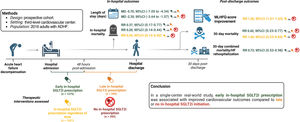
Central illustration. This prospective cohort study aimed to compare the clinical outcomes of adults with ADHF receiving either early in-hospital SGLT2i (≤ 48hours post-admission, n=1275), late in-hospital SGLT2i (> 48hours post-admission, n=346), or no in-hospital SGLT2i (n=395). Results are presented as RR with 95%CI for dichotomous outcomes and MD for continuous outcomes. Comparisons shown include: early versus late SGLT2i (green versus orange icons), early versus late/no SGLT2i (green versus combined orange/red icons), and any versus no in-hospital SGLT2i (yellow versus red icons). In-hospital outcomes include length of stay and mortality, while post-discharge outcomes encompass MLHFQ score improvement, 30-day mortality, and the combined endpoint of 30-day mortality/heart failure rehospitalization. 95%CI, 95% confidence intervals; ADHF, acute decompensated heart failure; HF, heart failure; MD, mean differences; MLHFQ, Minnesota Living with Heart Failure Questionnaire; RR, relative risks; SGLT2i, sodium-glucose cotransporter 2 inhibitors.

(0.51MB).

Regarding comorbidities and laboratory values, the no-SGLT2i group showed notably higher prevalence of chronic kidney disease (19.5%) compared to both early (11.9%) and late (9.5%) SGLT2i groups. Similarly, renal function was significantly worse in the no-SGLT2i group (median eGFR 54.9mL/min/1.73 m2) compared to both early (64.2mL/min/1.73 m2) and late (66.5mL/min/1.73 m2) SGLT2i groups (table 1). When specifically comparing early versus late SGLT2i initiation groups, several notable differences emerged. Patients receiving early SGLT2i therapy had more severe HF symptoms, with a higher proportion of New York Heart Association class III-IV (67.1% versus 59.5%, P=.009) and lower left ventricular ejection fraction (29.0% versus 33.0%, P<.001). The early group also showed distinct HF etiologies, with higher prevalence of Chagas disease (18.3% versus 11.8%, P=.005) and dilated cardiomyopathy (21.8% versus 15.6%, P=.011), but lower ischemic etiology (37.8% versus 48.3%, P<.001). Notably, renal function parameters were comparable between groups, with similar eGFR values (64.2 versus 66.5mL/min/1.73 m2, P=.720) and proportion of patients with eGFR<30mL/min/1.73 m2 (6.3% versus 8.4%, P=.165). Finally, the early initiation group showed better baseline optimization of guideline-directed medical therapy, including higher rates of angiotensin-converting enzyme inhibitor/angiotensin receptor blocker/angiotensin receptor-neprilysin inhibitor (55.3% versus 43.1%, P<.001), beta-blockers (52.2% versus 41.9%, P<.001), and aldosterone receptor antagonists (46.5% versus 34.1%, P<.001), differences that were prioritized for adjustment in the multivariate models ().

Factors associated with SGLT2i prescription patterns

In examining factors associated with early (≤ 48h) versus late (> 48h) in-hospital SGLT2i initiation, we identified male sex (OR, 0.72; 95%CI, 0.54-0.95; P=.020) and ischemic etiology (OR, 0.72; 95%CI, 0.56-0.92; P=.009) as associated with lower likelihood of early initiation. Lower ejection fraction remained a predictor of early use (OR, 0.97 per 1% increase; 95%CI, 0.96-0.98; P<.001), as did prior SGLT2i use (OR, 1.83; 95%CI, 1.22-2.74; P=.004).

When analyzing predictors of early (≤ 48h) versus late or no in-hospital SGLT2i use, several distinct patterns emerged. Higher ejection fraction (OR, 0.96 per 1% increase; 95%CI, 0.95-0.97; P<.001) and ischemic etiology (OR, 0.76; 95%CI, 0.62-0.92; P=.005) were associated with lower likelihood of early initiation. Higher eGFR (OR, 1.01 per mL/min/1.73 m2; 95%CI, 1.00-1.01; P=.005) and prior SGLT2i use (OR, 2.46; 95%CI, 1.81-3.35; P<.001) strongly predicted early initiation. Interestingly, prior beta-blocker use was associated with lower likelihood of early SGLT2i initiation (OR, 0.57; 95%CI, 0.40-0.81; P=.002).

Finally, factors associated with lower prescription of any in-hospital SGLT2i use included higher left ventricular ejection fraction (OR, 0.96 per 1% increase; 95%CI, 0.94-0.97; P<.001) and higher body mass index (OR, 0.96 per kg/m2; 95%CI, 0.94-0.99; P=.006). Conversely, better renal function (OR, 1.01 per mL/min/1.73 m2 increase in eGFR; 95%CI, 1.01-1.02; P<.001), prior SGLT2i use (OR, 2.64, 95%CI, 1.71-4.07; P<.001), and presence of dyslipidemia (OR, 1.61; 95%CI, 1.05-2.46; P=.029) were independently associated with higher likelihood of in-hospital SGLT2i prescription. Lower potassium levels at admission also predicted higher SGLT2i use (OR, 0.77 per mEq/L increase; 95%CI, 0.63-0.93; P=.008).

In-hospital management and clinical outcomes

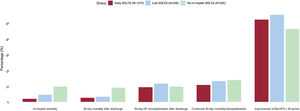
Early SGLT2i use was associated with significantly lower in-hospital mortality compared to late SGLT2i use (adjusted RR, 0.37; 95%CI, 0.17-0.77). This benefit was consistent when comparing early versus late/no in-hospital SGLT2i (adjusted RR, 0.25, 95%CI, 0.14-0.44) and any in-hospital SGLT2i versus none (adjusted RR, 0.24, 95%CI, 0.14-0.42) (table 2 and figure 2).

Table 2.

Regression models evaluating the effect of in-hospital SGLT2i prescription regarding primary and secondary outcomes

In-hospital mortality  Crude effect (95%CI)  Adjusted effect (95%CI) 
Early (< 48 h) versus late (> 48 h) SGLT2i prescription  0.41 (0.21-0.79) *  0.37 (0.17-0.77) * 
Early (< 48 h) versus late (> 48 h) or no SGLT2i prescription  0.25 (0.15-0.41) *  0.25 (0.14-0.44) * 
In-hospital SGLT2i prescription versus no SGLT2i prescription  0.23 (0.15-0.37) *  0.24 (0.14-0.42) * 
Length of stay  Crude effect (95%CI)  Adjusted effect (95%CI) 
Early (< 48 h) versus late (> 48 h) SGLT2i prescription  −5.70 (−7.05 to −4.34) *  −5.70 (−7.05 to −4.34) * 
Early (< 48 h) versus late (> 48 h) or no SGLT2i prescription  −2.99 (−4.05 to −1.92) *  −2.99 (−4.05 to −1.92) * 
In-hospital SGLT2i prescription versus no SGLT2i prescription  0.63 (−0.67 to 1.93)  0.63 (−0.67 to 1.93) 
30-day mortality  Crude effect (95%CI)  Adjusted effect (95%CI) 
Early (< 48 h) versus late (> 48 h) SGLT2i prescription  0.60 (0.29-1.23)  0.49 (0.23-1.04) 
Early (< 48 h) versus late (> 48 h) or no SGLT2i prescription  0.44 (0.26-0.77) *  0.42 (0.23-0.77) * 
In-hospital SGLT2i prescription versus no SGLT2i prescription  0.43 (0.24-0.76) *  0.44 (0.23-0.84) * 
30-day HF rehospitalization  Crude effect (95%CI)  Adjusted effect (95%CI) 
Early (< 48 h) versus late (> 48 h) SGLT2i prescription  0.76 (0.51-1.12)  0.72 (0.47-1.08) 
Early (< 48 h) versus late (> 48 h) or no SGLT2i prescription  0.87 (0.63-1.18)  0.80 (0.57-1.12) 
In-hospital SGLT2i prescription versus no SGLT2i prescription  1.02 (0.69-1.50)  0.98 (0.64-1.50) 
30-day combined mortality/HF rehospitalization  Crude effect (95%CI)  Adjusted effect (95%CI) 
Early (< 48 h) versus late (> 48 h) SGLT2i prescription  0.79 (0.54-1.13)  0.72 (0.49-1.06) 
Early (< 48 h) versus late (> 48 h) or no SGLT2i prescription  0.77 (0.58-1.02)  0.72 (0.53-0.98) * 
In-hospital SGLT2i prescription versus no SGLT2i prescription  0.79 (0.56-1.11)  0.63 (0.47-1.93) 
30-day MLHFQ improvement ≥ 20 points  Crude effect (95%CI)  Adjusted effect (95%CI) 
Early (< 48 h) versus late (> 48 h) SGLT2i prescription  0.90 (0.71-1.14)  0.89 (0.69-1.14) 
Early (< 48 h) versus late (> 48 h) or no SGLT2i prescription  1.07 (0.89-1.28)  1.06 (0.87-1.29) 
In-hospital SGLT2i prescription versus no SGLT2i prescription  1.26 (1.01-1.57) *  1.28 (1.01-1.63) * 

95%CI, 95% confidence interval; HF, heart failure; MLHFQ, Minnesota Living with Heart Failure Questionnaire; RR, relative risk; SD, standard deviation; SGLT2i, sodium-glucose cotransporter 2 inhibitors.

*

Represents a statistically-significant effect.

Figure 2.

Short-term clinical outcome rates stratified by timing of in-hospital SGLT2i initiation.

(0.12MB).

Length of hospital stay was significantly shorter with early SGLT2i use compared to late initiation (adjusted mean difference −5.70 days, 95%CI, −7.05 to −4.34) and compared to delayed/no SGLT2i (adjusted mean difference −2.99 days, 95%CI, −4.05 to −1.92). Notably, there was no significant difference in length of stay between any in-hospital SGLT2i use versus none (adjusted mean difference 0.63 days, 95%CI, −0.67 to 1.93) (table 2).

Among hospital survivors, early SGLT2i use showed a trend toward lower 30-day mortality compared to late initiation (adjusted RR, 0.49, 95%CI, 0.23-1.04) and significantly lower mortality compared to delayed/no SGLT2i (adjusted RR, 0.42, 95%CI, 0.23-0.77). Similarly, 30-day HF rehospitalization rates tended to be lower with early SGLT2i use (adjusted RR, 0.72, 95%CI, 0.47-1.08 versus late initiation; adjusted RR, 0.80, 95%CI, 0.57-1.12 versus delayed/no SGLT2i); however, this difference was not statistically significant. Finally, the composite endpoint of 30-day death or HF rehospitalization showed a consistent potential benefit with early SGLT2i use (adjusted RR, 0.72, 95%CI, 0.49-1.06 versus late initiation; adjusted RR, 0.72, 95%CI, 0.53-0.98 versus delayed/no SGLT2i) (table 2).

Quality of life and medication optimization

Quality of life, assessed by MLHFQ score improvement ≥ 20 points at 30 days, was similar across SGLT2i groups (adjusted RR, for early versus late SGLT2i: 0.89, 95%CI, 0.69-1.14). However, patients receiving in-hospital SGLT2i showed higher rates of significant MLHFQ improvement compared to those not receiving SGLT2i (adjusted RR, 1.28, 95%CI, 1.01-1.63).

At discharge, patients receiving early SGLT2i had higher rates of guideline-directed medical therapy optimization, including angiotensin-converting enzyme inhibitor/angiotensin receptor blocker/angiotensin receptor-neprilysin inhibitor (90.4% versus 86.7% versus 72.7%, P<.001), beta-blockers (95.1% versus 94.2% versus 86.1%, P<.001), and aldosterone receptor antagonists (91.6% versus 87.0% versus 60.8%, P<.001). SGLT2i continuation at discharge was also higher in the early group (93.8% versus 91.9% versus 41.0%, P<.001).

DISCUSSION

The present study evaluated the impact of in-hospital prescription of SGLT2i in patients with ADHF, being, to our knowledge, the first to explore the benefit of early continuation/initiation of SGLT2i during the first 48hours of hospital admission in a real-world setting. Our results support the benefit of early SGLT2i prescription in terms of in-hospital mortality reduction and reduced hospital stay compared with late prescription, despite early initiation patients having more severe HF manifestations, as evidenced by higher New York Heart Association class and lower ejection fraction. Additionally, early prescription was associated with lower in-hospital mortality, a shorter hospital stay and a reduced 30-day combined mortality/HF rehospitalization rate when compared with late or no in-hospital SGLT2i prescription. Finally, in-hospital use of SGLT2i was associated with increased ambulatory prescription rates of these drugs at discharge. Our results contribute to the previous high-quality evidence from clinical trials by including different groups of patients not considered in previous randomized studies, reflecting the real-world trends related to SGLT2i use.

Following the confirmation of the outstanding benefit of SGLT2i in chronic HF in the outpatient setting by multiple well-known clinical trials, there has been increasing interest in evaluating its potential benefit in patients with ADHF.1–3,6 On one side, SGLT2i-related natriuresis in the proximal tubules represents a promising mechanism aiding patient decongestion in the acute setting, considering that the majority of Na+ reabsorption (65%) occurs at this level, compared to the Henle loop (35%) and the distal tubules (5%), being proximal Na+ reabsorption proportionally higher in the ADHF patient.7 In addition to increasing diuresis and natriuresis, pleiotropic effects mediated by SGLT2i on oxidative stress can also provide additional benefits in light of the complex pathophysiology of ADHF.8–11 Finally, SGLT2i are characterized by a rapid effect (which can be observed only days after initiation) in addition to an adequate safety and tolerability profile, especially considering the need to preserve renal function in the ADHF patient.6

This potential has been reflected in the results of clinical trials in patients with acute HF. On the one hand, the EMPAG-HF confirmed the diuretic potential of these medications by observing a 25% increase in urine output 5 days after starting empagliflozin (25mg o.d.) compared to conventional management, a finding observed in the absence of impaired renal function and accompanied by a significant reduction in N-terminal pro-B-type natriuretic peptide levels.12 Moreover, the SOLOIST WHF, in which the dual SGLT inhibitor sotagliflozin was compared to placebo, showed for the first time that initiation of an SGLT2i at hospital discharge or during the first 3 days post-discharge was associated with a reduction in hospitalizations for HF and an improvement in quality of life regardless of ejection fraction. However, no statistically significant difference in mortality rates was observed in this trial.13 The benefit of in-hospital use of SGLT2i in terms of survival would be identified more recently in the EMPULSE trial, in which in-hospital use of 10mg empagliflozin o.d. was associated with lower all-cause mortality and incidence of HF events, as well as better quality of life compared to placebo. Additionally, this study confirmed the robust safety profile of these medications, highlighting the absence of ketoacidosis events and a lower incidence of acute renal failure and urinary tract infections in the treated group.5

Despite these findings, real-world evidence about the benefit of in-hospital use of SGLT2i in relation to clinical outcomes such as mortality and rehospitalizations is scarce, which limits the extrapolability of the beneficial results observed in populations not considered in the pivotal clinical trials of ADHF, such as end-stage chronic kidney disease patients. In this regard, the study by Okoroike et al. evaluated the effect of in-hospital initiation of these drugs in patients with HF and reduced left ventricular ejection fraction, analyzing 2663 patients of whom 177 received SGLT2i during hospitalization.14 The authors reported a significantly lower 30-day rehospitalization rate in the SGLT2i group (9.3% versus 22.7%), as well as lower all-cause mortality (4% versus 22.7%). However, the differences in outcomes reported were not adjusted for relevant covariates that differed between the 2 study groups, as for example, patients who received SGLT2i were younger and had lower N-terminal pro-B-type natriuretic peptide levels on admission, among other differences. Additionally, the time from hospital admission to drug prescription was not reported, which limited the possibility of evaluating the effect of this relevant factor on outcomes. Similarly, the study of Mizobuchi et al. reported real-world results of the potential benefits of in-hospital SGLT2i prescription in a third-level center in Tokyo, Japan. Their analysis of 1108 patients revealed that SGLT2i prescription during ADHF had a significantly lower rate of the composite endpoint of all-cause death and HF hospitalization compared to those that were not prescribed these medications, regardless of left ventricular ejection fraction categories.15 Finally, the study of Singh et al. which analyzed the Veterans Affairs health care system data of acute care hospitalizations, reported a significant benefit of SGLT2i continuation during the transition from the outpatient to the inpatient setting in patients with diabetes mellitus, highlighting lower mortality and length of stay, and no increased risk of acute kidney injury.16

Limitations

Despite the encouraging findings, our results should be interpreted with caution, recognizing the limitations of a single-center study, as well as the residual confounding bias inherent to non-randomized studies. In this regard, the absence of systematic data collection regarding specific ADHF presentation phenotypes (e.g., cardiogenic shock, acute pulmonary edema) limits our ability to analyze the relationship between HF presentation subtypes and SGLT2i prescription patterns. In addition, despite the modest sample size, the low incidence of the outcomes evaluated limited the possibility of performing subgroup analyses for the evaluation of potential interactions. Furthermore, beyond diabetic ketoacidosis, which was not observed in any patient, we did not systematically collect data on other potential adverse effects or tolerability issues associated with early versus late SGLT2i initiation. Nevertheless, we believe our study contributes to filling a knowledge gap in this area by supporting the benefit and safety of in-hospital continuation/initiation of SGLT2i in a real-world setting after considering multiple relevant confounders in the regression models. Additionally, our study is the first to report a clinical benefit of early in-hospital initiation of SGLT2i in terms of rehospitalizations and length of hospital stay, highlighting the need to further investigate the benefit of initiating these drugs as early as possible during hospitalization of the ADHF patient.

CONCLUSIONS

In a single-center real-world study including patients hospitalized with ADHF, in-hospital continuation/initiation of SGLT2 inhibitors, particularly within the first 48hours of admission, was associated with improved clinical outcomes. Specifically, early in-hospital SGLT2i prescription was associated with reduced in-hospital mortality, as well as shorter length of stay, higher SGLT2i prescription rates at discharge and a lower risk of mortality compared to late or no in-hospital prescription. These exploratory results require further validation in multicenter studies and clinical trials, which should also focus on special populations present in the real world setting such as end-stage chronic kidney disease patients and individuals with high frailty scores, among others.

FUNDING

The present study did not require funding.

ETHICAL CONSIDERATIONS

The Institutional Committee on Research Ethics approved the study protocol (CEI-2022-05104). Written informed consent was waived due to the registry-based nature of the study, the use of de-identified data, and the absence of any direct patient contact for research purposes beyond standard clinical care. The sex and gender equity in research (SAGER) guidelines were followed for the design of the study.

STATEMENT ON THE USE OF ARTIFICIAL INTELLIGENCE

No generative artificial intelligence was used in this study.

AUTHORS’ CONTRIBUTIONS

S.A. Gómez-Ochoa, L.Z. Rojas, and L.E. Echeverría had full access to all of the data in the study and take responsibility for the integrity of the data and the accuracy of the data analysis. Study concept and design: L.E. Echeverria and S.A. Gómez-Ochoa. Acquisition, analysis, or interpretation of data: L.E. Echeverria, A.Y. Serrano-García, D.R. Botero, M. Cantillo-Reines, A.M. Jurado, K.A. García-Rueda, A. Torres-Bustamante, D.I. Cañón-Gómez, C. Idrovo-Turbay, R. Sánchez-García, J.A. Rodríguez, and S.A. Gómez-Ochoa. Drafting of the manuscript: L.E. Echeverria, L.Z. Rojas, A.Y. Serrano-García, and S.A. Gómez-Ochoa. Critical revision of the manuscript for important intellectual content: L.E. Echeverria, L.Z. Rojas, A.Y. Serrano-García, D.R. Botero, M. Cantillo-Reines, A.M. Jurado, K.A. García-Rueda, A. Torres-Bustamante, D.I. Cañón-Gómez, C. Idrovo-Turbay, R. Sánchez-García, J.A. Rodríguez, and S.A. Gómez-Ochoa. Statistical analysis: L.Z. Rojas and S.A. Gómez-Ochoa. Study supervision: L.E. Echeverria, J.A. Rodríguez, S.A. Gómez-Ochoa.

CONFLICTS OF INTEREST

S.A. Gómez-Ochoa, L.Z. Rojas, and L.E. Echeverría received funding from Boehringer Ingelheim S.A. for the development of an Investigator-initiated study. The other authors have no conflict of interest.

ACKNOWLEDGMENTS

We would like to thank the epidemiology unit of the Instituto Cardiovascular, Fundación Cardiovascular de Colombia for their support in the management of the ICARUS.

WHAT IS KNOWN ABOUT THE TOPIC?

  • -

    SGLT2 inhibitors have demonstrated significant benefits in chronic HF management, leading to their inclusion as first-line therapy in current guidelines. The EMPULSE trial established the safety and efficacy of in-hospital SGLT2i initiation in acute HF, with a median initiation time of 3 days post-admission. However, real-world evidence regarding optimal timing of SGLT2i initiation during hospitalization, particularly within the first 48hours, remains limited, and the generalizability of clinical trial results to diverse patient populations is uncertain.

WHAT DOES THIS STUDY ADD?

  • -

    -This large real-world study provides the evidence that early SGLT2i initiation (≤ 48hours) during acute HF hospitalization may be associated with improved clinical outcomes compared to later initiation, including reduced in-hospital mortality and shorter length of stay. The study suggests that early SGLT2i initiation can be safely implemented across a broad spectrum of patients, including those with more severe HF and varied etiologies not well-represented in clinical trials.

References
[1]
S.D. Anker, J. Butler, G. Filippatos, et al.
Empagliflozin in Heart Failure with a Preserved Ejection Fraction.
N Engl J Med., (2021), 385 pp. 1451-1461
[2]
M. Packer, S.D. Anker, J. Butler, et al.
Cardiovascular and Renal Outcomes with Empagliflozin in Heart Failure.
N Engl J Med., (2020), 383 pp. 1413-1424
[3]
J.J.V. McMurray, S.D. Solomon, S.E. Inzucchi, et al.
Dapagliflozin in Patients with Heart Failure and Reduced Ejection Fraction.
N Engl J Med., (2019), 381 pp. 1995-2008
[4]
T.A. McDonagh, M. Metra, M. Adamo, et al.
2023 Focused Update of the 2021 ESC Guidelines for the diagnosis and treatment of acute and chronic heart failure.
Eur Heart J., (2023), 44 pp. 3627-3639
[5]
A.A. Voors, C.E. Angermann, J.R. Teerlink, et al.
The SGLT2 inhibitor empagliflozin in patients hospitalized for acute heart failure: a multinational randomized trial.
Nat Med., (2022), 28 pp. 568-574
[6]
V.N. Rao, E. Murray, J. Butler, et al.
In-Hospital Initiation of Sodium-Glucose Cotransporter-2 Inhibitors for Heart Failure With Reduced Ejection Fraction.
J Am Coll Cardiol., (2021), 78 pp. 2004-2012
[7]
W. Mullens, K. Damman, V.-P. Harjola, et al.
The use of diuretics in heart failure with congestion — a position statement from the Heart Failure Association of the European Society of Cardiology.
Eur J Heart Fail., (2019), 21 pp. 137-155
[8]
M.L. Ng, X. Ang, K.Y. Yap, et al.
Novel Oxidative Stress Biomarkers with Risk Prognosis Values in Heart Failure.
Biomedicines., (2023), 11 pp. 917
[9]
J.-C. Charniot, N. Vignat, J.-P. Albertini, et al.
Oxidative stress in patients with acute heart failure.
Rejuvenation Res., (2008), 11 pp. 393-398
[10]
H. Yaribeygi, S.L. Atkin, A.E. Butler, A. Sahebkar.
Sodium-glucose cotransporter inhibitors and oxidative stress: An update.
J Cell Physiol., (2019), 234 pp. 3231-3237
[11]
G.M. Gager, D. von Lewinski, H. Sourij, et al.
Effects of SGLT2 Inhibitors on Ion Homeostasis and Oxidative Stress associated Mechanisms in Heart Failure.
Biomed Pharmacother., (2021), 143 pp. 112169
[12]
P.C. Schulze, J. Bogoviku, J. Westphal, et al.
Effects of Early Empagliflozin Initiation on Diuresis and Kidney Function in Patients With Acute Decompensated Heart Failure (EMPAG-HF).
Circulation., (2022), 146 pp. 289-298
[13]
D.L. Bhatt, M. Szarek, P.G. Steg, et al.
Sotagliflozin in Patients with Diabetes and Recent Worsening Heart Failure.
N Engl J Med., (2021), 384 pp. 117-128
[14]
H. Okoroike, S. Patel, P. Simone, R. Lavelle, J.A. Szwak.
Impact of Inpatient Initiation of Sodium-Glucose Cotransporter-2 Inhibitors on Prescription Rates in Patients With Heart Failure With Reduced Ejection Fraction.
Am J Cardiol., (2023), 186 pp. 150-155
[15]
S. Mizobuchi, Y. Saito, D. Kitano, et al.
Sodium-glucose co-transporter 2 inhibitors in acute heart failure: real-world prescription trends and outcomes analysis.
ESC Heart Fail., (2023), 11 pp. 410-421
[16]
L.G. Singh, S. Ntelis, T. Siddiqui, S.L. Seliger, J.D. Sorkin, E.K. Spanakis.
Association of Continued Use of SGLT2 Inhibitors From the Ambulatory to Inpatient Setting With Hospital Outcomes in Patients With Diabetes: A Nationwide Cohort Study.
Diabetes Care., (2024), 47 pp. 933-940
Copyright © 2025. Sociedad Española de Cardiología