
Invasive management in frail patients with non–ST-segment elevation myocardial infarction (NSTEMI) remains controversial. We investigated the impact of various geriatric conditions.
MethodsThe MOSCA-FRAIL trial included 167 adults aged ≥ 70 years with frailty (Clinical Frailty Scale [CFS] ≥ 4 points) and NSTEMI, who were randomized to either an invasive (n=84) or conservative (n=83) strategy. In addition to frailty, we measured activities of daily living (Barthel index), cognitive impairment (Pfeiffer test), and comorbidities (Charlson index). The primary endpoint was the difference (invasive minus conservative) in restricted mean survival time (RMST) for all-cause mortality at a median follow-up of 3.9 years.
ResultsA total of 93 patients died. The RMST difference favored invasive management at the CFS 25th percentile (CFS=4; 157 days, 95%CI, 18-295; P=.027), which changed to a nonsignificant effect at the 50th and 75th percentiles. The RMST difference remained nonsignificant, irrespective of the severity of other geriatric assessments. In time-to-event analysis, invasive management was associated with an initially lower life expectancy, peaking at around 1 year, among all subgroups. However, patients with CFS=4 experienced a benefit at the end of follow-up (181 days, 95%CI, 19-343), whereas those with CFS >4 did not (−16 days, 95%CI, −217 to 186; interaction P=.16). Subgroups defined by other geriatric markers showed a similar time-dependent trend, albeit with weaker statistical interaction.
ConclusionsAmong adults with frailty and NSTEMI, the CFS might be useful for evaluating the relative risks and benefits of invasive management. A CFS >4 could serve as a valuable threshold for decision-making.
Keywords
Frailty is increasingly common among patients admitted for non–ST-segment elevation acute myocardial infarction (NSTEMI). Extensive evidence highlights the detrimental impact of frailty on prognosis.1 However, the optimal management strategy for these patients remains unclear, as they may be particularly vulnerable to the risks associated with aggressive drug therapies or invasive interventions. Consequently, current guidelines recommend an individualized approach that carefully assesses the risks and benefits of each treatment option to optimize outcomes.2
The largest trial comparing invasive and conservative strategies in adult patients demonstrated the superiority of invasive management.3,4 In contrast, earlier smaller trials yielded conflicting results.5–9 A recent meta-analysis found that routine invasive treatment did not reduce the risk of a composite endpoint of all-cause mortality and myocardial infarction within 1 year.10 However, it did show that invasive treatment significantly decreased the risk of repeat myocardial infarction or urgent revascularization. Notably, frailty was assessed in only 1 trial, suggesting a potential underrepresentation of frail patients in these studies.
The MOSCA-FRAIL randomized clinical trial compared invasive and conservative management in adult patients with frailty and NSTEMI.9,11 The study revealed no discernible differences between the 2 approaches. Nevertheless, there was a tendency toward early harm associated with invasive management within the first year, followed by a late benefit. The present subgroup analysis aimed to identify which elements of the geriatric assessment—frailty, activities of daily living, cognitive impairment, and comorbidities—may provide superior insights for identifying patients who might benefit from or be harmed by invasive management.
METHODSStudy designThe MOSCA-FRAIL clinical trial (NCT03208153) has been previously published.9,11 In brief, the trial was a multicenter, prospective, randomized study that focused on older adults with frailty who were admitted for NSTEMI and evaluated the effects of invasive management in this population. The inclusion criteria were age 70 years or older and frailty, defined by a Clinical Frailty Scale (CFS) score of 4 or greater,12 and hospitalization for NSTEMI. Exclusion criteria consisted of established nonrevascularizable coronary artery disease, significant concomitant nonischemic heart disease, inability to understand or provide informed consent (by patients or relatives), and a life expectancy of less than 12 months. In addition to these criteria, the attending cardiologist had to believe that the patient's participation in the study was reasonable. Reasons for considering participation inappropriate included a recommendation by the attending cardiologist that invasive treatment was mandatory due to severe clinical instability at admission (eg, recurrent chest pain and/or dynamic ischemic electrocardiographic changes) or any factor that precluded consideration of invasive treatment
Patients were randomized within 48hours of admission to either conservative management or invasive management, which involved a routine invasive coronary angiogram and revascularization if feasible. Crossover to invasive management was allowed in the conservative arm in patients with recurrent ischemia, as prespecified in the protocol. Medical treatment in both study arms was identical and adhered to current guidelines.
The trial was an investigator-driven initiative conducted under the auspices of the Spanish Society of Cardiology, the Interventional Cardiology Association, and the Section on Geriatric Cardiology. A total of 13 centers participated in the study. The recruitment period spanned from July 7, 2017, to January 9, 2021. The extended follow-up, which included all enrolled patients (n=167), concluded on January 31, 2023. All participating centers received approval from their respective Medical Ethics Committees, and all patients provided written informed consent.
A systematic and comprehensive geriatric evaluation was prospectively performed during hospitalization in all patients, assessing their status prior to admission: a) frailty was assessed for inclusion criteria using the CFS; b) activities of daily living were evaluated with the Barthel Index;13c) cognitive function was measured with the Pfeiffer test;14 and d) comorbidities were evaluated with the Charlson index.15 For the subgroup analysis, we used predefined cutoffs of 4 points on the CFS and 3 errors on the Pfeiffer test.14,16 For the Barthel index and Charlson index, patients were categorized based on the median values within the cohort.
EndpointsThe original trial was designed with a primary endpoint of the number of days alive and out of the hospital from discharge after the index hospitalization up to 1 year.9 The restricted mean survival time (RMST) difference for all-cause mortality (ie, days alive) between the treatment strategies was chosen as the primary endpoint for the extended follow-up analysis.11 This earlier study on the extended follow-up showed that the proportionality assumption was not met, as indicated by the crossing of the curves for the 2 treatment arms on the Kaplan-Meier analysis. Therefore, the RMST was selected because this method does not require the proportionality of hazards over time and allows for adjustment of time-dependent effects.17 In the current subgroup analysis, the RMST difference between the treatment strategies for all-cause mortality was also selected as the primary endpoint. RMST estimates the number of days remaining alive during the follow-up period and the differences between treatment strategies for each geriatric marker selected for this study.
Statistical analysisResults are presented as frequencies or the mean±standard deviation, as appropriate. Between-group comparisons were performed using the t-test for continuous variables and the Fisher exact test for categorical variables. Standardized differences were used to assess the balance of baseline characteristics between the 2 treatment groups following randomization, with a value of P=.25 or less considered indicative of a good match.
We included interaction terms between the treatment strategy and key geriatric markers in our models to explore effect modifiers of invasive vs conservative treatment strategies on all-cause mortality. Each geriatric marker was modeled both in its continuous form and as a dichotomized variable using cutpoints from the published literature for time-to-event analysis. Stratified by these dichotomized markers, RMST was employed as the main method for regression analyses because the proportionality assumption between the 2 strategies was not met, as evidenced by the crossing of Kaplan-Meier curves for the two treatment arms during the follow-up period.
A significance level of P<.05 was used for all analyses. All statistical analyses were performed using Stata 17.0 (StataCorp, 2021. Stata Statistical Software: Release 17. College Station, TX: StataCorp LLC).
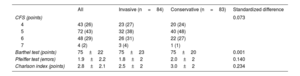
RESULTSBaseline characteristicsThe study population consisted of 167 patients (79 men [47.3%]), with 84 allocated to the invasive group and 83 to the conservative group. Baseline characteristics were previously reported and are shown in table 1 of the supplementary data. The mean age was 86±5 years. Table 1 presents the results of the geriatric assessment tests, which showed no significant differences between groups.
Geriatric conditions in the whole population and treatment subgroups
| All | Invasive (n=84) | Conservative (n=83) | Standardized difference | |
|---|---|---|---|---|
| CFS (points) | 0.073 | |||
| 4 | 43 (26) | 23 (27) | 20 (24) | |
| 5 | 72 (43) | 32 (38) | 40 (48) | |
| 6 | 48 (29) | 26 (31) | 22 (27) | |
| 7 | 4 (2) | 3 (4) | 1 (1) | |
| Barthel test (points) | 75±22 | 75±23 | 75±20 | 0.001 |
| Pfeiffer test (errors) | 1.9±2.2 | 1.8±2 | 2.0±2 | 0.140 |
| Charlson index (points) | 2.8±2.1 | 2.5±2 | 3.0±2 | 0.234 |
CFS, Clinical Frailty Scale.
CFS is expressed as No. (%). Other geriatric conditions are expressed as mean±standard deviation.
Coronary angiography was performed in nearly all patients in the invasive group (n=82; 97.6%). In comparison, only 9 patients (10.8%) in the conservative group crossed over to invasive treatment due to recurrent ischemia, as prespecified in the study protocol. Consequently, the initial revascularization rates were 50 (59.5%) in the invasive group and 8 (9.6%) in the conservative group.
Follow-upThe median follow-up for the entire study population was 3 [interquartile range, 1.2-3.9] years years. For surviving patients, the median follow-up was 3.9 [interquartile range, 3.2-4.4] years. No patients were lost to follow-up.
A total of 93 patients died. There were no significant differences in survival time between the study groups in the whole population (invasive minus conservative group=28 days, 95% confidence interval [95%CI], −188 to 230).
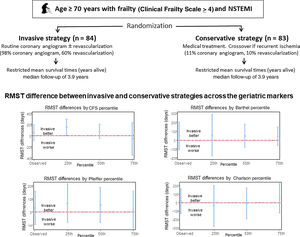
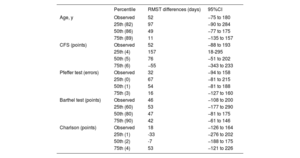
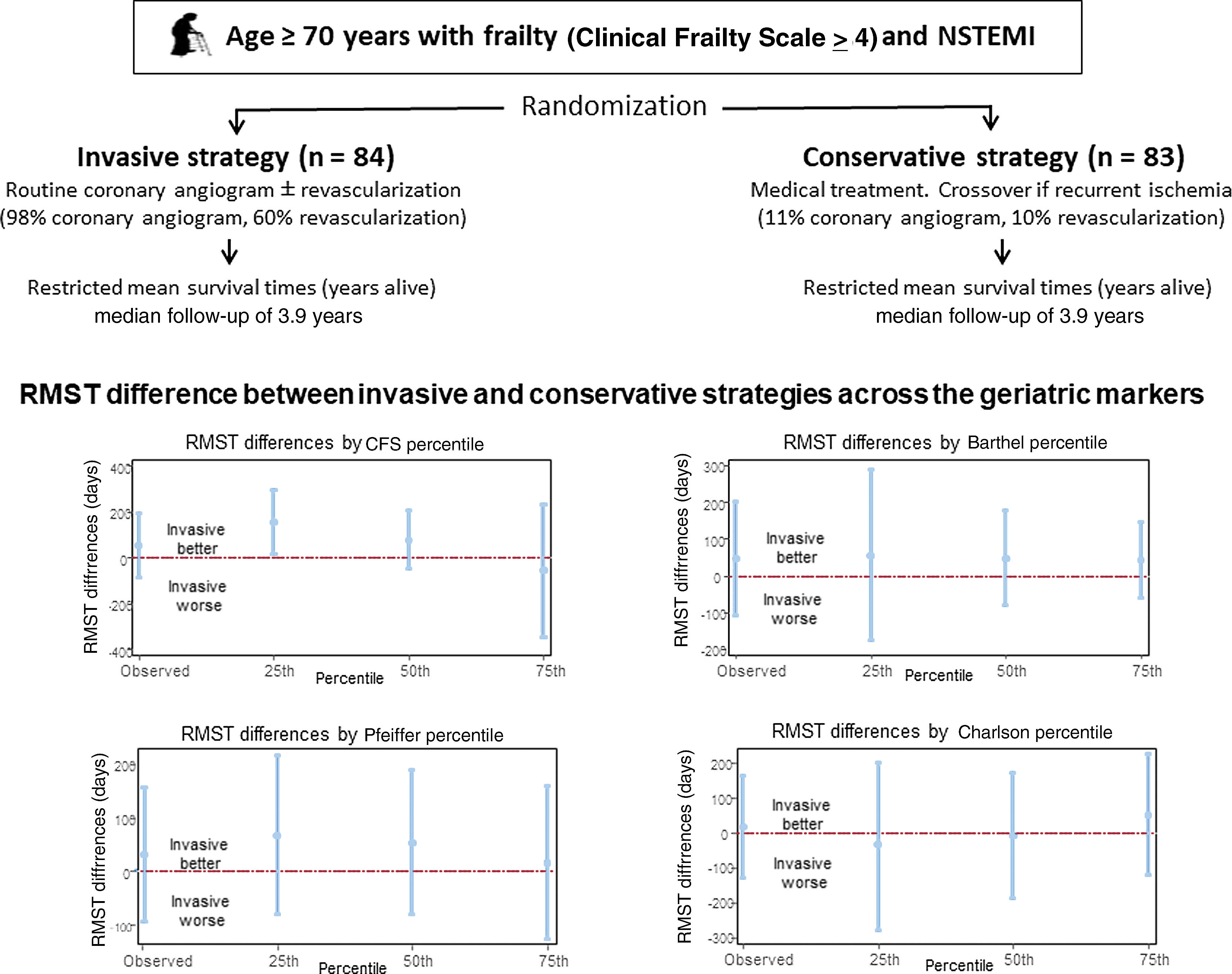
RMST according to geriatric conditionsTable 2 and figure 1 display the difference in RMST (invasive minus conservative) at various percentiles of geriatric conditions, treated as continuous variables to capture more granular effects. No discernible influence of age, Pfeiffer test, Barthel index, or Charlson index scores on the efficacy of invasive management was observed. However, the invasive strategy increased the number of days alive when the CFS was 4, with this effect diminishing as the CFS score increased (figure 1). Specifically, the RMST difference was significantly positive at the 25th percentile (CFS=4; 157 days, 95%CI, 18-295; Z-score=2.22, P=.027). The RMST difference was not statistically significant at the 50th percentile (CFS=5; 76 days, 95%CI, −51 to 202; Z-score=1.17; P=.24) or the 75th percentile (CFS=6; −55 days, 95%CI, −343 to 233 Z-score=−0.37; P=.71), although it remained positive at the 50th percentile and turned negative at the 75th percentile.
Difference in restricted mean survival time between invasive and conservative strategies at various percentiles of age and geriatric conditions, treated as continuous variables
| Percentile | RMST differences (days) | 95%CI | |
|---|---|---|---|
| Age, y | Observed | 52 | −75 to 180 |
| 25th (82) | 97 | −90 to 284 | |
| 50th (86) | 49 | −77 to 175 | |
| 75th (89) | 11 | −135 to 157 | |
| CFS (points) | Observed | 52 | −88 to 193 |
| 25th (4) | 157 | 18-295 | |
| 50th (5) | 76 | −51 to 202 | |
| 75th (6) | −55 | −343 to 233 | |
| Pfeffer test (errors) | Observed | 32 | −94 to 158 |
| 25th (0) | 67 | −81 to 215 | |
| 50th (1) | 54 | −81 to 188 | |
| 75th (3) | 16 | −127 to 160 | |
| Barthel test (points) | Observed | 46 | −108 to 200 |
| 25th (60) | 53 | −177 to 290 | |
| 50th (80) | 47 | −81 to 175 | |
| 75th (90) | 42 | −61 to 146 | |
| Charlson (points) | Observed | 18 | −126 to 164 |
| 25th (1) | -33 | −276 to 202 | |
| 50th (2) | -7 | −188 to 175 | |
| 75th (4) | 53 | −121 to 226 |
95%CI, 95% confidence interval; CFS, Clinical Frailty Scale; RMST, restricted mean survival time.
Central illustration. Difference in restricted mean survival time (RMST) between invasive and conservative strategies at various percentiles of the geriatric markers and the observed RMST difference based on actual patient data. The geriatric markers are treated as a continuous variable. The 95% confidence intervals are shown as error bars. CFS, Clinical Frailty Scale; NSTEMI, non–ST-segment elevation acute myocardial infarction.
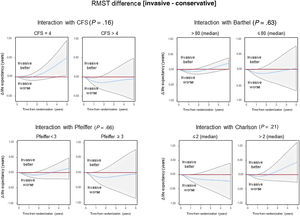
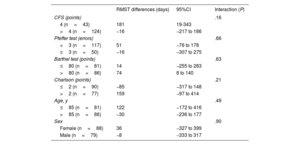
Table 3 and figure 2 illustrate the time-to-event curves for the RMST difference between invasive and conservative treatment strategies among subgroups stratified by age, sex, CFS, Barthel index, Pfeiffer test, and Charlson comorbidity index. Overall, a tendency toward initially lower life expectancy with invasive management was observed among all subgroups, as indicated by a negative RMST difference between invasive and conservative approaches, peaking around 1 year. This tendency progressively reversed after 1 year, with the RMST difference becoming positive. The effect was more pronounced in the CFS subgroups. Specifically, patients with CFS=4 experienced a statistically significant benefit by the end of follow-up (181 days, 95%CI, 19-343). In contrast, patients with CFS >4 exhibited significantly lower life expectancy early on (upper 95%CI below 0), but this difference became nonsignificant in the long-term (−16 days, 95%CI, −217 to 186; P for interaction=.16) (figure 2). The subgroups defined by age, sex, Barthel index, Pfeiffer test, and Charlson index demonstrated similar trends to CFS, although with weaker statistical interaction. Patients with a Barthel index >80 had a higher life expectancy with invasive management (74 days, 95%CI, 8-140; P for interaction=.63).
Differences in restricted mean survival time according to subgroups depending on age, sex and geriatric conditions
| RMST differences (days) | 95%CI | Interaction (P) | |
|---|---|---|---|
| CFS (points) | .16 | ||
| 4 (n=43) | 181 | 19-343 | |
| >4 (n=124) | −16 | −217 to 186 | |
| Pfeffer test (errors) | .66 | ||
| <3 (n=117) | 51 | −76 to 178 | |
| ≥3 (n=50) | −16 | −307 to 275 | |
| Barthel test (points) | .63 | ||
| ≤80 (n=81) | 14 | −255 to 283 | |
| >80 (n=86) | 74 | 8 to 140 | |
| Charlson (points) | .21 | ||
| ≤2 (n=90) | −85 | −317 to 148 | |
| >2 (n=77) | 159 | −97 to 414 | |
| Age, y | .49 | ||
| ≤85 (n=81) | 122 | −172 to 416 | |
| >85 (n=86) | −30 | −236 to 177 | |
| Sex | .90 | ||
| Female (n=88) | 36 | −327 to 399 | |
| Male (n=79) | −8 | −333 to 317 |
95%CI, 95% confidence interval; CFS, Clinical Frailty Scale; RMST, restricted mean survival time.
Plots representing the difference in restricted mean survival time (RMST) between invasive and conservative treatment strategies among subgroups of patients stratified by the geriatric markers (Clinical Frailty Scale, Barthel index, Pfeiffer test, and Charlson index). The 95% intervals are shown as shaded areas. CFS, Clinical Frailty Scale.
This study prospectively investigated the impact of several geriatric assessment tools (CFS, Barthel index, Pfeiffer test, and Charlson index) on the efficacy of invasive management in adult patients with frailty and NSTEMI, with a focus on long-term survival. The key findings are as follows: a) there was a possible benefit of the invasive strategy in less frail patients (CFS=4), which was not evident in patients with higher degrees of frailty (CFS >4). However, this trend was not observed with other geriatric tools, as invasive management did not improve outcomes regardless of the severity of these markers within this population of frail patients; b) a temporal pattern was observed for the effect of invasive treatment among all subgroups defined by geriatric markers, consisting of a trend toward initial lower life expectancy, peaking around 1 year, and progressively transitioning to a late benefit; c) the effect was most pronounced in the CFS subgroups: patients with a CFS=4 had a higher life expectancy at the end of follow-up, while those with a CFS >4 showed significantly lower life expectancy initially, with no differences in the long-term. The statistical interaction for the CFS subgroups indicated a trend that did was not statistically significant.
This study mainly focused on frail patients identified by a CFS ≥4, resulting in a cohort with a relatively narrow range of frailty. Even within this restricted range, notable clinical differences in the efficacy of invasive interventions were observed on the CFS scale. It is conceivable that these differences would have been more pronounced if the study had included patients with lower levels of frailty or those not classified as frail. The initial adverse effects, particularly pronounced in patients with higher frailty, seemed to counteract the potential benefits of invasive management. These early adverse effects were less marked in patients with lower frailty, resulting in significant long-term benefits. The hypothesis of “depletion of susceptibles” seems particularly relevant to patients with CFS >4.18
Frailty evaluation can be approached through predominantly physical assessments, such as those conducted with physical tests like the Fried score, or by considering an accumulation of deficits resulting from disabilities and comorbidities. The CFS offers a subjective clinical assessment of these accumulated deficits. Both methodologies have demonstrated clinical usefulness in the prognostic evaluation of patients with heart disease.19,20 However, physical tests are impractical in acute settings, whereas the CFS offers a more feasible option, despite potential concerns about subjectivity. Our study further corroborates the usefulness of the CFS in dentifying the potential benefits of invasive treatment in adult patients with NSTEMI.
The Barthel Index for Activities of Daily Living is an ordinal scale that measures a person's ability to perform daily activities. Limited information exists regarding its prognostic value in acute myocardial infarction, with some studies showing inconclusive results about its predictive ability at admission.21,22 These studies, however, are prone to selection bias, as they included few patients with high levels of disability. Our study included patients with greater disability than those in previously reported studies, with an average Barthel score around 80 (indicating mild disability). We found that patients with a Barthel score greater than 80 might benefit from invasive management, although the statistical interaction was not significant.
A recent study demonstrated that cognitive impairment in older patients with NSTEMI undergoing invasive strategies was associated with long-term all-cause mortality.23 This suggests that routine cognitive screening might be advisable for risk stratification and decision-making. Our findings, based on a sample with mild cognitive impairment (an average of less than 2 errors on the Pfeiffer test), support this approach; however, the CFS provided better risk stratification.
Comorbidities decrease the potential benefit of in-hospital revascularization in adult patients with NSTEMI.7,24–26 Despite its limitations, the Charlson comorbidity index is the most commonly used measure of comorbid burden. A higher Charlson comorbidity index correlates with increased in-hospital mortality following percutaneous coronary intervention.27 However, based on this index, we failed to observe a mortality gradient in our study population of patients with frailty. This observation suggests that frailty might, to some extent, capture the mortality risk associated with comorbidities.
LimitationsThe MOSCA-FRAIL clinical trial has some limitations that have been previously acknowledged.9,11 The main limitation of the current study is the small sample size for subgroup analyses, which may increase the risk of type I errors. In addition, the wide confidence intervals associated with the estimates introduce uncertainty into the findings. Finally, the randomization process did not ensure a perfect balance in baseline characteristics, which is a common issue in trials with small sample sizes.
CONCLUSIONSAmong adult patients with frailty admitted for NSTEMI, the CFS might be a useful clinical tool for risk stratification of the potential benefits or drawbacks of invasive management. A CFS >4 could serve as a valuable threshold for decision-making in this challenging context.
- -
The evidence supporting invasive management in adult patients with NSTEMI is based on a limited number of trials.
- -
These trials did not assess frailty or other geriatric assessment tools.
- -
The Clinical Frailty Scale may be a valuable tool for risk stratification of the relative risk/benefit ratio of invasive management in adult patients with frailty and NSTEMI.
- -
Incorporating frailty assessment into future trials and clinical practice could improve decision-making regarding invasive management for adult patients with NSTEMI.
This study was supported by grants FIS 17/01736 and FIS 17/00899 from Spain's Ministry of Science and Innovation through the Carlos III Health Institute: Fondo Europeo de Desarrollo Regional and by grant 16/11/00420 from Centro de Investigación Biomédica en Red Enfermedades Cardiovaculares (CIBERCV).
ETHICAL CONSIDERATIONSAll centers received the approval of their Medical Ethics Committee, and all patients provided written informed consent. Possible sex and gender biases have been taken into account in the preparation of this article in accordance with the SAGER guidelines.
STATEMENT ON THE USE OF ARTIFICIAL INTELLIGENCENo artificial intelligence was used in the preparation of this study.
AUTHORŚ CONTRIBUTIONSJ. Sanchis, A. Ariza-Solé, and H. Bueno contributed to the design and execution of the trial. J. Sanchis drafted the report, which was critically revised by A. Ariza-Solé, H. Bueno, F. Formiga, and J. Núñez. S. García-Blas, J.A. Gómez-Hospital, D. Martí, M. Martínez-Sellés, L. Domínguez-Pérez, P. Díez-Villanueva, J.A. Barrabés, F. Marín, A. Villa, M. Sanmartín, C. Llibre, A. Sionís, A. Carol, E. Valero, E. Calvo, M.J. Morales, J. Elízaga, I. Gómez, F. Aalfonso, and B. García del Blanco contributed to the execution of the trial. J. Sanchis, EN and J. Núñez performed the statistical analysis. All authors approved the final report.
Conflicts of interestJ. Sanchis is editor-in-chief of Rev Esp Cardiol. The journal's editorial procedure to ensure impartial processing of the manuscript has been followed. J. Sanchis reports receiving payments for presentations from Boston Scientific Corporation and Abbott Vascular outside the submitted work. H. Bueno reports receiving grant funding from the European Union, Instituto de Salud Carlos III, Spanish Society of Cardiology, Boehringer Ingelheim, and Janssen Global Services LLC, and personal fees from AstraZeneca, Novartis AG, Novo Nordisk A/S, and Organon & Co outside the submitted work. F. Marín reports receiving grant funding from Bayer AG, Grupo Ferrer Internacional SA, and Boehringer Ingelheim; support for meetings from Esteve; and serving on the advisory board of the Atrial Fibrillation Network. M. Sanmartín reports receiving conference fees from Amgen Inc, Boehringer Ingelheim, and AstraZeneca outside the submitted work. J. Núñez reports receiving personal fees from Alleviant Medical Inc, AstraZeneca, Boehringer Ingelheim, Novartis AG, NovoNordisk A/S, Pfizer Inc, and Laboratorios Farmacéuticos Rovi SA outside the submitted work. No other disclosures are reported.